


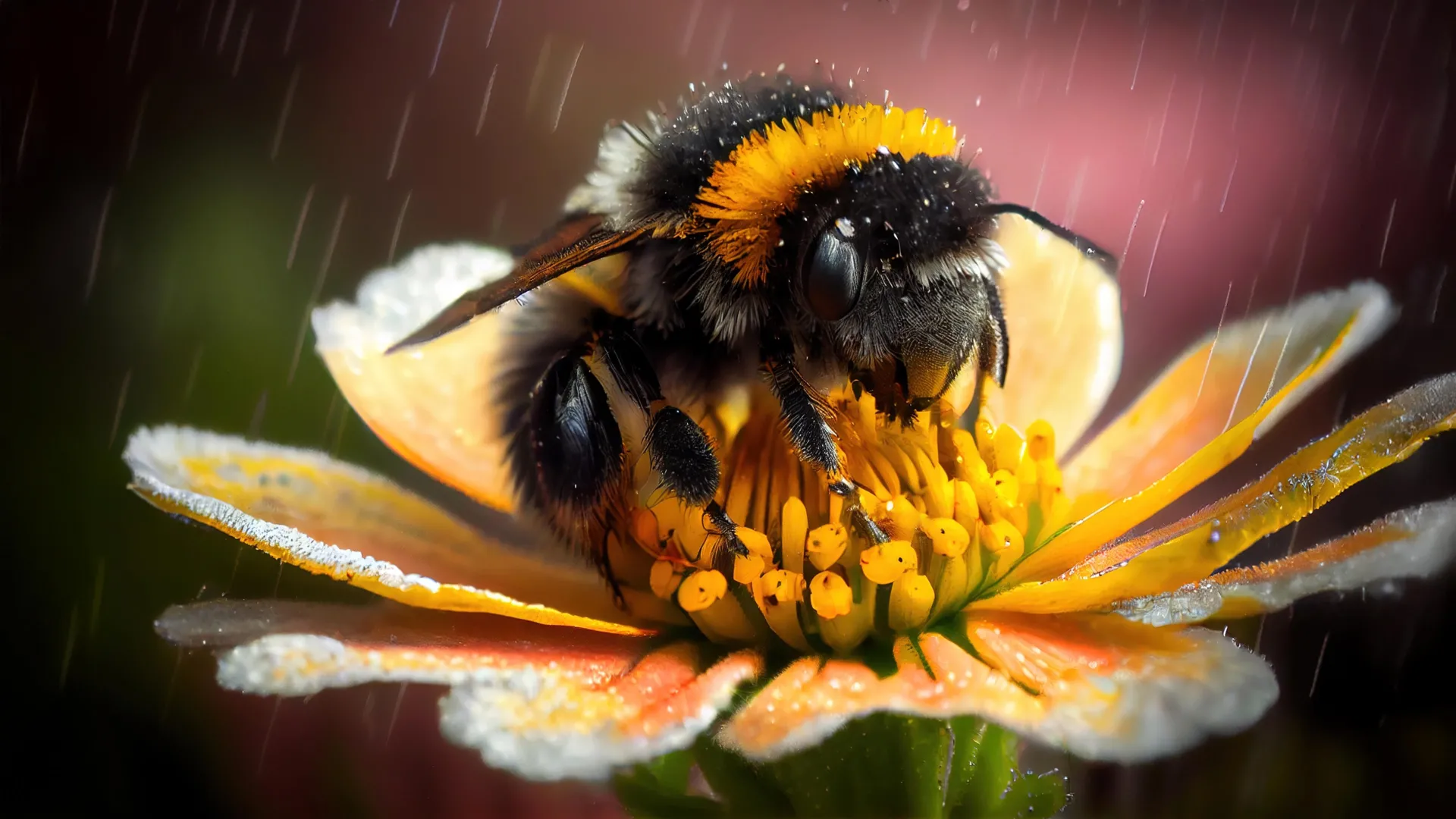
Bumblebees, despite their small size of about an inch, are essential contributors to global agriculture. Around one-third of the world’s food production relies on vital pollinators like bees. Unfortunately, these crucial insects are increasingly threatened by pesticides and various environmental challenges.
Modern pesticides are instrumental for farmers in safeguarding crops and maximizing yields. However, some of these chemicals can harm the very pollinators that are vital for abundant harvests. One such chemical, sulfoxaflor, is a next-generation pesticide introduced in 2013, designed to combat sap-sucking pests like aphids on crops such as soybeans and corn. While sulfoxaflor effectively targets these pests, it is also known to be toxic to bees. Recent studies are revealing how even minimal exposure to such chemicals impacts bee reproduction at a molecular level.
Impact of Pesticides on Gene Activity in Honey Bees
Researchers from Georgia Tech have discovered that sulfoxaflor can alter gene activity and reproductive functions in bumblebees. In a USDA-funded study, scientists exposed worker bees to low doses of this insecticide and then monitored changes in gene expression.
The most significant alterations were found in ovarian tissue, indicating that pesticides may interfere with reproductive processes. These genetic changes could lead to a decline in offspring and a decrease in honey bee populations over time.
To explore these effects further, researchers flash-froze bee tissue and analyzed its RNA to observe changes in gene activity following pesticide exposure. Additionally, they employed computational models to identify the biological systems most impacted by these chemicals.
“What makes this study noteworthy is its connection between molecular changes in gene expression and real-world impacts on individual bees and their colonies,” stated Professor Michael Goodisman from the School of Biological Sciences. “Such relationships are rare, providing a clearer understanding of how pesticides influence bees.”
Balancing Pest Control and Pollinator Protection
The findings underscore the ongoing challenge in modern agriculture to protect crops from harmful pests while preserving the beneficial insects essential for food production.
“While pesticides are essential for managing crop pests, they can inadvertently harm important non-target insects like bumblebees,” explained Sarah Orr, the study’s lead researcher and now an assistant professor at the University of Tampa. “My mission as a scientist is to discover practical solutions that facilitate pest management while safeguarding beneficial insects and the food systems reliant on them.”
Orr emphasized the critical role of maintaining healthy bee populations for successful pollination.
“A plentiful bee population is vital for effective pollination,” Orr stated. “Insufficient offspring can lead to decreased pollination.”
Bumblebees Are Facing Multiple Threats
Pesticides represent just one of several challenges confronting bumblebees. Rising temperatures and the increased occurrence of heatwaves further exacerbate the stress on these pollinators.
By enhancing our understanding of how chemicals like sulfoxaflor affect bee biology, researchers aim to cultivate farming practices that protect crops while also safeguarding the pollinators essential for numerous food systems.
Source: www.sciencedaily.com