


Possible Second-Generation Planet Found Around a White Dwarf 270 Light-Years Away
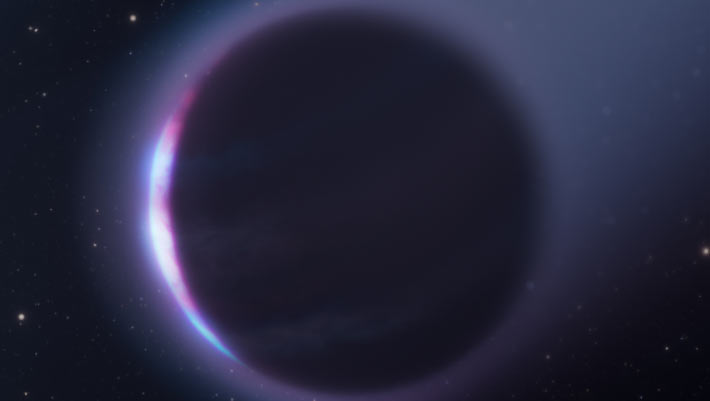
Astronomers have identified evidence for a possible “second-generation” planet that may have formed from the debris released by a dying star. The candidate world appears to orbit the hot, young white dwarf HS 0209+0832, located about 270 light-years away in the constellation Cetus.
A white dwarf with an unusual chemical fingerprint
Planets are generally thought to form alongside their stars. However, new research suggests that planets may also form later from material expelled by a dying star.
White dwarfs are dense remnants of Sun-like stars. Their atmospheres often contain metals delivered by shattered asteroids and other rocky bodies, with compositions that tend to resemble material found in our solar system.
HS 0209+0832 is a notable exception. The hot, young white dwarf is approximately 5 million years old and contains an unusual mixture of elements in its atmosphere.
“In 1999, using the Space Telescope Imaging Spectrometer (STIS) aboard NASA/ESA’s Hubble Space Telescope, we discovered the presence of carbon, aluminum, silicon, calcium, titanium, nickel, and zinc in the atmosphere, as well as 100 unidentified lines,” said Jamie Williams, an astronomer at the University of Warwick, and colleagues.
“The presence of helium and metals indicates continued accretion, but the nature of their external sources remained unknown.”
Niobium points to material from a dying star
For the new study, astronomers reanalyzed archival observations from Hubble’s STIS instrument, the FUSE and UVES instruments on ESO’s Very Large Telescope, and broadband photometric data from Pan-STARRS and ESA’s Gaia satellite.
They found that niobium was more than three orders of magnitude more abundant than in the Sun. The element was not detected in any of the other 33 metal-contaminated white dwarfs included in the comparison.
Nickel also appears to outnumber iron by at least a factor of two. In contrast, iron is the most abundant of these elements in the Sun, Earth, and primitive meteorites.
The unusual abundances are inconsistent with known material accreted from meteorites or other white dwarfs. The star also does not appear to be consuming volatile-rich icy objects.
“Niobium and other elements heavier than iron are astronomically special because, unlike many common elements, they are not formed in the centers of stars by thermonuclear fusion,” said Dr. Nicholas Stone, a theoretical astrophysicist at the University of Wisconsin-Madison.
“Rather, these heavy elements can only be synthesized in exotic conditions where they appear temporarily inside dying stars.”
“The existence of niobium is a signpost to the suffering of these ‘deaths’ and the release of the insides of dying stars into space.”
Could a second-generation planet have formed?
As the star expanded into an asymptotic giant branch (AGB) star, it may have produced heavy elements through the slow neutron-capture process, also known as the s-process. The researchers propose that stellar winds then released this enriched material into space.
According to their model, the material formed a disk around the star late in its life. Giant planets could have grown from this disk, making them “second-generation” planets that formed after the star’s original planetary system.
The AGB nucleosynthesis model accurately predicts the observed enrichment of niobium, nickel, copper, and zinc, while requiring little change in the abundances of oxygen, silicon, calcium, and iron.
The composition of HS 0209+0832 therefore indicates that the white dwarf may be accreting material from a second-generation planet candidate.
“If there’s a second-generation planet out there, I think it’s likely to survive,” Williams said.
“Eventually, the white dwarf cools down and maintains a constant temperature, and the planet remains in a stable habitable zone for millions of years.”
A possible planet signal from TESS
Data from NASA’s Transiting Exoplanet Survey Satellite (TESS) revealed changes in the white dwarf’s brightness that repeat approximately every 4.4 days. This period is considerably longer than the typical white dwarf rotation period of about 1.25 days.
The repeating signal may be caused by a day-night temperature difference on a giant planet orbiting at approximately 0.04 astronomical units (AU) from the white dwarf.
Further observations will be needed to determine whether the signal confirms the existence of the planet candidate.
“Rather than the white dwarf phase being a kind of epilogue to the story of stars and their planets, this study shows that the star systems we know so well are just the first chapter of a potentially much longer story with some new characters. That’s a very exciting prospect to pursue,” Williams said.
The team’s results were published this week in Nature Astronomy.
_____
JT Williams et al. Discovery of a second-generation planet candidate accreting on a white dwarf. Nature Astronomy, published online October 5, 2026. doi: 10.1038/s41550-026-02983-7
Source: www.sci.news