


Close Menu
HitechubHitechub
    What's Hot
    Technology

    Microsoft President Says AI Is Less Regulated Than Milk

    Science

    Do Dinosaur Fossils Dominate Top Scientific Journals? Study Sparks Debate Over “Charismatic” Discoveries

    Technology

    Ukrainian Drones Deploy Robots for Direct Combat from Land, Sea, and Air

    Important Pages:
    • About Us
    • Privacy Policy
    • Terms & Conditions
    Facebook X (Twitter) Instagram Pinterest
    Facebook X (Twitter) Instagram
    HitechubHitechub
    Wednesday, November 25
    • Shop
      • Fashion
        • Mens
        • Womens
        • Accessories
          • Handbags
          • Keychain
          • Masks
          • Money clicps
          • Neck Pillow
          • Rings
          • Towels
          • Wallets
        • Jewelry
        • Watches
        • T-shirts
        • Hawaiian shirts
        • Vests
        • Swim trunks
        • Swimsuits
      • Fun
        • Magic cubes
        • Magnifiers
        • Misc
        • Photo books
        • Puzzles
        • Toys
      • Home
        • Cleaning/Care
        • Mailbox covers
        • Mugs
        • Pot Holders
        • Spoon
      • Office and Electronics
        • Chairs
        • Office Supplies
        • IPad cases
        • Laptop stickers
        • Mouse pads
        • Notebooks
        • Pencil bags
        • Pens
        • Phone cases
      • Personalized
      • Pets
      • Sports
        • Cycling
          • Balaclava Mask
          • Bike Bell
          • Bike Computer
          • Bike Fender
          • Bike Grips
          • Bike Kickstand
          • Bike Light
          • Bike Locks
          • Bike Mitts
          • Bike Pumps
          • Bike Repair Stand
          • Bike Seat
          • Bike Trainer
          • Bike Wheels
          • BIKES
            • Folding Bikes
            • Road Bikes
          • Carbon Fiber Bike Products
          • Cycling Mask
          • Kid’ Bike Helmets
          • Inner Tube
          • Motorcycle Bag
          • Nylon Pedals
          • Adult Helmets
          • Photochromic Sunglasses
          • Soft Coolers
          • Suction Cup Bike Rack
          • Tool accessories
          • Winter Cloth
          • Heart Rate Monitor
        • Outdoors/Camping
          • Outdoor Bags
        • Sweatband
    • Technology
      1. AI
      2. Gadgets
      3. View All

      This is the most popular CEO in the world

      Sectors in which “Chat-GPT” is most often used

      Artificial intelligence has begun to “swallow” professions

      The unusual robot conductor of a concert in Seoul

      Here’s how you can tell if your phone is being tapped

      PlayStation 5 becomes a completely silent console and gets more space

      This is the first phone that can be used to park a car

      Best Gaming Laptops 2023: Powerful Portables for PC Games

      Growing Concerns About the AI Boom

      Why Small Cars Are Becoming More Popular Across Europe

      US Attorney General Declines to Answer Questions About NVIDIA Investigation

      Microsoft’s Historic Cloud Outage Exposes the Engineering “Fog of War”

    • Science
      1. Space
      2. Wheels
      3. View All

      Space Perspective: A Journey to the Edge of Space

      5 Fascinating Facts About Space

      Space Exploration: Unveiling the Wonders of the Universe

      Toyota wants to make a new generation battery with a range of up to 1,200 km

      Meet Toyota’s lunar “baby” that could make exploring the Moon easier

      What does a night drive look like with one of the most beautiful cars in the world: the Rolls-Royce Ghost

      Medieval Chain Mail Found in 15th-Century “Floating Castle” Shipwreck Off Sweden’s Coast

      Humanoid Robots Use Living Human Neurons to Enhance Thinking, Lab Says

      Archaeologists Reveal Powerful Iron Age King May Have Been a Woman

      Rising Food Prices in India: How Inflation Is Straining Household Budgets

    HitechubHitechub
    Home » How a Giant Space Mirror Can Boost Renewable Energy on Earth: Startup’s Innovative Approach
    Science

    How a Giant Space Mirror Can Boost Renewable Energy on Earth: Startup’s Innovative Approach

    Share Facebook Twitter Pinterest WhatsApp
    Share
    Facebook Twitter LinkedIn Pinterest WhatsApp

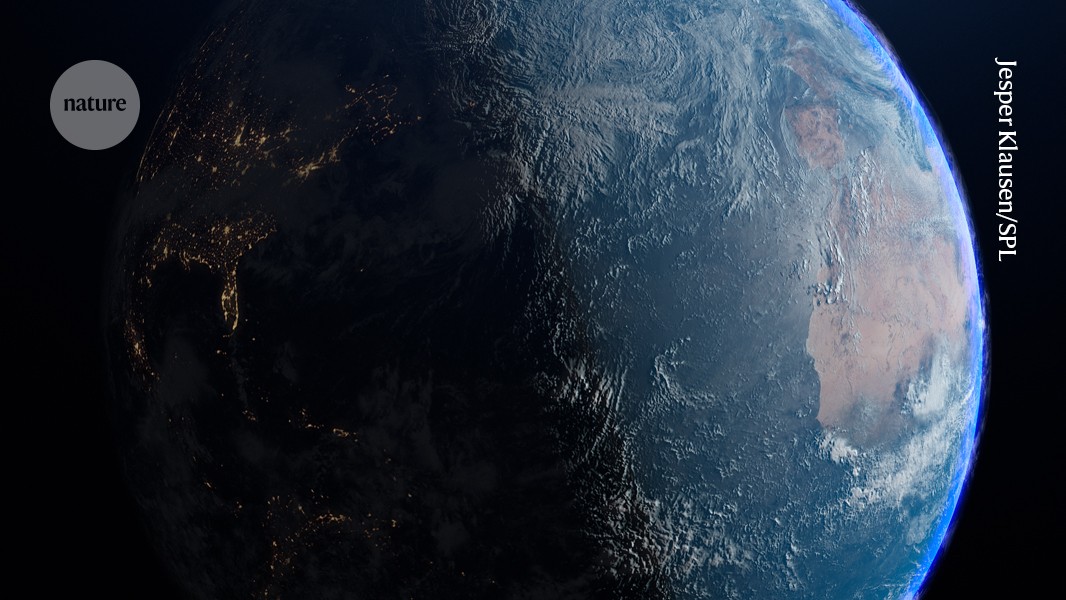
    Reflect Orbital’s mission is to illuminate the Earth’s nighttime zones.
    Credit: Jesper Klausen/Science Photo Library

    In a groundbreaking initiative, a risky plan to transform nighttime into daylight is nearing fruition. Recently, U.S. authorities granted approval for a project aimed at deploying a massive mirror in space, which will reflect sunlight onto the Earth’s shadowed regions. The startup leading this venture intends to place 50,000 mirrors in orbit by 2035, providing “midday light” to select locations.

    Based in Hawthorne, California, Reflect Orbital promises to create “clean, abundant energy on demand.” The company asserts that the “daytime” areas generated could boost agricultural yields, enhance natural disaster relief efforts, and enable solar panels to produce electricity during the night.

    AI Data Hub in Space: When Will It Launch?

    However, numerous astronomers are concerned that the beams emitted from these orbiting mirrors may disrupt sensitive telescope equipment and escalate light pollution. “Deploying 50,000 satellites would jeopardize ground-based astronomy, potentially ending optical astronomy as we know it,” warns Roohi Dalal, associate director for public policy at the American Astronomical Society in Washington, D.C.

    A spokesperson from Reflect Orbital countered that such claims illustrate a misunderstanding of their technology, asserting that they have instituted safeguards to prevent interference with astronomical research. The company has engaged with scientists and plans ongoing consultations, stating, “Feedback from the astronomy community is significantly shaping our spacecraft design and operational strategies.”

    Here’s an overview of Reflect Orbital’s aspirations and the considerations from the scientific community:

    Understanding the Technology: Objectives of the Test Mission

    Following approval by the US Federal Communications Commission on July 9, Reflect Orbital plans to launch its inaugural artificial satellite, Eärendil-1, into an orbit 625 kilometers above the Earth’s surface later this year. The satellite, roughly the size of a compact refrigerator, will deploy a mirror equivalent to a tennis court yet 28 times thinner than a human hair. These mirrors will be directed into sunlight at various test locations, allowing the Reflect Orbital team to assess the deployment and pointing mechanisms. The initial mirror is designed to illuminate an approximate area of 24 square kilometers of the Earth’s surface, with the capability to switch off the light as needed.

    “This initial satellite will serve as a proving ground, providing us the opportunity to demonstrate how we can positively impact the world without directing our light where it is unwanted,” states Ben Nowak, co-founder and CEO of Reflect Orbital. He notes that the team has developed numerous mirror prototypes and has plans for further test launches, collaborating with independent researchers to evaluate the effectiveness of their technology.

    Challenges and Considerations for this Technology

    The entire mission is considered “extremely risky, but we are willing to confront that challenge directly,” Nowak asserts.

    Like other satellite operations, even a minor error in hardware or software can lead to mirror deployment failures. “Simplicity is appealing,” comments Darren McKnight, a senior technical researcher at LeoLab, a spacecraft and debris tracking company based in Menlo Park, California.

    Moreover, once the mirror is deployed, Reflect Orbital must vigilantly track debris from other spacecraft orbiting Earth, as collisions with millimeter- or centimeter-sized debris are probable. Repeated impacts on a sensitive mirror could significantly diminish its effectiveness. Additionally, this operational altitude is populated with high concentrations of atomic oxygen, a reactive substance that can erode spacecraft surfaces and harm mirrors.

    Space Junk Is Falling from the Sky: Addressing This Growing Threat

    Source: www.nature.com

    Share. Facebook Twitter Pinterest LinkedIn WhatsApp
    Previous ArticleSan Francisco Demands Apple and Google Remove Nudify App from Their Stores
    Next Article Top 4 Walking Pads for Small Spaces and Standing Desks in 2026

    Related Posts

    Science

    Medieval Chain Mail Found in 15th-Century “Floating Castle” Shipwreck Off Sweden’s Coast

    Science

    Humanoid Robots Use Living Human Neurons to Enhance Thinking, Lab Says

    Science

    Archaeologists Reveal Powerful Iron Age King May Have Been a Woman

    Science

    Rising Food Prices in India: How Inflation Is Straining Household Budgets

    Science

    Can an Atom-Sized Black Hole Destroy an Entire Star?

    Science

    2-Million-Year-Old Australopithecus Jaw Reveals Bony Ridges Still Found in Modern Humans

    Science

    NASA+ Content Comes to the Big Screen at a Greenbelt, Maryland Movie Theater

    Science

    AI and the Future of Mathematics: Is It the End of Mathematics as We Know It?

    Add A Comment
    Leave A Reply Cancel Reply

    Stay In Touch
    • Facebook
    • Twitter
    • Instagram
    • Pinterest
    Top Picks
    Science

    Interstellar Solar Sails Face Unexpected Problems at 75% the Speed of Light

    Reaching another star in a practical timeframe will require propulsion technology far more powerful than…

    Captivating Fungi Photography: Discover the Intricate Beauty of Mushrooms

    Environmental Impact: What the Richest 10% Owe the Planet for Damage

    Diplodocus Fossils Discovered in Europe for the First Time, Suggesting Migration via an Ancient Land Bridge

    National Academy of Sciences Urges Scientific Journals to Correct Errors Faster

    Most Popular
    Science

    Giant Asteroid Hit the North Sea, Triggering a 330-Foot Tsunami

    Science

    Ancient DNA Reveals the True Story of the Mysterious American Cheetah

    Categories
    • AI (9)
    • Gadgets (6)
    • Science (3,574)
    • Space (3)
    • Technology (3,217)
    • Wheels (3)
    Our Picks
    Technology

    Rocket Report: Europe Invests Heavily in Space Startups as Pallas-1 Launch Nears

    Technology

    Google Confirms Gemini AI Model Hacked Three Companies in May 2026

    © 2026 Hitechub.
    • Home
    • About Us
    • Privacy Policy
    • Terms & Conditions

    Type above and press Enter to search. Press Esc to cancel.

    GDPR Cookie Banner

    We are using cookies to give you the best experience on our website.

    You can find out more about which cookies we are using or switch them off in .

    Ad Blocker Enabled!
    Ad Blocker Enabled!
    Our website is made possible by displaying online advertisements to our visitors. Please support us by disabling your Ad Blocker.