This Week’s Science News: Golden Tongue Discovery in Grave, Sugar Located in Space, New Monkey Species in Congo Rainforest, and Amateur Astronomers Explore Ancient Impact Crater
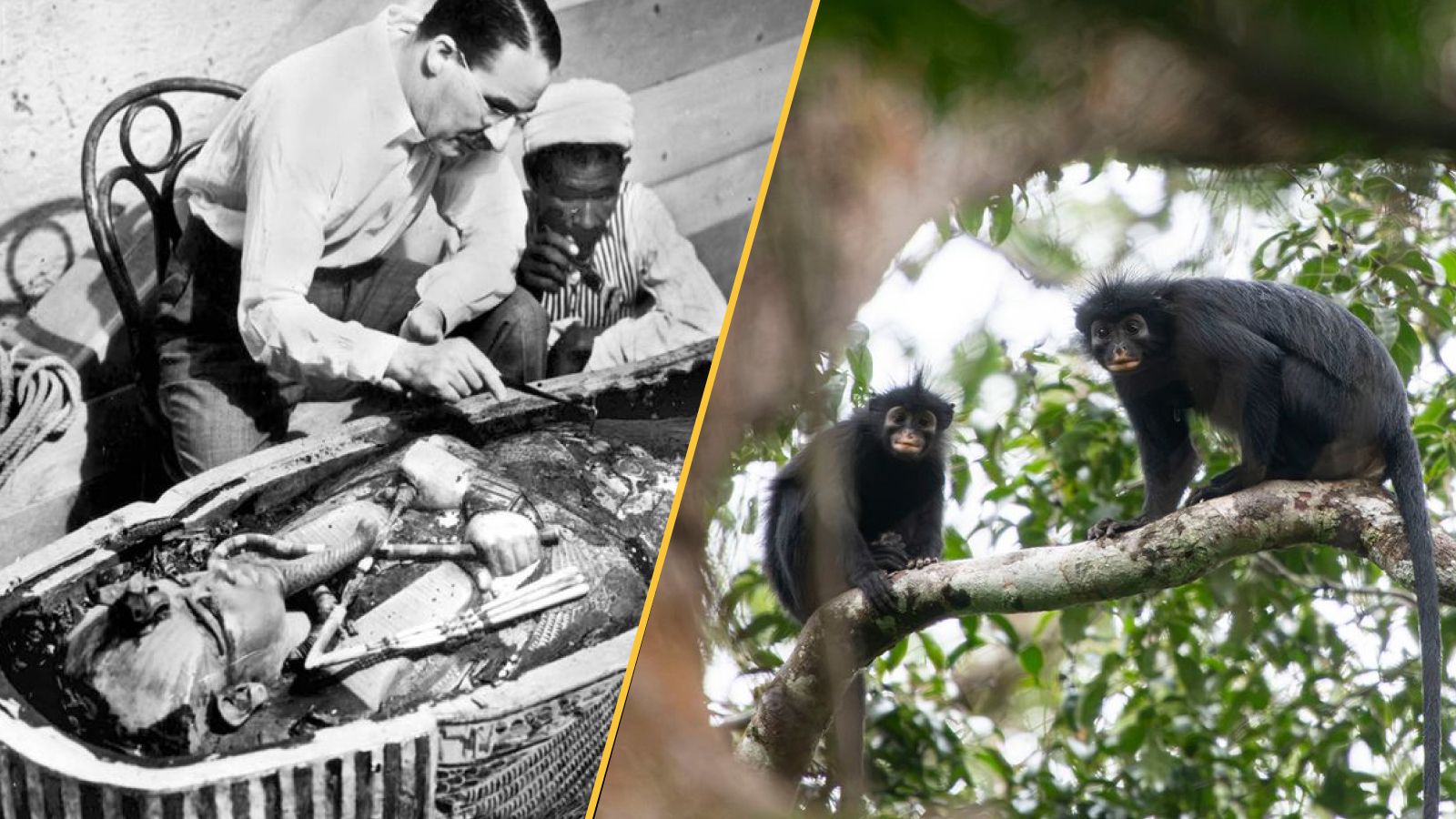
This week’s captivating science news highlights the ongoing discovery of the past, including the remarkable finding of 18 ancient Egyptian tombs adorned with golden tongues among other treasures.
The ancient Egyptians held a profound belief that gold represented the divine flesh of their gods. By placing a golden tongue with the deceased, they believed the individual could communicate in the afterlife. However, ambiguity surrounds whether these newly discovered golden objects are indeed tongues; some hypotheses suggest they could symbolize ears of wheat—a significant fertility emblem. The potential existence of a false door within the tomb has fueled further scholarly debate.
In addition, archaeologists have uncovered a peculiar ancient chariot linked to a mysterious society that incinerated its structures before vanishing. Other revelations include that ancient Bronze Age shamans previously thought to be male were actually female and investigations have uncovered the origins of over 150 freed Africans abandoned by the Royal Navy on St. Helena Island.
A Hubble image capturing the center of the Milky Way galaxy, where sugar was discovered in raspberry-forming clouds.
(Image credits: NASA, ESA, G. Brammer)
Astronomers were thrilled to announce the detection of erythroulose, a type of sugar, found in interstellar space close to the Milky Way’s center.
Erythroulose comprises four carbon atoms and is a known raspberry ingredient on Earth. Its cosmic presence provides a tantalizing hint of the abundant life’s essentials throughout the galaxy, suggesting that life may exist beyond our expectations—and perhaps aliens also enjoy a sweet treat.
Stay updated with the world’s most fascinating discoveries, delivered right to your inbox.
More Space News:
—‘Smaller than nature’s smallest scale’: physicists create black holes from light to test Stephen Hawking’s elusive radiation theory
—‘The moon looked wrong’: Artemis II mission controller Chris White captures historic lunar flyby photo from 450,000 miles away
—James Webb Telescope reveals visually striking scars of the ‘Centaur’ galaxy — Our Space Photo of the Week
Life’s Little Mysteries
What is the roundest animal?
Pill bugs curl up into a round ball to protect themselves.
(Image credit: lophius via Alamy)
Various animals exhibit unique shapes, but is there a true perfect sphere in nature? This question holds profound evolutionary significance.
—If you found this exciting, consider subscribing to the Life’s Little Mysteries newsletter.
Amateur Astronomers Explore Ancient Craters
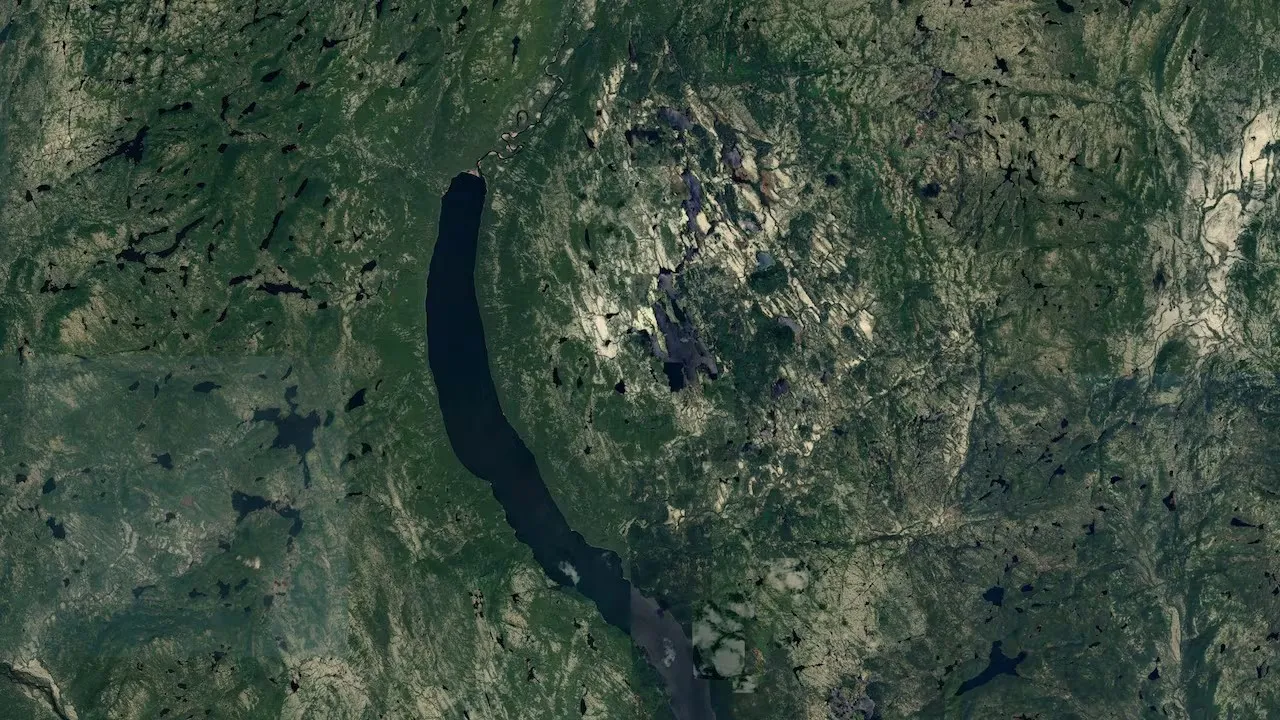
This large crater discovered in 2024 is a 390-million-year-old meteorite impact site.
(Image credit: Gordon Osinski via Google Earth)
Geoguessing has gained popularity in the last decade, enabling players to guess locations based on Google Map images. But what happens when unidentified geological features require insights from trained scientists?
In such cases, amateur astronomer Joel Lapointe emerges as this year’s standout. While planning a hiking expedition in Quebec’s Côte-Nord region, he discovered a dent that scientists identified as a 390-million-year-old impact crater left by a colossal asteroid.
“Numerous civilians have claimed to find craters, but 99 out of 100 have proven otherwise,” Gordon Osinski, a planetary geology professor at Canada’s Western University, confirmed through email communication. “This exceptional case highlights the feasible contributions of calculated public assistance.”
More Earth News:
—During an El Niño event, tropical forests cease CO2 absorption; this year could witness unprecedented levels.
—Venezuela’s devastating ‘double earthquake’ serves as a warning for California’s San Andreas fault.
—‘Alarming predictions’: The likelihood of a Super El Niño is increasing, potentially resulting in a humanitarian crisis.
—A Nobel Prize-winning physicist and team leverage Claude AI to tackle long-standing mathematical puzzles.
—Innovative 3D silicon chips are stacking circuits to improve computational power.
—A robotic dog adapts to stairs and forests, showcasing capabilities through rapid AI training.
—Scientists are flash-freezing koala eggs and sperm to avert extinction for the species.
—Tianhu: China’s deepest lake lies above a colossal volcano, most of which belongs to North Korea.
Your Weekend Activities
If you’re seeking weekend activities, explore our selection of engaging opinion pieces, interviews, diagnostic dilemmas, and crosswords published this week.
—‘Everyday life at risk’: A sea level researcher explains why unprecedented floods could become the standard [Interview]
—Diagnostic Dilemma: A teenager’s junk food diet leads to permanent blindness [Diagnostic Dilemma]
—Live Science Crossword Puzzle #52: 2 down — Another name for the moon [Crossword]
This Week’s Science Photo
The newly identified monkey, with orange lips and unique white fur patches, has been introduced to science.
(Image credit: Daniel Rosengren, Frankfurt Zoological Society)
A new monkey has made its debut!
Named colobus congoensis, this unique species, identified in a remote area of the Democratic Republic of Congo, features striking orange lips along with a distinctive roar and snort.
This finding is significant, especially since new primate discoveries are exceedingly rare—only five new primate species have been identified in Africa over the last 75 years. Locating this species required extensive tracking, documentation, and collaboration with local villagers familiar with the species.
Additionally, this find suggests that many more undiscovered species of mammals, fish, reptiles, and plants may be lurking within the Congo rainforest.