


Researchers at the Dresden-Rossendorf-Helmholtzzentrum (HZDR) are pioneering two innovative technologies aimed at effectively destroying per- and polyfluoroalkyl substances (PFAS), a complex class of industrial chemicals known for resisting conventional degradation processes.
The first method employs hydrodynamic cavitation, which generates and collapses miniature vapor bubbles within contaminated water. The second approach utilizes cold atmospheric plasma in conjunction with gas dispersion. Analysis conducted by the Helmholtz Center for Environmental Research (UFZ) revealed that PFAS molecules were successfully degraded, releasing fluoride during the treatment process.
If these technologies reach full commercial viability, they could enable industries to treat wastewater before it contaminates rivers, lakes, and oceans.
Challenges in PFAS Destruction
While certain PFAS chemicals are implicated in genetic damage and elevated cancer risks, the biological impacts of many compounds within this group remain largely unexplored. Over 10,000 short- and long-chain industrial chemicals are classified as PFAS.
The remarkable persistence of PFAS can be attributed to their exceptionally stable carbon-fluorine bond, one of the most robust bonds in organic chemistry. This durability has given PFAS the ominous nickname “forever chemicals.”
PFAS infiltrate rivers and oceans through wastewater and are now globally pervasive. Recent findings indicated significant levels of PFAS in the Elbe River, which may pose health risks to plants, animals, and humans alike.
As part of Germany’s National Water Strategy, designed to safeguard water resources and ensure the nation’s drinking water supply, HZDR scientists are investigating methods to significantly reduce PFAS contamination by systematically destroying these chemicals rather than merely relocating them.
The pilot study, initiated in 2022, has been spearheaded by postdoctoral researcher Dr. Isabel Huacaro Aguilar, who is exploring the efficacy of hydrodynamic cavitation in degrading PFAS in water.
The Extreme Conditions Created by Bubble Collapse
“Hydrodynamic cavitation involves channeling PFAS-laden water through a restriction, resulting in the formation of tiny vapor bubbles,” explains Dr. Sebastian Reinecke, Head of Water and Environmental Technology at HZDR.
Long-chain PFAS behave like surfactants, clinging to air bubbles. As water flows through the constriction, pressure builds and the bubbles collapse violently.
“When the bubble bursts due to increased ambient pressure in the downstream water, the PFAS adhered to the bubble experiences local temperature spikes reaching several thousand degrees Celsius,” Reinecke elaborates.
Cavitation additionally produces highly reactive hydroxyl radicals. These species readily engage with nearby substances, aiding in the breakdown of compounds generated during the early stages of PFAS degradation.
“We hypothesize that these radicals target intermediate products, substantially accelerating PFAS degradation,” Reinecke adds.
Huacaro Aguilar and her colleagues validated the effectiveness of cavitation in degrading PFAS in tap water, while also mineralizing organically bound fluorine. As treatment progressed, the fluorine levels measured in the water consistently increased, indicating successful separation from the original PFAS molecules.
The experiment focused on perfluorooctane sulfonate (PFOS), a well-known and highly persistent PFAS compound. By the experiment’s conclusion, around 37 percent of the dissolved PFOS molecules had been degraded, maintaining a stable degradation rate.
“We are currently conducting follow-up experiments aimed at enhancing the degradation rate,” Reinecke states. “Our objective is to refine the process to achieve over 80 percent degradation of PFAS in solution and mineralize more than 50 percent of the fluorine bound to the chemicals, effectively breaking the carbon-to-fluorine bonds characteristic of PFAS.”
Rapid PFAS Attack Using Cold Plasma
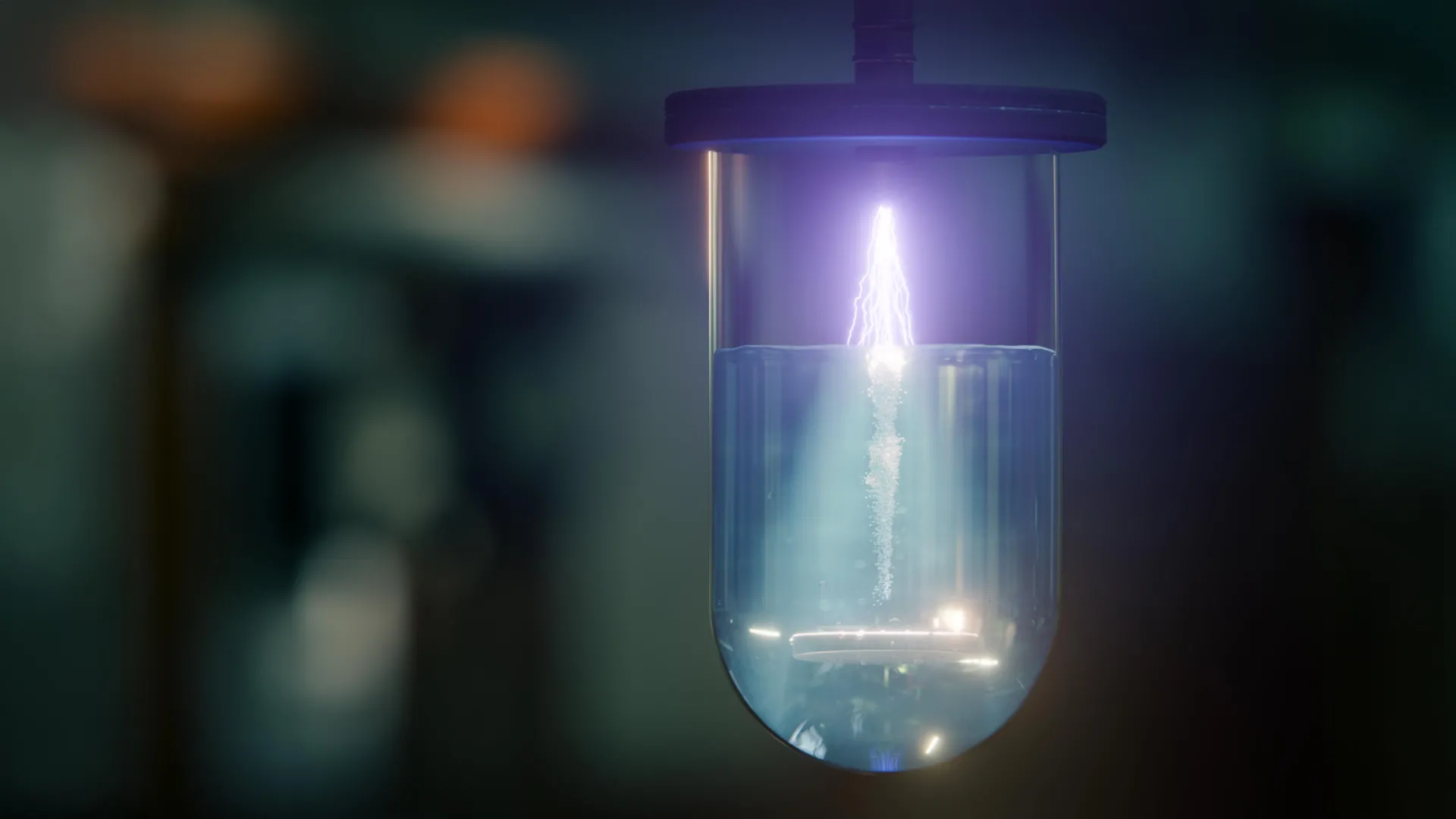
In a separate series of experiments, environmental engineer Dr. Amit Kumar applied a combination of cold atmospheric plasma and gas dispersion to dismantle PFAS.
This method operates under standard ambient conditions and does not require catalysts or additional chemicals. During his doctoral research, Kumar investigated how reactive species generated by plasma can disintegrate trace pollutants, applying his findings to PFAS experiments.
“We generated plasma on the water’s surface while simultaneously injecting gas into the PFAS-contaminated water,” explained Dr. Reinecke regarding the experimental setup. “PFAS attaches to the surface of the bubbles. As the bubbles rise, the water circulates continuously, bringing PFAS to the surface where plasma facilitates breakdown.”
Plasma treatment led to nearly complete degradation of both long- and short-chain PFAS, with about 35 percent of the fluorine atoms initially bound within the chemicals converted into fluoride salts.
Although the results were faster than those achieved through cavitation, this method has significant drawbacks.
“While this technique reacts much faster than cavitation, it also consumes considerably more energy per unit volume,” Reinecke cautions. “Moreover, this process generates transformation products yet to be thoroughly investigated, including gaseous compounds formed during the reactions.”
Ongoing experiments aim to ascertain whether these transformed products pose health risks, as researchers seek strategies to minimize the creation of potentially harmful substances.
Integrative Approaches: Combining Cavitation and Plasma
The research team is currently adapting the plasma system for large-scale treatment of contaminated water. They plan to extend the reaction volume from approximately 50 milliliters to 5 liters using multiple electrodes and a technical gas injector.
Their long-term goal is to integrate plasma treatment and hydrodynamic cavitation, leveraging the strengths of both technologies into a unified system.
“We believe that combining highly reactive species from the plasma with the cavitation effects will enable us to achieve high degradation rates,” Reinecke asserts.
Success in this combined approach could pave the way for innovative, efficient techniques aimed at eradicating PFAS in contaminated water before these persistent chemicals contaminate the environment.
This research received funding from the Impulse and Networking Fund of the Helmholtz Association through the Clean Water Technology Lab (CLEWATEC), a Helmholtz Innovation Lab (reference number HIL-A02). The projects “HyKaPro SAB-EFRE” and “Plasma4PFAS SAB-EFRE” receive co-financing from the European Union and by tax revenues approved in the state budget of the State Parliament of Saxony.
Source: www.sciencedaily.com