


Close Menu
HitechubHitechub
    What's Hot
    Science

    How Earth’s Water Enabled the Evolution of Intelligent Life – Cyworthy

    Science

    Ancient Human Settlement Unearthed at 2,000 Meters in the Mountains: Experts in Awe

    Science

    Atom-Based Quantum Computers: Accelerating Towards Practical Applications

    Important Pages:
    • About Us
    • Privacy Policy
    • Terms & Conditions
    Facebook X (Twitter) Instagram Pinterest
    Facebook X (Twitter) Instagram
    HitechubHitechub
    Wednesday, June 10
    • Technology
      1. AI
      2. Gadgets
      3. View All

      This is the most popular CEO in the world

      Sectors in which “Chat-GPT” is most often used

      AI Pioneer Expresses Concern About Potential for AI to Surpass Humanity

      Artificial intelligence has begun to “swallow” professions

      What’s new in Android 14

      Europeans have about 700 million old mobile phones in their drawers

      Here’s how you can tell if your phone is being tapped

      “Sneaker X” – computer case in the shape of a sneaker

      Russian Gamers Unite to Prevent Nuclear War: Join the Fight Online

      Challenges of Space Travel: Why Journeying to Space is So Difficult

      NASA Astronaut Casts Historic Vote from Space

      Discover the Future of Comfort: What If You Could Wear a Chair?

    • Science
      1. Space
      2. Wheels
      3. View All

      Galaxies in the universe are growing more slowly than they should

      “Espace” presented the new lander “Apex 1.0”

      The largest asteroid sample ever collected has arrived on Earth

      (VIDEO) Incredible flight of the Parker Solar Probe

      Toyota wants to make a new generation battery with a range of up to 1,200 km

      Meet Toyota’s lunar “baby” that could make exploring the Moon easier

      Microlino – Is this the perfect city car?

      Alfa Romeo 4C gets an electric successor

      Discover How Millions of Planets Could Form Around Supermassive Black Holes

      Unlocking Sloth’s Slow Lifestyle: The Ancient ‘Jumping Gene’ Explained

      Rapid Melting of Glaciers on the Roof of the World: Causes and Impacts

      Near Miss with Waymo: Why I’m Still Optimistic About Self-Driving Cars

    HitechubHitechub
    Home » NASA’s Stunning New Image Reveals the Incredible Power of a Supermassive Black Hole
    Science

    NASA’s Stunning New Image Reveals the Incredible Power of a Supermassive Black Hole

    Share Facebook Twitter Pinterest WhatsApp
    Share
    Facebook Twitter LinkedIn Pinterest WhatsApp

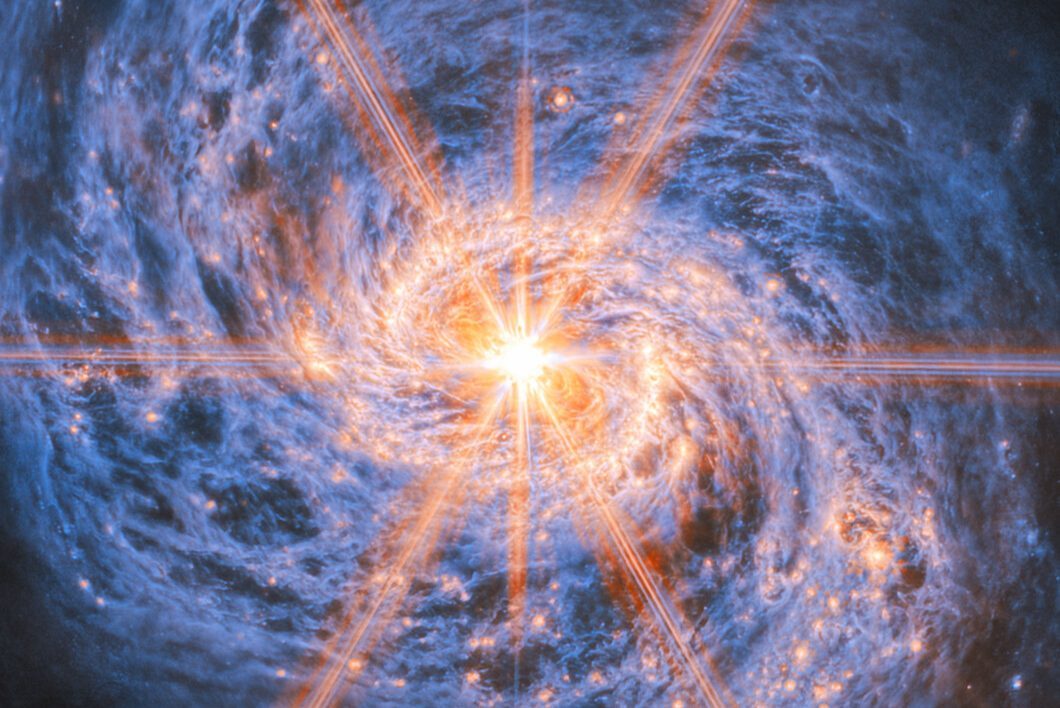
    Recent stunning images from the James Webb Space Telescope have unveiled new insights into one of the universe’s brightest spectacles.

    Messier 77 (M77), commonly referred to as the Squid Galaxy, features magnificent swirling tentacles of dust and gas that stretch deep into intergalactic space.

    What sets this galaxy apart, located 47 million light-years from Earth, are the brilliant rays of light emanating from its core.

    Recent observations highlight the extreme activity of this galactic nucleus. According to Dr. Darren Baskill, an astronomy lecturer at the University of Sussex, “Look how exceptionally bright the center of this galaxy is in comparison to the trillions of stars surrounding it,” as reported by BBC Science Focus.

    “For years, the reason behind the overwhelming brightness of galactic centers was a mystery. However, calculations and observations now suggest that significant amounts of gas are falling into the supermassive black hole at the center,” Baskill elaborates.


    Describing the sheer scale, M77 boasts a mass of approximately 8 million solar masses, making it twice as massive as Sagittarius A*, the supermassive black hole at the core of our Milky Way galaxy.

    Furthermore, there’s a crucial distinction, Baskill explains: “A vast quantity of gas is spiraling into a disk around the supermassive black hole at M77’s center. In contrast, our Milky Way’s center remains relatively tranquil, with only sporadic stars falling into its black hole.”

    “This disparity elucidates the striking brightness difference between M77 and our galaxy.”

    Read More:

    Source: www.sciencefocus.com

    Share. Facebook Twitter Pinterest LinkedIn WhatsApp
    Previous ArticleJoin The New Scientist Book Club: Exclusive Excerpt from Richard Dawkins’ “The Selfish Gene”
    Next Article Near Miss with Waymo: Why I’m Still Optimistic About Self-Driving Cars

    Related Posts

    Science

    Discover How Millions of Planets Could Form Around Supermassive Black Holes

    Science

    Unlocking Sloth’s Slow Lifestyle: The Ancient ‘Jumping Gene’ Explained

    Science

    Rapid Melting of Glaciers on the Roof of the World: Causes and Impacts

    Science

    Near Miss with Waymo: Why I’m Still Optimistic About Self-Driving Cars

    Science

    Join The New Scientist Book Club: Exclusive Excerpt from Richard Dawkins’ “The Selfish Gene”

    Science

    How Robots Are Set to Replace Armed Soldiers as Decision Makers in Warfare

    Science

    How Aliens Make First Contact with Humans: Unraveling the Truth

    Science

    Viral Injections Show Promising Results in Halting Pancreatic Cancer Progression in Three Patients

    Add A Comment
    Leave A Reply Cancel Reply

    Stay In Touch
    • Facebook
    • Twitter
    • Instagram
    • Pinterest
    Top Picks
    Science

    How Human Error Transformed into a Weapon Against Large-Scale Language Models

    Typos indicate human involvement in writing…for now. Marc de Simone/Alamy In a recent conversation over…

    Thriving Complex Colonial Life During the Cambrian Explosion: Unveiling Ancient Ecosystems

    5 Fascinating Facts About Space

    Deep neural networks do not see the world as we see it

    How Parenthood Can Impact Your Love Life: Keeping the Spark Alive After Babies

    Most Popular
    Science

    Where is the anti-universe where time flows backwards?

    Science

    Last Man on the Moon Shares Insights on Artemis II Mission Experience

    Categories
    • AI (13)
    • Gadgets (10)
    • Science (172)
    • Space (9)
    • Technology (37)
    • Wheels (9)
    Our Picks
    Wheels

    BMW XM surprises in a moose avoidance test

    Science

    Transforming Polystyrene with Sunlight and Sulfur: Innovative Upcycling Techniques – Sciworthy

    © 2026 Hitechub.
    • Home
    • About Us
    • Privacy Policy
    • Terms & Conditions

    Type above and press Enter to search. Press Esc to cancel.

    We are using cookies to give you the best experience on our website.

    You can find out more about which cookies we are using or switch them off in .

    Ad Blocker Enabled!
    Ad Blocker Enabled!
    Our website is made possible by displaying online advertisements to our visitors. Please support us by disabling your Ad Blocker.
    Go to mobile version
    Hitechub
    Powered by  GDPR Cookie Compliance
    Privacy Overview

    This website uses cookies so that we can provide you with the best user experience possible. Cookie information is stored in your browser and performs functions such as recognising you when you return to our website and helping our team to understand which sections of the website you find most interesting and useful.

    Strictly Necessary Cookies

    Strictly Necessary Cookie should be enabled at all times so that we can save your preferences for cookie settings.