


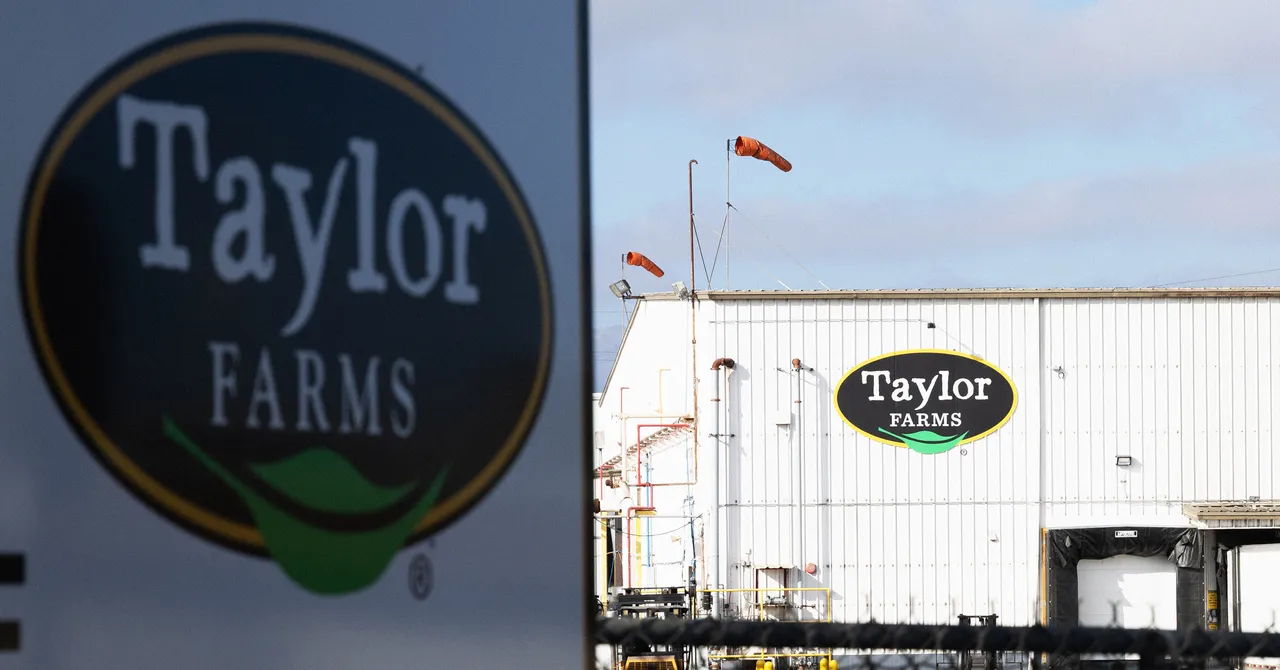
in the middle As the diarrhea storm continues, the Food and Drug Administration (FDA) and lettuce supplier Taylor Farms are engaged in a passive-aggressive technology dispute.
On July 17, the California-based Taylor Farms announced a voluntary recall of iceberg lettuce sourced from central Mexico. This recall follows reports of cyclosporiasis, a parasitic infection linked to the leafy greens, affecting individuals in at least five states.
The following day, the FDA revealed that a parasite was detected in a sample of Taylor Farms’ lettuce, which was not initially included in the recall. However, both the company and the FDA later clarified that this was a false positive.
“Today, the FDA apologized to us,” said Taylor Farms in an X account post on July 19.
However, the FDA disagreed with this interpretation. On July 20, agency officials stated that they did not issue a “public apology” to Taylor Farms, instead asserting they were providing “factual information” about the complexities involved in testing and tracing Cyclospora sources.
The FDA reiterated that the recall affects 27 states and includes specific lettuce sold to Taco Bell and Walmart. “To clarify, this false-positive test result does not alter the basis of the FDA’s ongoing outbreak investigation or the substantial epidemiological data supporting Taylor Farms’ current voluntary recall,” the agency posted on X.
In a July 19 update, Taylor Farms also stated that the FDA “has not identified any positive product tests for Cyclospora.” Although this is accurate, it overlooks the challenges associated with parasite testing.
Many food poisoning experts trace sources without directly testing products. Instead, they rely on epidemiological data, like interviews with affected individuals, to identify common factors.
Taylor Farms has reportedly challenged the methods used by the FDA and CDC in their weeks-long investigation of the outbreak’s source. A spokesperson informed The New York Times that the company met with White House and FDA officials to discuss what they termed “deficiencies” in the agency’s response. Reports indicate that Taylor Farms’ executives questioned the conclusions drawn by the FDA and CDC during a July 16 meeting, the day before the recall announcement.
Taylor Farms did not respond to WIRED’s request for commentary.
Since May, thousands have contracted cysticercosis, as health authorities struggle to identify the outbreak’s origins. Michigan officials have recorded 6,148 cases alone, with experts suggesting that the actual national case count is likely much higher.
Source: www.wired.com