


The global energy dilemma intensifies as fossil fuel supplies from the Middle East face disruption due to recent US and Israeli operations against Iran. With a heavy reliance on oil and natural gas, the world must transition to sustainable, low-carbon energy sources like solar and wind to mitigate severe global warming effects. This brings up the crucial question: what occurs during this transition phase? For at least the next decade, natural gas will be vital to meet rising energy demands, support intermittent renewable sources, and power advanced technologies like artificial intelligence.
But where will this essential gas come from? As established fossil fuel resources deplete, a new frontier is emerging: the deep ocean. Once challenging to access, advancements in technology are now enabling exploration thousands of meters below the ocean surface. This quest includes the deep-sea zone, a nearly pitch-black layer of ocean lying 4,000 to 6,000 meters beneath this surface.
4 Deep-Sea Technologies That Could Detect Deadly Earthquakes and Tsunamis
Investment in deepwater oil and gas extraction is surging, forecasted to exceed USD 200 billion by 2026—doubling the average of the past decade. An estimated $2.5 trillion is projected for deep-sea drilling between 2026 and 2035.
Nevertheless, the deep ocean is vulnerable. Its remote nature makes it scientifically under-monitored, ecologically slow to recover, operationally hazardous, and legally challenging to manage. As the oil and gas industry ventures further offshore, enforcing inspection, liability, and remediation becomes increasingly complex.
The primary concern isn’t whether to tap into deep-sea resources; rather, it revolves around energy security (see Energy Trends). Nonetheless, sacrificing biodiversity should never be an acceptable cost of operation.

Source: Top: Energy Association – Statistical Review of World Energy (June 2025); Bottom: Global Energy Monitor’s Global Oil and Gas Extraction Tracker (February 2025).
To strike a balance, each project should be assessed individually, only proceeding if operators can prove that environmental harm is minimized, emissions are verifiable, accountability is ensured, and liability extends beyond the production phase.
Offshore Drilling Boom
Recent advances in offshore drilling are reshaping the global energy landscape. Over 70% of the “proven and probable” reserves discovered by seven publicly traded, investor-owned international oil companies in the past decade are found in deep-sea waters (approximately 400 meters). Such deep-sea reservoirs typically yield deposits 16 times larger than their terrestrial counterparts.
However, deep-sea operations are far from simple. The water at great depths poses severe challenges: extreme cold (just above freezing) and immense pressure (hundreds of times that of the atmosphere). Only a select group of 15 to 20 oil companies possess the technical expertise and financial capacity necessary to thrive in these conditions.

Trust in Seabed Mining Authorities is Fragile – Here’s How to Change It
Drilling campaigns and licenses can cost hundreds of millions to billions of dollars. Yet, by utilizing modern subsea systems, floating facilities, and innovative digital operations, deepwater projects have become economically viable. Current oil prices from such sites average about $43 per barrel, comparable or even lower than many US shale fracking projects.
Deepwater mining is primarily concentrated in the lucrative Golden Triangle of the U.S. Gulf of Mexico, as well as in Brazil and West Africa. In Brazil, significant discoveries have driven oil prices down to between $30 and $40 per barrel. The U.S. Gulf of Mexico enjoyed a remarkable year in 2025, with floating production facilities like Shell’s Whale and Beacon Offshore’s Shenandoah contributing an additional 350,000 barrels of oil equivalent per day—the largest increase in a decade. Emerging regions like Guyana’s Stabroek field and Namibia’s Orange Basin are also drawing monumental investments.
Deepwater resources are becoming increasingly crucial for national energy security, particularly in countries reliant on fossil fuel imports, such as China, which imports 70% of its oil and 41% of its gas.
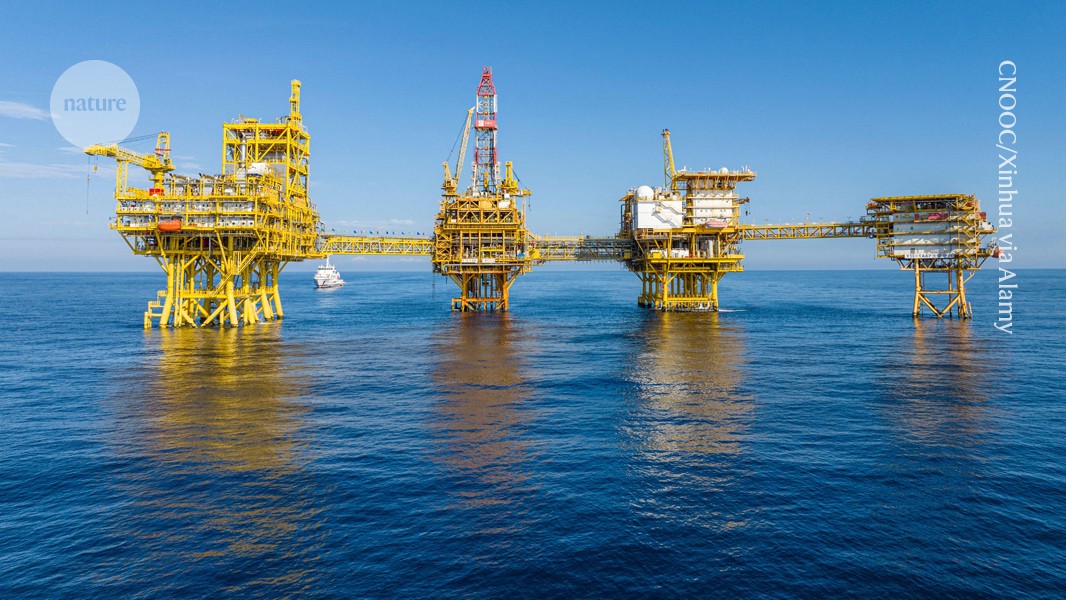
Since 2022, the China National Offshore Petroleum Corporation has launched extensive drilling projects in the South China Sea and Bohai Sea. One flagship undertaking (Deepwater No.1) generated enough natural gas (4.5 billion cubic meters) to cover a quarter of the energy demand in the Guangdong-Hong Kong-Macau Greater Bay Area by 2025. China’s 15th Five-Year Plan, announced in March, identifies the ocean economy as a vital growth pillar, with sector sales already surpassing 11 trillion yuan (around USD 1.6 trillion), accounting for 8% of its GDP.
Technological Feat
Unlocking deep-sea resources is set to require extraordinary engineering advances. For instance, methane reservoirs (known as ultra-shallow gas) located 300 to 500 meters below the ocean floor have historically posed dangers to deep-sea drilling, contributing to over 20% of ocean blowouts that lead to uncontrolled oil and gas releases.1 However, this resource can be safely extracted. Under low-temperature and high-pressure conditions, methane escaping from within sediment can crystallize into mineral caps. Engineers can pinpoint and preserve this cap using seismic imaging, remote sensing, and digital modeling before carefully drilling.
The Lingshui 36-1 oil field project in the South China Sea, the world’s first large-scale, ultra-deepwater (over 1,500 meters deep) ultra-shallow gas field, serves as a model for re-evaluating this previously overlooked energy resource.
The industry is also shifting towards a “whole ocean” development approach, integrating exploration, subsea wells, pipelines, floating production facilities, and digital practices.
In terms of exploration, cutting-edge seismic surveys, image processing, and AI-driven interpretation techniques allow geoscientists to quickly assess reservoirs, faults, and drilling hazards.2 For production, borehole sensors track critical metrics such as pressure, temperature, flow, vibration, strain, and fluid composition, enabling operators to modify drilling and production controls in real-time.3.
A digital twin model—a real-time computer simulation of the entire system—integrates physics-based simulations with sensor data to detect issues like corrosion, fatigue, leaks, and abnormal loads before failures occur. Moreover, remotely operated vehicles (ROVs) and autonomous underwater vehicles (AUVs) can inspect underwater structures and logistics that are arduous to reach using manned vessels.

Divers assess the underwater infrastructure of Deep Sea No. 1, which supplies natural gas to a region in China.
Credit: CNOOC/Xinhua via Alamy
On land, offshore operations contend with challenges such as typhoons, elongated supply lines, crew rotations, tanker unloading, and emergencies. AI-based monitoring and drone-assisted inspections are essential to maintain production even under severe conditions.
Floating production storage and offloading vessels are prevalent in deep-sea operations. These multi-functional vessels sit above the well, collecting fluids through a riser pipe, separating oil, gas, and water onboard. Crude oil is stored in hull tanks, which can then be transferred to tankers. Gas may be exported, reinjected into wells, or allocated for power projects. For instance, in the South China Sea, Haikui 1 has a processing capacity of around 5,600 tons of oil daily, can store 60,000 tons of oil, and can operate offshore for up to 15 years without returning to shore.
Costs have been reduced by employing standard components and structural designs. Modular construction has shifted much of the manufacturing and testing to onshore sites, allowing pre-assembled modules to arrive offshore, ready for quick lifting, assembly, and commissioning. This innovation also allows for wellhead foundations to be installed in five days instead of ten.
The next step is to standardize these technologies across the industry. Validated digital twins, robotic inspections, durable subsea sensors, and real-time methane and integrity reporting should become routine for oil and gas companies.
Beyond just energy supply, trillions of dollars allocated for deepwater oil and gas are constructing the industrial platforms of tomorrow.
Materials designed to withstand pressure, corrosion, fatigue, and low temperatures—such as specialized foams, corrosion-resistant alloys, flexible materials, and insulation systems—are being adapted for use in aerospace and geothermal energy.
Advanced sensing technologies including laser-based methane spectrometers, pressure-resistant acoustic systems, and high-precision thermal detectors can facilitate the autonomous inspection of hydrogen leaks and coal mine hazards.
Pipelines, power and communication connectors, modular facilities, and marine bases can also be redirected for tasks such as carbon transport and storage, nuclear decommissioning, polar logistics, and urban infrastructure.
Environmental Responsibility
However, this journey is fraught with challenges. The deep sea faces ongoing environmental and legal disputes over how to harmonize energy security, climate accountability, biodiversity conservation, and seabed resource management.
The contribution of fossil fuels to climate change is ever pertinent. Methane, the primary component of natural gas, is a potent greenhouse gas. Satellite observations (from initiatives like MethaneSAT and Sentinel-5 Precursor) indicate that emissions from offshore gas venting and flaring at wells may be significantly underreported, with real figures averaging 50% higher than official estimates.
For accountability, coupling satellite monitoring with independent verification is crucial. When anomalies are detected from space, drones, ROVs, and AUVs should be deployed for onsite inspections of platforms and pipelines to catch leaks early. Methane sources, flares, and leaks require validation against company disclosures and national inventories. Projects that can’t confirm low, verifiable emissions may face penalties such as stricter import regulations, higher methane guidelines, elevated insurance premiums, and financing predicaments.

Why Increased Drilling Doesn’t Need to Increase Negative Environmental Impact
The possibility of a catastrophic oil spill is an alarming reality. The 2010 Deepwater Horizon disaster stands as a stark reminder of the risks involved. One failed deepwater well disgorged over 3 million barrels of oil in 87 days, devastating more than 1,600 kilometers of coastline before capping the leak. Ensuring safer drilling involves having remote, rapid-deployment anti-blowout barriers that can operate effectively under high pressure, strong currents, and low visibility.
Worryingly, interest in deep-sea mining is intensifying while international control over seabed resources becomes increasingly decentralized. Most offshore oil and gas projects fall under the jurisdiction of coastal states in their exclusive economic zones or continental shelves. Yet, in remote areas of the ocean, regulatory oversight is scant.
Source: www.nature.com