


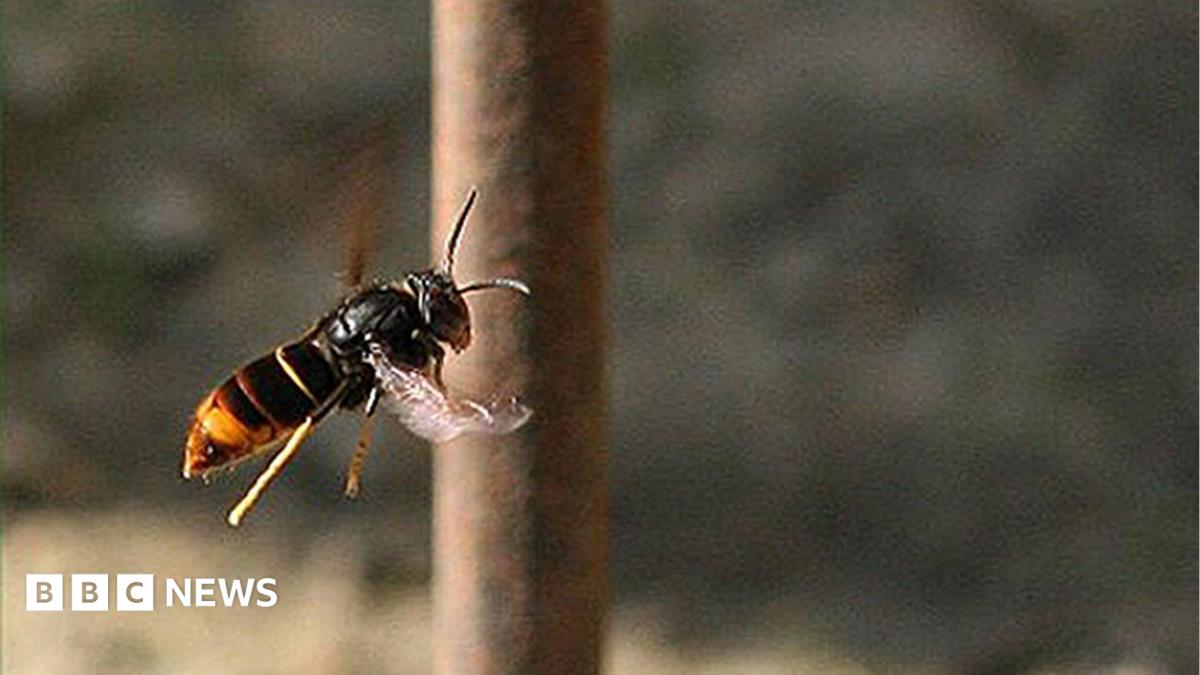
Residents of Guernsey are encouraged to “chase” the Asian hornet instead of “trampling” it, vital for safeguarding public health and the region’s biodiversity.
The Asian hornet has spread across Europe since its arrival in southern France in 2004 via a pottery shipment from Asia.
First identified in Guernsey in 2017, this invasive species poses a significant threat to local biodiversity and honeybee populations, which provide about 39% of the island’s diet, according to U.S. government sources.
The goal is to maintain a low hornet population, and residents are urged to report any sightings to facilitate the destruction of primary nests.
State authorities have emphasized the importance of tracking this invasive species, external. Islanders should take photos of the hornets and observe their flight patterns before submitting information., external.
This year alone, 205 queen Asian hornets have been captured, and nine significant nests have been destroyed across Guernsey and Herm.
Annelotte Barth-Jehan, Invasive Species Policy Coordinator, highlighted the crucial role of volunteers in capturing these hornets.
“Their efforts are vital,” she noted, adding, “With their observations, we can locate the hornet nests and ensure safe and effective removal.”
The U.S. government has advised islanders against attempting to remove nests themselves, as these can rapidly increase in population from August to September, potentially hosting up to 2,000 hornets.
The hornets can be found in tall trees, hedges, brambles, and buildings.
“Always inspect for signs of activity before trimming hedges or vegetation,” authorities advised.
Source: www.bbc.co.uk