


NASA’s SSPICY Mission Puts Starfish Space’s Otter Servicing Spacecraft to the Test
Starfish Space is preparing for a major test of its Otter spacecraft as part of NASA’s SSPICY mission. The mission will evaluate the company’s autonomous rendezvous, docking, and in-orbit servicing technology.
“All of this is going to start being tested,” Bennett said of the SSPICY mission. “But then there will be an opportunity to do something more with the rest of Otter’s life.”
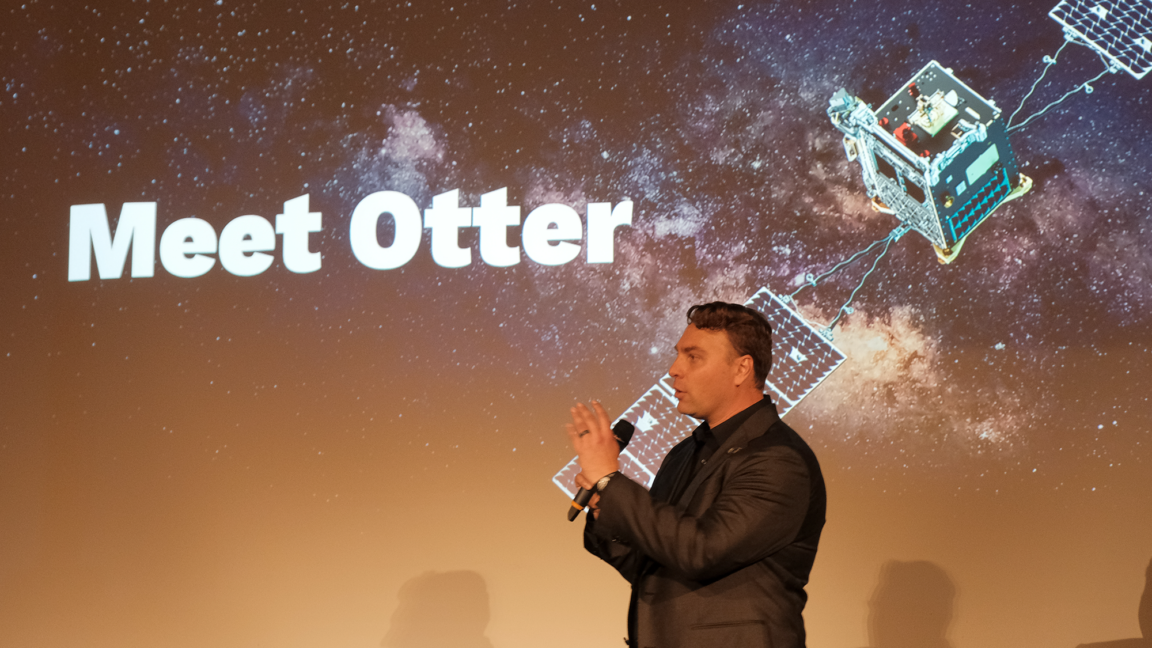
Otter spacecraft used for SSPICY mission.
Credit: Starfish Space
Starfish Space is focused on in-orbit servicing
Starfish Space has been around for seven years, and Bennett and Link have kept the company fairly small. The company has about 120 employees and has raised about $150 million to date.
Rather than developing an entire spacecraft from scratch, Starfish chose to procure the spacecraft bus from AstroDigital. That allowed the company to focus on the software and maneuvering technology needed for precise rendezvous and docking, along with the ability to remain in orbit for long periods and service multiple spacecraft.
A long and winding road to autonomous docking
Starfish Space has conducted several demonstrations over the years. Its first mission, Otter Pup 1, launched in 2023. However, the external orbital transport vehicle malfunctioned, and the Otter Pup 1 spacecraft was prematurely ejected at a rotation speed of 330 degrees per second.
The Starfish team spent several weeks recovering the spacecraft, but one of its thrusters eventually failed.
Two subsequent demonstration missions were more successful. Otter Pup 2 launched in 2025 and flew close to a target spacecraft in low Earth orbit. The vehicles have come within 1 kilometer of each other, and if all goes well, docking is expected to take place in the coming months.
Starfish also partnered with Impulse Space last summer, using its software to fly the Mira spacecraft after it completed its main mission. The goal was to demonstrate that a single lightweight camera system and Starfish’s closed-loop guidance, navigation, and control software could autonomously rendezvous with another spacecraft.
It worked.
NASA’s SSPICY mission will be the biggest test yet
The next step is flying a full-fledged Otter for NASA. Starfish is producing five more Otters for additional missions that will demonstrate docking, deorbiting, and spacecraft life-extension capabilities.
“You always get nervous when you see something flying for the first time, right?” Bennett said. “The other part is a tremendous amount of excitement. I think the excitement is because this is a new kind of capability that’s getting off the ground. The proud part is the amount of effort it took to get here, from ourselves, our team members, the people we work with, and our customers who believed this could happen and helped us get there.”
“This is a moment of celebration for being here and having the opportunity to do something big,” he said.
Source: arstechnica.com