


PhD Third-Year Slump: How to Regain Motivation When Research Stalls
Illustration: David Perkins
Why PhD students lose motivation
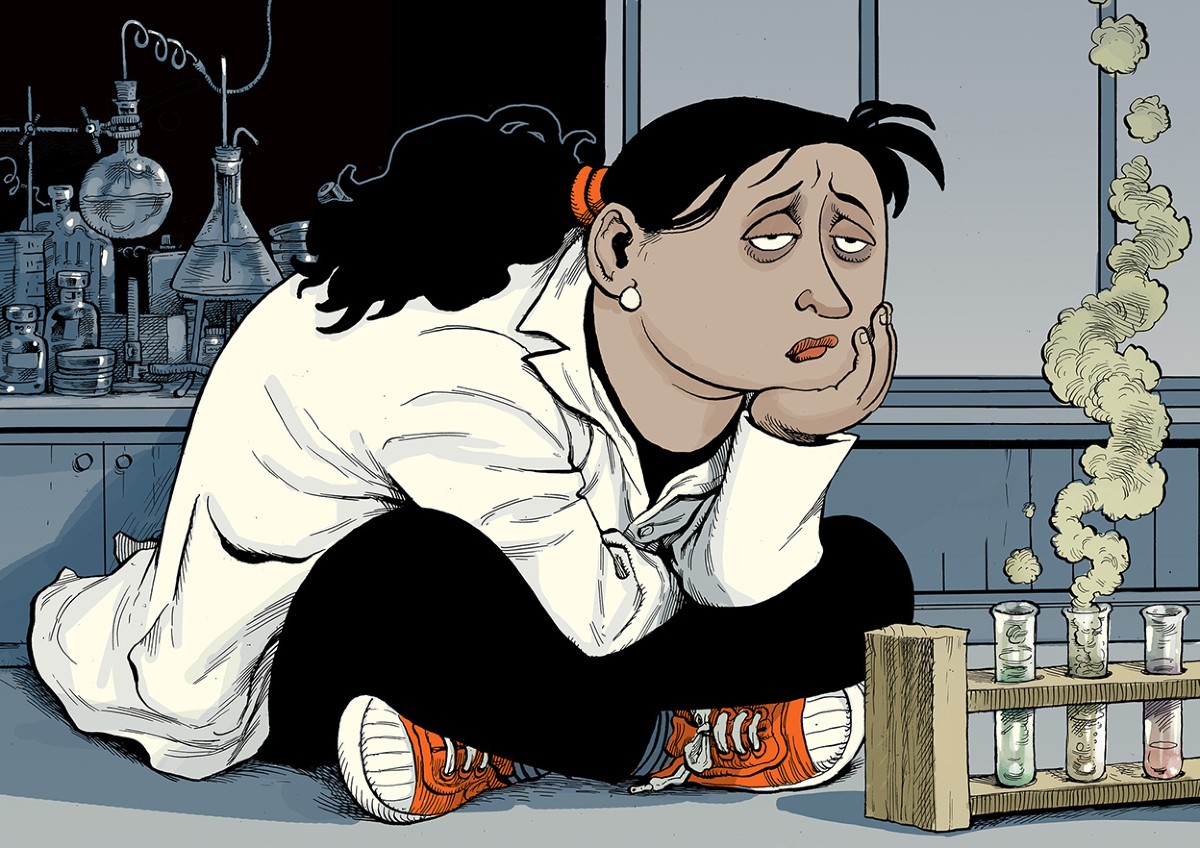
It is common to experience a lull during a doctoral programme. In fact, there is even a term for it: the “third-year slump”. As the novelty and excitement wear off, students may start to recognize the limits of their knowledge, explains Vicki Wright. Previously a higher-education researcher at the University of Birmingham in the UK, Wright now works as a life coach and podcaster for PhD students.
The working environment can also change during a PhD. Moving from the laboratory to spending more time in front of a screen can bring unexpected challenges. “It’s normal to notice some strange changes and wonder what the new normal will be like,” Wright says.
If your energy levels suddenly change, it is worth checking with your doctor to see whether there is a physical cause. But a loss of motivation may also relate to discipline and agency. Nicole Burns, who leads education efforts at the American Psychological Association in Washington, DC, suggests that “the problem is not motivation, but agency. When effort does not lead to progress, the system teaches us to conserve energy.”
“Before you interpret your current feeling of fatigue as a sign that you no longer belong, it might be worth looking at what happens when your plans change,” Burns advises. “Oftentimes, when you get that sense of agency back, you feel energized.”
Make a clear plan with your supervisor
To tackle your PhD work more effectively, explain your situation clearly to your supervisor. They may be overloaded with work and may not be paying enough attention to you. Wright says: “Sometimes you just have to say, ‘Look, we need to make some plans here,’ and nail that down in a serious conversation.”
Alongside developing a “Plan B”, such as another project, you and your principal investigator need to establish what will trigger it, Wright says. The trigger could be time-based or event-based. For example, an explicitly denied request for clinical data, or a lack of feedback on a project for a set period, could signal that it is time to change direction.
“Importantly, the new plan must include small, well-defined steps that will result in measurable progress in the short term,” Burns says. “Momentum matters.” These manageable steps might include working on methodological papers or narrow mini-projects using available data.
Avoid all-or-nothing thinking about your PhD
Taking gradual steps can help you avoid the difficult decision of whether to stay in the programme or leave immediately. Wright considers this “an example of all-or-nothing thinking”. It is not an either-or situation: “There’s a huge range in between. And when you lock yourself into a box of ‘I have to be perfectly happy or break up’, it’s not as easy to move forward.”
Wright suggests setting aside a defined period of time, perhaps two months, to clarify why you do not feel that you are working hard enough towards your degree. Use that time to consider whether you want to put more effort into the PhD or direct more energy towards other activities. By the end of that period, you should have the information needed to make your next decision.
Seek support if your PI is not helping
If your principal investigator is not helpful despite your best efforts, Wright suggests finding someone else to talk to informally about what is making you feel stuck. This could be the programme director or the head of graduate studies.
If the department is small, or the principal investigator is a colleague of the informal adviser, finding and speaking directly to that person can be sensitive. Wright nevertheless advises starting these conversations early.
Luis Prieto, an educational-technology researcher and blogger at the University of Valladolid in Spain, emphasizes through Happy Ph.D. that “it’s normal to feel frustrated and guilty about the current situation”.
Find balance and reshape your work
One constructive response is “job crafting”. This means reflecting on the aspects of your work that you like and emphasizing them, as far as you can, while de-emphasizing the aspects you dislike.
For example, if you feel disconnected from your colleagues, you might benefit from going into the field more often or scheduling regular online coffee breaks with your lab mates. Prieto says colleagues may be able to offer creative suggestions to help you break out of a slump.
Source: www.nature.com