


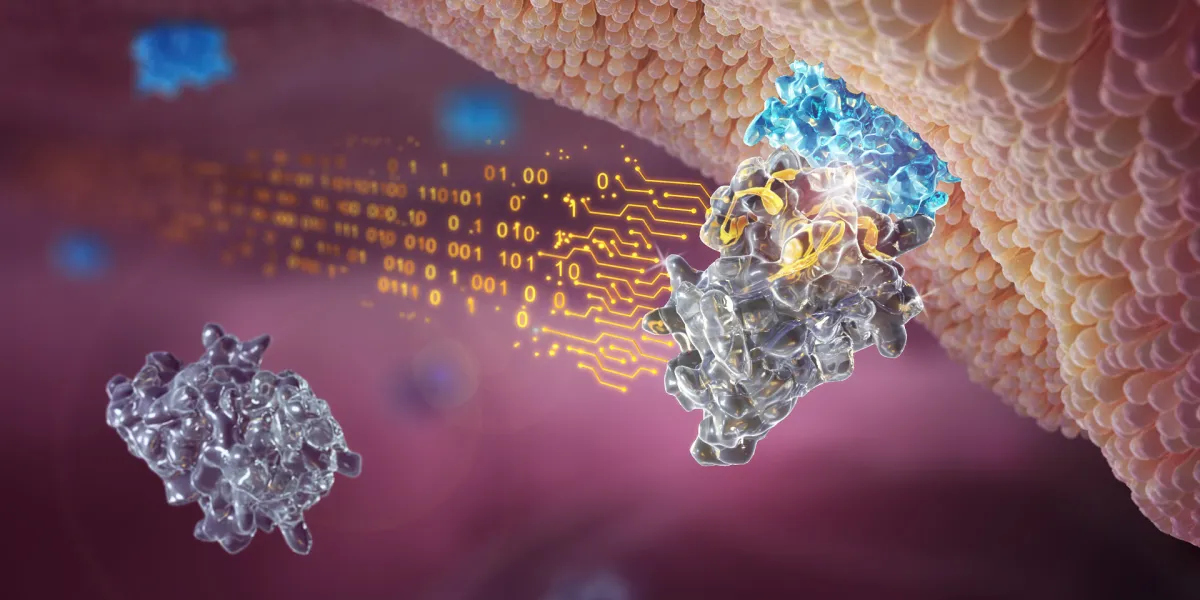
AI-assisted drug design is transforming the development of biologic drug candidates. Leading companies like AstraZeneca are bolstering their engineering teams to harness this technology effectively. “Everything we do—design, manufacturing, testing, and analysis—is now computer-enhanced,” states Puja Sapra, AstraZeneca’s Senior Vice President and Head of Research, Development, Biologics Engineering, and Oncology Target Discovery. “As a result, both cycle times and innovation are increasing.”
Sapra elaborates on AstraZeneca’s iterative “build-measure-learn” approach. AI rapidly generates and prioritizes candidate molecules, predicting which designs have the highest chance of success. This allows scientists to concentrate lab resources on the most promising candidates, leading to tighter feedback cycles, fewer dead ends, and faster iterations. Consequently, it enables the pursuit of disease targets that were once deemed untreatable. The complexity of potential molecular combinations far exceeds human capabilities, making AI essential in refining test options in biologic drug design.
Addressing Complex Drug Design Challenges
In addition to speeding up timelines, AI is facilitating the discovery of entirely new categories of medicines. Traditional biologics target specific disease pathways, while next-generation drugs can engage multiple targets simultaneously or deliver therapeutic agents directly to targeted cells. Achieving this involves optimizing numerous variables simultaneously. Looking ahead, Sapra asserts that AI-driven models can create sophisticated multi-specific biologics. “For example, these models can determine which two or three targets to prioritize based on biological insights and optimize multiple parameters for efficacy, stability, manufacturability, and safety,” she explains. “Utilizing drugs for previously untreatable conditions is becoming a reality,” adds Sapra, highlighting the remarkable potential for patient benefits.
Creating a Data Moat
According to McKinsey, the integration of Generative AI with various computational tools could reduce drug discovery times by up to 50%. However, the success of any AI model is contingent on the quality of its training data. In drug discovery, this translates to requiring substantial amounts of high-quality biological data derived from experiments that provide critical insights, regardless of success or failure.
“Data is our differentiator,” states Sapra, elaborating on how AstraZeneca’s unique, multimodal dataset encompasses molecular structures, binding measurements, safety profiles, and manufacturing results. “We’ve developed a diverse portfolio across various disease areas and drug types. This comprehensive data enables us to refine our Frontier AI models with richer, more representative training sets,” she adds.
Developing an Autonomous Detection Engine
To consolidate all this data, AstraZeneca is building a “Lab of the Future” facility in Kendall Square, Cambridge, Massachusetts. This lab will leverage AI and robotic automation to create a continuous closed-loop detection system. “Just as self-driving cars use sensors and models for navigation, our system employs AI for predictions, robotic systems for experiment execution, and equipment for data generation,” explains Sapra. The collected data is then fed back into the model, expediting subsequent cycles.
“Throughout this process, scientists remain pivotal, providing oversight and strategic direction to ensure outcomes are explainable, acceptable, and focused on potential benefits for patients,” she emphasizes.
Ultimately, these automated high-throughput systems aim to generate and evaluate thousands of molecular interactions weekly. “This AI-enabled data generation operates on a scale that traditional workflows cannot match,” Sapra concludes. “Robotic sample processing, automated quality checks, and integrated data pipelines will significantly enhance early drug development timelines.”
Source: www.technologyreview.com