


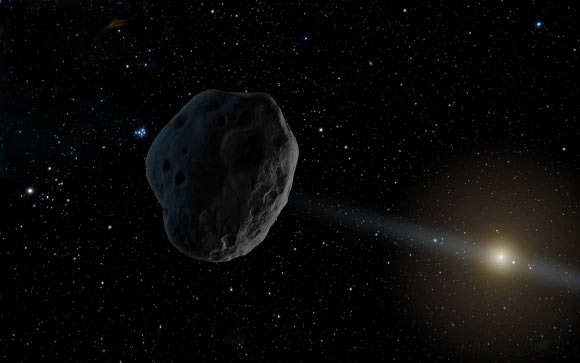
Near-Earth object (875163) 1998 SH2, initially classified as an asteroid, has unveiled a surprising transformation. Recent findings suggest that it may, in fact, be a comet in disguise. According to new research published in the journal Nature Astronomy, this discovery could reshape our understanding of such objects.
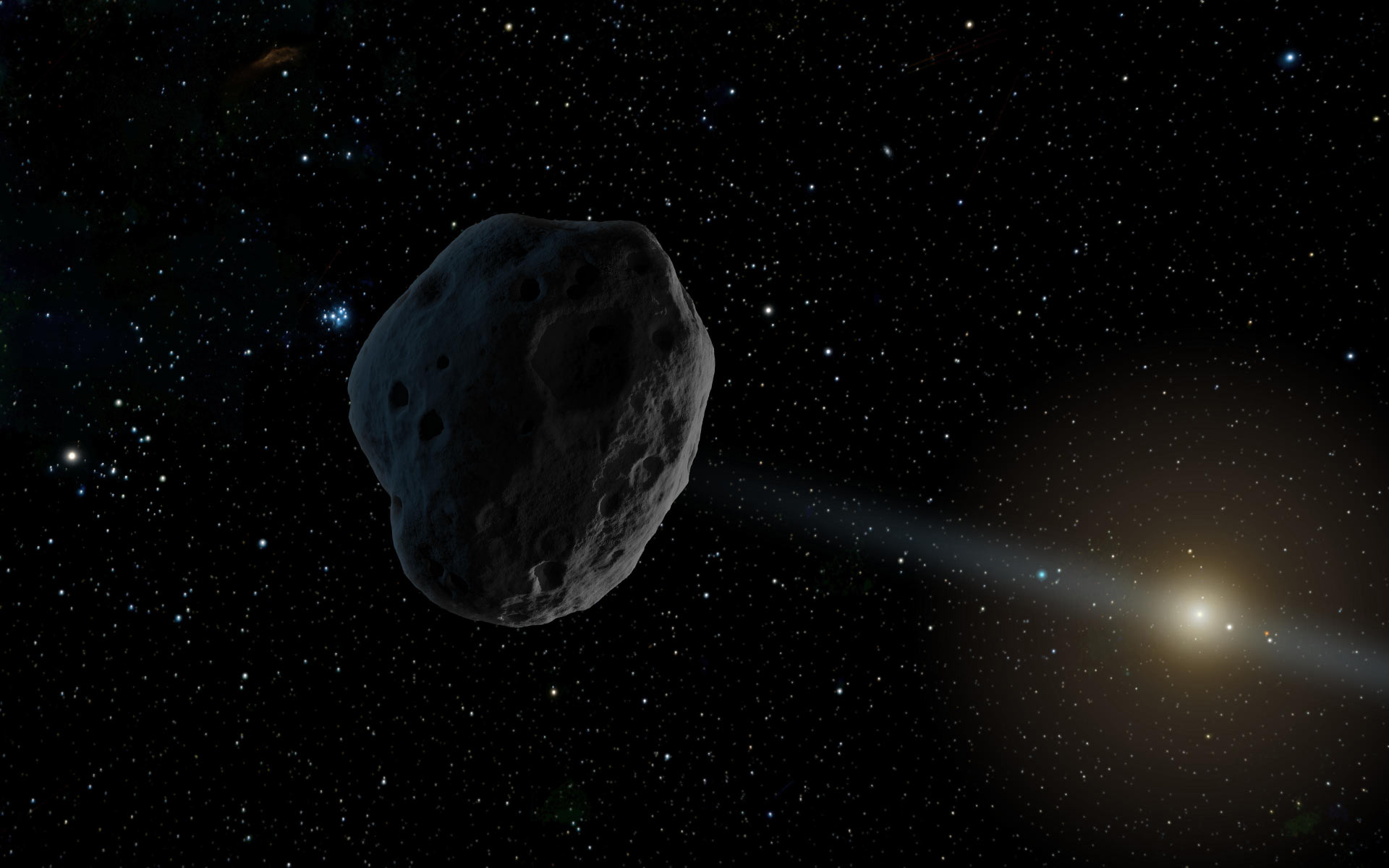
Artist’s concept of near-Earth object 1998 SH2, illustrating its remarkable elongated orbit. With significant orbital perturbations, objects like SH2 can exhibit comet-like features, including faint tails and comas. Image credit: NASA/JPL-Caltech.
The intrigue surrounding 1998 SH2 began on August 28, 2025, when this object passed Earth at a safe distance of 3 million kilometers (about 1.86 million miles) during its four-and-a-half-year solar orbit.
Dr. Davide Farnocchia and his team at NASA’s Jet Propulsion Laboratory aimed to track this object using the Deep Space Network’s planetary radar, employing its known orbit to determine its expected position.
However, the disappointment arose when the asteroid did not appear where predicted, raising suspicions of unusual influences affecting its trajectory.
This mystery turned out to be due to gas emissions, a phenomenon typical of cometary activity.
“After observing the non-gravitational perturbations affecting the motion of 1998 SH2, we realized these anomalies were inconsistent with its classification as an asteroid, leading us to suspect it might be an active comet,” Dr. Farnocchia explained.
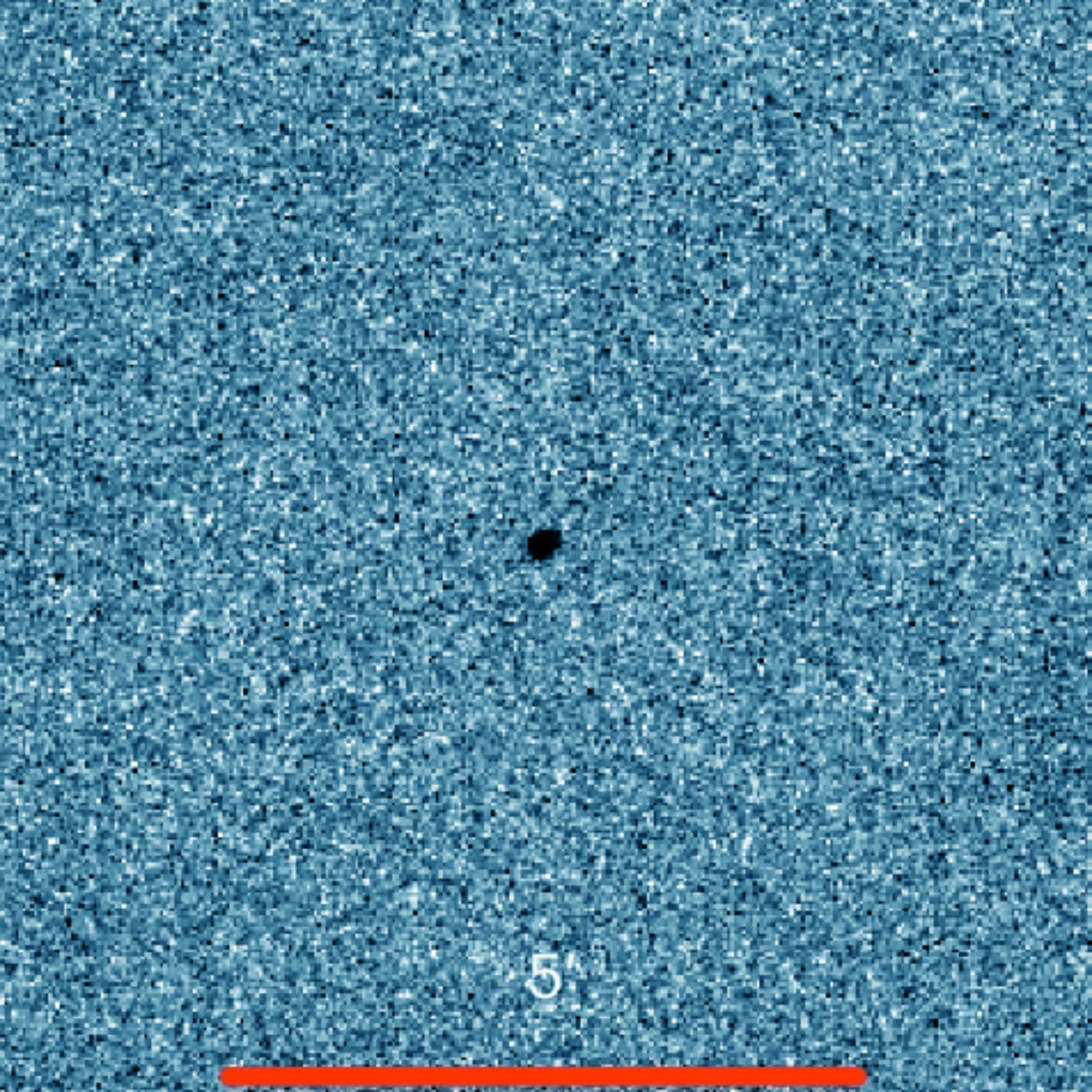
Stacked images of 1998 SH2 captured by the ATLAS Chile telescope on September 3 and 4, 2025, revealing no visible coma or tail. Image credit: ATLAS/Farnocchia et al., doi: 10.1038/s41550-026-02913-7.
The researchers revisited historic observations from the object’s discovery in 1998, hypothesizing that sunlight warms the ice within its rocky composition, converting it into gas and generating a weak jet-like thrust.
Unlike typical comets known for their dramatic tails, this activity was notably subdued and went unnoticed by most telescopes.
The August 2025 flyby provided scientists with a rare chance to validate their hypothesis using various observatories, including the Canada-France-Hawaii Telescopes, ESO’s Denmark Telescope, and the Very Large Telescope.
The findings showed a faint but distinct tail, confirming that 1998 SH2 is indeed a comet, subsequently reclassified as P/1998 SH2.
“Images collected from these observatories revealed a weak but clear tail, confirming that 1998 SH2 is now recognized as a comet,” said Dr. Olivier Hainaut, an astronomer at ESO.
“This exemplifies scientific progress: formulating a hypothesis and then rigorously testing it,” he added.
“This data was exactly what we needed to reinforce our hypothesis that 1998 SH2 is a comet,” stated Dr. Farnocchia.
This study underscores the significance of continuously monitoring near-Earth objects, according to Dr. Farnocchia.
“Due to gas emissions, the comet’s trajectory is more significantly altered than that of an asteroid,” he noted.
“Detecting these perturbations can become an essential tool for planetary defense, allowing us to discern which objects are likely to be comets rather than asteroids, understanding the evolution of their orbits, and assessing their potential threat to Earth.”
_____
D. Farnocchia et al. Non-gravitational acceleration indicating cometary activity of near-Earth objects. Nat Astron published online on July 10, 2026. doi: 10.1038/s41550-026-02913-7
Source: www.sci.news