


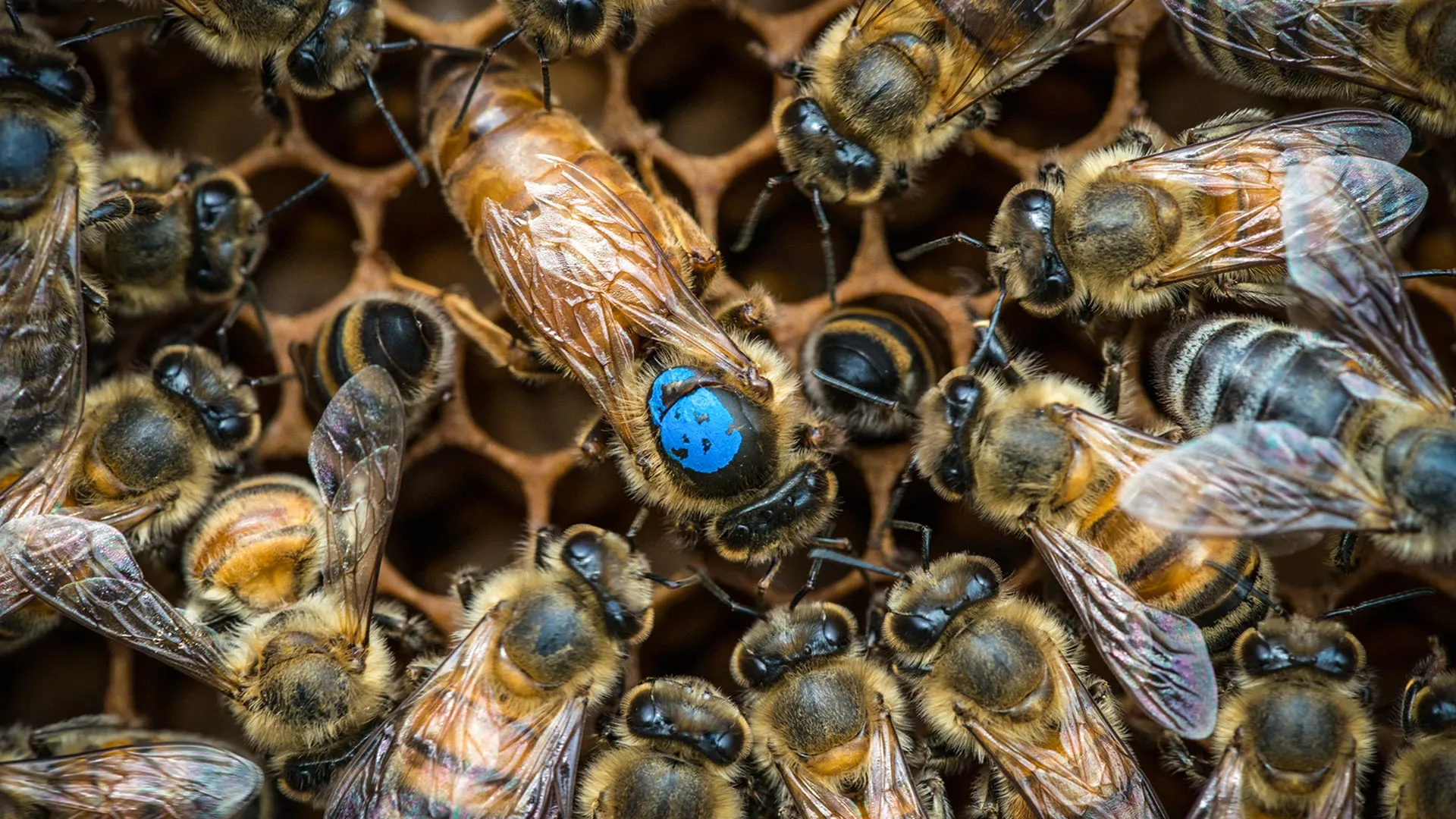
Scientists have pinpointed brain circuits crucial for worker bees in determining their tasks within the colony. Researchers from Heinrich-Heine University (HHU) in Düsseldorf, along with teams from the universities of Cologne and Frankfurt/Main, have shown that it is possible to alter the behavior of honeybees by targeting specific genes and selectively diminishing the activity of particular neural circuits.
Recent research published in scientific journals, notably the Proceedings of the National Academy of Sciences (PNAS), offers groundbreaking insights into how bee colonies efficiently organize their workforce without needing a leader to assign tasks.
How Do Bees Efficiently Divide Work Without Leadership?
The efficiency of a bee community relies on its members executing the right tasks at the appropriate times. Unlike humans, who can deliberate and allocate responsibilities, bee colonies operate without a central planner. Despite this, bees (Western honey bee) demonstrate remarkable task division.
As worker bees mature, their responsibilities evolve. Young workers focus on caring for the queen and the larvae, before transitioning to building and maintaining the nest, and ultimately foraging for food in their final stage of life.
These behavioral adaptations are influenced by interactions among about 1 million neurons in the honey bee’s brain. Until now, the mechanisms driving these age-related task shifts remained largely unexplored by scientists.
Exploring Genes Linked to Worker Bee Behavior
Crucial insights originated from early studies by a team at HHU led by Professor Martin Bay of the Institute of Evolutionary Genetics. During their research on the double sex gene, they noted a surprising behavioral modification.
Once the activity of genes in older workers decreased, those bees reverted to caring for the queen. This task is typically associated with younger bees, suggesting that the double sex gene plays a vital role in regulating age-specific labor behavior.
Because the double sex gene operates within defined neural circuits, this discovery enables Bay’s team, in collaboration with researchers from the University of Cologne and the University of Frankfurt/Main, to delve deeper into how specific brain areas influence social behaviors in honeybees.
Selective Inhibition of Neural Circuits
The researchers successfully silenced neurons linked to the double sex gene. Using this gene, they engineered a protein to inhibit neural activity and activated it by feeding honeybees a specific substance, which allowed targeted circuit activity reduction.
Upon disrupting these circuits, older workers abandoned their expected roles and returned to caring for the queen.
Dr. Jana Thaler, lead author of the study published in PNAS, commented: “The older workers then shifted to queen nursing, a responsibility typically reserved for younger bees. When the circuit remained intact, the bees exhibited normal age-appropriate behaviors. This allowed us to control which tasks the workers undertook.”
Neural Communication in Nest Organization
This finding underscores the neural foundation of task organization within honey bee colonies. When specific brain areas reduce activity, alternative neural circuits activate, guiding behavioral shifts.
The study presents early evidence that communication between different neural circuits can help worker bees decide whether to nurture the queen, construct or defend the nest, or forage for food.
Professor Bay concludes: “Controlling social behaviors in bees opens new avenues for understanding behavioral diversity and the foundations of social cooperation. The secrets behind how bees and other animals manage to work together efficiently without explicit task assignments likely lie within the intricate neural circuits of the brain.”
Source: www.sciencedaily.com