


NASA’s Moon Orbiter Finds a Fresh Impact Crater Formed Just Two Years Ago
NASA’s Lunar Reconnaissance Orbiter (LRO), a robotic satellite about the size of a minivan, has been photographing the Moon since its launch in 2009. After examining hundreds of those images, scientists have identified what they describe as a rare, “once-in-100-years” discovery: the largest new impact crater detected during LRO’s mission.
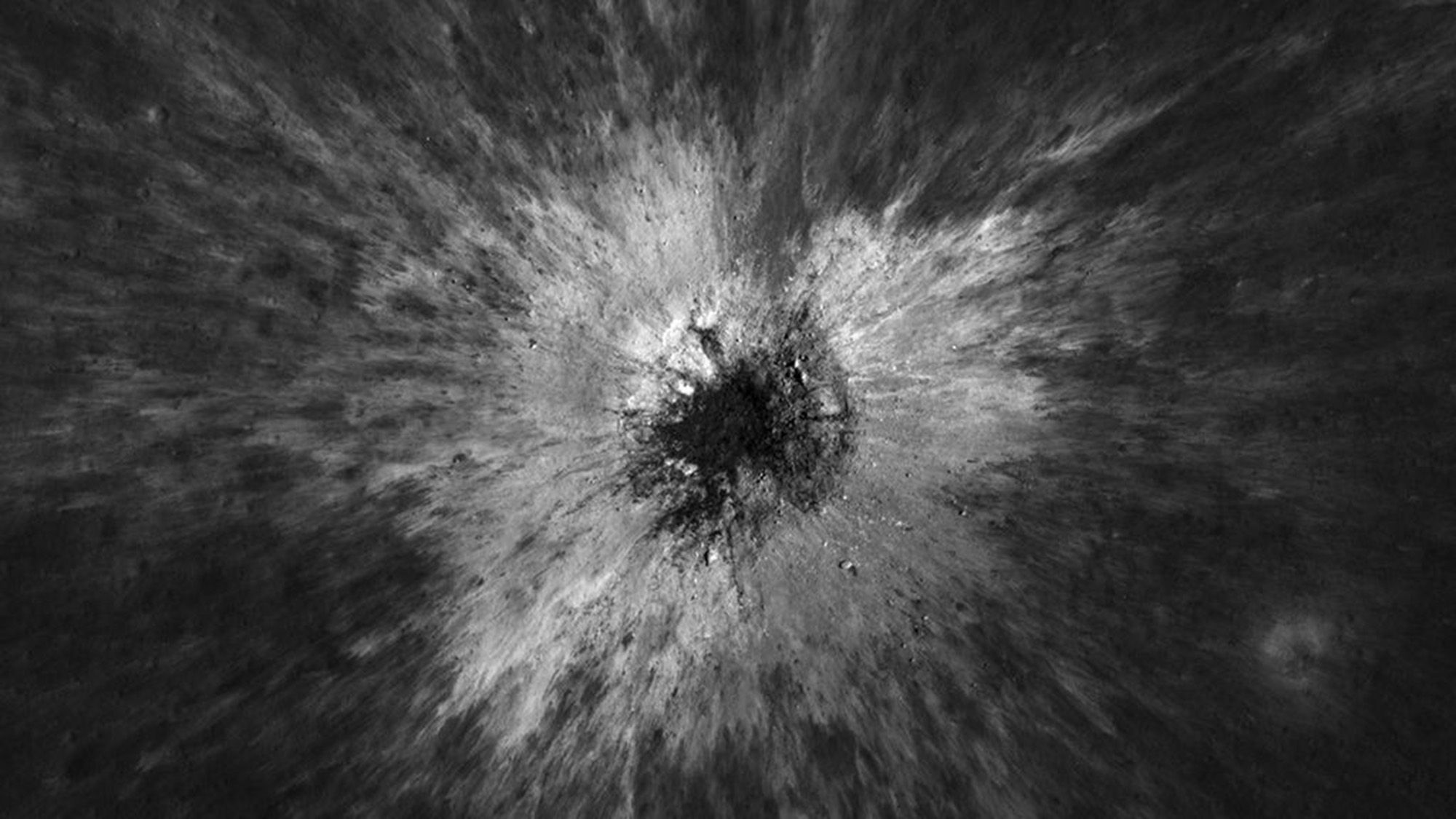
The crater, named McGetchin Crater after the late geologist and lunar scientist Tom McGetchin, appears to have formed when a building-sized object struck the Moon between April and May 2024. Scientists discovered it in LRO images in October 2025.
McGetchin Crater is approximately 728 feet (222 meters) wide and 141 feet (43 meters) deep. That is roughly the length of two American football fields and deep enough to accommodate a 14-story building.
Researchers say the fresh crater offers an unusually valuable opportunity to study how lunar impacts occur, how often they happen and what risks they could pose to future visitors and infrastructure on the Moon.
Why this new Moon crater is so unusual
Small objects are far more common in the solar system than large ones. As a result, the Moon has countless small craters but relatively few large, newly formed ones.
“We generally know that there are more small objects than large objects in the universe, which means that the Moon has many small craters and very few large ones,” Julie Stopar, a senior scientist at the Lunar and Planetary Institute and deputy principal investigator for LRO’s camera team, told Live Science.
“So we would only expect to encounter something the size of this crater about once every 130 years.”
McGetchin Crater is not close to the Moon’s largest crater. That distinction belongs to the South Pole–Aitken Basin, a giant impact feature about 10,000 times wider. However, McGetchin is the largest new crater scientists have identified during the 17 years LRO has been operating.
Its bright debris ring has also been detected by sky watchers from Earth. The debris was blasted outward when the impactor struck the lunar surface.
A crater preserved in exceptional condition
Unlike Earth, the Moon has no atmosphere, weather or active geological processes that rapidly erode its surface. That means impact craters can remain preserved for extremely long periods.
McGetchin Crater is especially valuable because it is only about two and a half years old. Its rim, ejecta and other features remain sharp and clearly visible, allowing researchers to study the impact soon after it occurred.
“It’s a great crater because it’s so fresh and new,” Stopar said. “It’s not weathered. The Moon preserves the original details much better.”
The crater formed at the boundary between two distinct lunar landscapes. One side contains dark, flat volcanic mare deposits, while the other consists of older, brighter and more rugged lunar highlands.
Material excavated by the impact appears to contain debris from both regions. That gives scientists a chance to examine how different types of lunar terrain respond when struck by a fast-moving object.
Image credit: NASA Lunar Reconnaissance Orbiter
Could people on Earth have seen the impact?
Scientists estimate that the object that created McGetchin Crater was approximately the size of a three- to six-story building. A collision of that scale could potentially have produced a flash visible from Earth.
Flashes from smaller lunar impacts have already been observed by people on Earth. However, researchers do not know whether anyone was watching the correct part of the Moon when McGetchin Crater formed.
“This is a relatively large impact, and flashes associated with smaller impacts have been observed from Earth,” Stopar said. “So I think this could have flashed if the conditions were right. However, I don’t know if anyone was watching.”
Researchers are inviting anyone who may have recorded a video of a lunar flash during April or May 2024 to share it so the team can compare the timing and location with the new crater.
Why did it take so long to find the crater?
LRO orbits the Moon approximately 12 times each day, but its cameras capture only a small portion of the lunar surface during each pass. It can take years for the spacecraft to photograph the same location again under comparable conditions.
Without a recorded impact flash to indicate where a crater might have formed, researchers must conduct a largely random search through repeated images. They compare photographs taken before and after a suspected impact, looking for a new feature that was not present in earlier data.
That process requires examining every image of the lunar surface taken under suitable lighting and viewing conditions. The volume of data and the processing required to create accurate before-and-after comparisons make the search both time-consuming and technically demanding.
Robert Wagner, a member of the research team, reportedly “stopped and dropped everything” when he first identified the crater in the LRO data.
“I was surprised at how big it was,” Stopar said. “But I’ve seen a lot of similar craters on the Moon, so my first thought was actually, ‘This crater might help establish the age of all the other craters.’”
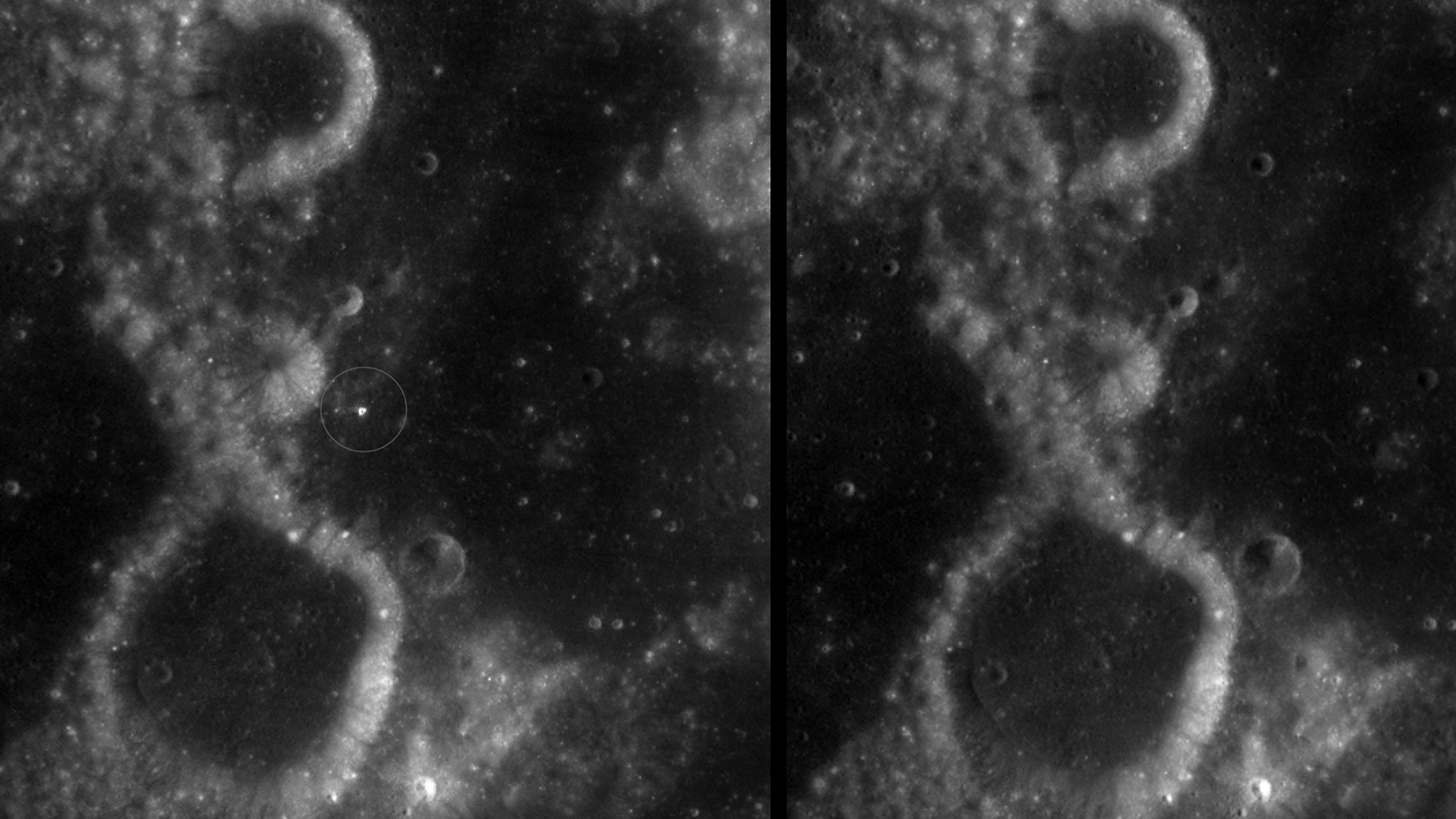
Image credit: NASA Lunar Reconnaissance Orbiter
How the crater could help date other lunar impacts
McGetchin Crater’s age is known with unusual precision because scientists can identify when it appeared in LRO’s image record. Its shape, brightness and sharp rim provide a reference point for interpreting older craters that formed at unknown times.
The crater is highly reflective, with bright ejecta surrounding a crisp rim. Researchers can compare those characteristics with other apparently young craters on the Moon.
However, scientists cannot yet prove the ages of those other craters. They may look young because their surfaces remain relatively fresh, but they formed before LRO began observing them.
“It has bright ejecta and a crisp rim,” Stopar said. “But other craters have been there since before LRO, so I don’t know how old they are. This crater gives us a way to understand what a truly young crater looks like.”
What McGetchin Crater can reveal about lunar impact rates
One of the study’s main goals is to improve estimates of the current lunar impact rate. Researchers want to understand how frequently objects of different sizes strike the Moon and how those impacts vary across the solar system.
That information matters as space agencies and private companies plan more missions to the lunar surface. Future landers, crewed missions and possible lunar bases could be exposed to impacts from meteoroids and other debris.
A better estimate of the impact rate could help determine whether such events are a frequent operational threat or an occasional risk that can be managed through planning and protective design.
Scientists can also use the crater to study how impact angle, impactor speed, impactor composition and the type of material at the target site affect crater formation. Because the impactor’s approximate mass and shape can be estimated, the event provides a particularly useful case study.
Researchers believe the crater could also be a promising location for future sampling. Since its formation date is known, samples from the crater and its ejecta could help answer questions about the lunar surface and the mechanics of fresh impacts.
Could human activity damage the Moon’s natural record?
Human-made objects have struck the Moon before, including spacecraft components and boosters associated with the Apollo program. Stopar said she is not currently concerned that human activity will destroy the Moon’s natural environment, but increasing activity could create coordination challenges.
As more countries, companies and organizations send spacecraft to the Moon, they may need to track impacts, debris and landing areas more carefully to avoid interfering with one another’s scientific and operational work.
“We need to talk to each other and coordinate,” Stopar said, emphasizing the importance of tracking impacts and debris as lunar activity increases.
Human-made impacts may also provide useful scientific information. Because a spacecraft’s mass and shape can be known in advance, researchers can compare the resulting crater with those created by natural objects. Impacts from irregular objects, including hollow cylinders, produce different energy patterns and crater shapes.
McGetchin Crater therefore offers more than a striking new feature on the Moon. It provides a precisely dated example of a natural impact and a new way to study lunar geology, crater formation and the risks facing future lunar exploration.
This interview has been condensed and lightly edited for clarity.
Sources
Source: www.livescience.com