


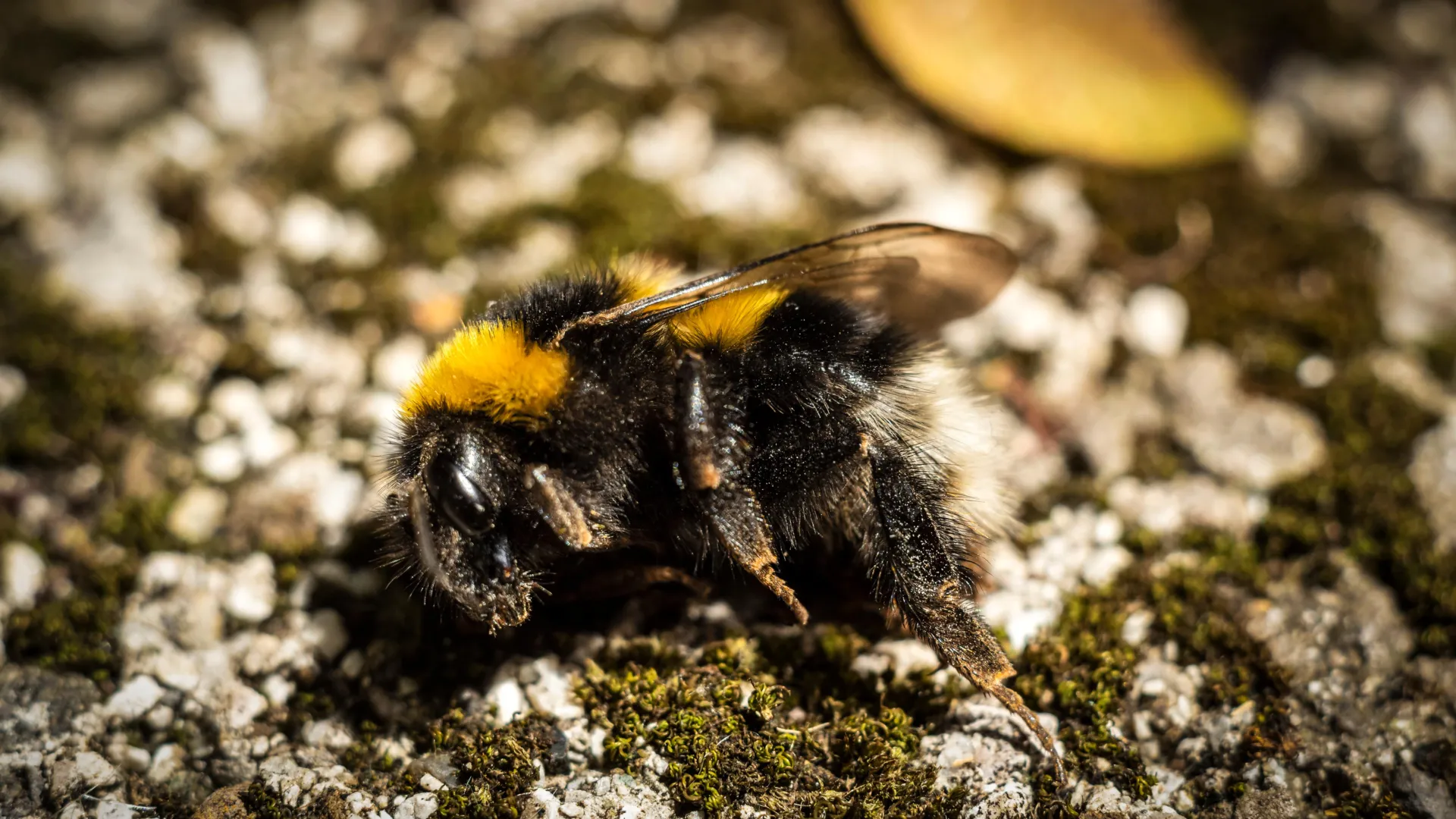
Finding dead bumblebees on pavements during the summer can be upsetting. While some deaths are part of the insects’ natural life cycle, extreme heat, pesticides, habitat loss and climate change are also putting increasing pressure on bee populations.
There are several reasons why you may see dead bumblebees in summer. Some are linked to weather conditions, while others are caused by human activity.
Bumblebees are social insects that live in colonies. These colonies depend on highly active worker bees, which have a relatively short lifespan of around four to six weeks. As older workers naturally die, healthy bees remove their bodies from the nest and carry them away. This helps reduce the risk of disease spreading throughout the colony.
Summer weather can also contribute to bumblebee deaths. England experienced its warmest June on record in 2026, while further periods of high temperatures are expected during the summer.
Extreme heat can cause thermal stress in bees. Prolonged exposure to high temperatures can affect their development, health and ability to survive, potentially threatening the long-term stability of bee populations.
Heatwaves can also disrupt bee reproduction, flight ability and foraging behaviour. Social insects such as bumblebees use cooling behaviours, including fanning their wings, to regulate temperatures inside the nest. However, these natural cooling methods have limits during prolonged or extreme heat.
As temperatures rise, bumblebees may increase their foraging activity and travel further to find food. Bees can regulate their body temperature by moving heat around their bodies while flying, but extreme conditions can still cause exhaustion, dehydration and illness.
Don’t kill your dandelions
Pesticides and herbicides are another major cause of bee deaths. These chemicals can reduce bee fitness and contribute to bee mortality. They can also destroy flowering plants that bees rely on for food, leaving colonies vulnerable to starvation.
Dandelions are a particularly important source of nectar for bees, yet they are often removed from gardens and lawns with herbicides. Leaving dandelions to flower is one simple way to provide bees with food, especially in early spring and summer.
Pesticide use is one of the historical key causes of bee decline. Chemicals designed to control insects that feed on crops can, ironically, harm the pollinators needed to produce those crops.
The EU and UK have restricted or banned some of the most harmful neonicotinoid pesticides. However, pesticides are still widely used and can have damaging effects on pollinators.
Insecticides, including organophosphates, synthetic pyrethroids and phenylpyrazoles, can cause paralysis and death in insects. They may also interfere with bees’ ability to navigate, find food and return safely to their nests.
Habitat loss is another serious threat to bumblebees. Land is increasingly being used for housing, intensive agriculture, roads and other human infrastructure. When suitable habitats disappear, bee populations suffer because there are fewer nesting sites and less food available.
Climate change is creating additional challenges for bees.
One of these challenges is known as phenological mismatch. This occurs when two species that depend on each other become active at different times. For example, plants may flower before bees emerge from hibernation, leaving bees without nectar when they need it most. Alternatively, bees may emerge before important flowers are available. In either case, the relationship between plants and pollinators is disrupted, potentially harming both bees and flowering plants.
Bees under threat
Insects are the most diverse and abundant group of animals on Earth. Despite their importance, they are among the most threatened.
Wild bee populations are declining at an alarming rate. Across Europe, the number of wild bee species considered at risk of extinction has more than doubled, rising from 77 species in 2014 to at least 172 today—around 10% of assessed species.
Bees are essential to healthy ecosystems. They help pollinate plants, while insects more broadly act as decomposers, natural pest controllers and an important food source for other animals. These roles are known as ecosystem services.
Pollination is particularly important to people. Bees are one of the most diverse groups of insects and support an estimated 75% of global crop pollination and nearly 90% of flowering plants. Other plants are pollinated by different animals, wind or weather.
If pollinator populations continue to decline, the loss of food production and biodiversity could contribute to a global food security crisis.
How can we help bumblebees?
When buying food or gardening products, make informed choices about pesticide use. Where possible, support local and sustainably produced food, and consider purchasing from farmers who use nature-friendly methods. This does not necessarily mean choosing organic products; it means thinking about how food is produced and the environmental impact of different farming systems.
At home, try non-chemical alternatives before using pesticides. If treatment is necessary, apply it sparingly and responsibly to reduce harm to bees, beneficial insects and other wildlife.
One of the simplest ways to tackle habitat loss is to grow more native plants. Plant a variety of flowering species, avoid removing dandelions and leave some areas of lawn unmown. These changes can create valuable feeding and nesting areas for bumblebees.
If you find a tired bumblebee on a pavement during a hot summer day, moving it carefully to a nearby flower or shaded spot may help. If it appears exhausted and no flowers are available, a small amount of sugar water may provide temporary support. Use a two-to-one mixture of sugar and water, and never provide honey.
Only move or handle a bee if it is safe to do so. Avoid doing this if you have an allergy or may be at risk of being stung.
Source: www.sciencedaily.com