


Brazil’s Groundwater Depletion Threatens Agriculture, Hydropower and Global Food Supplies
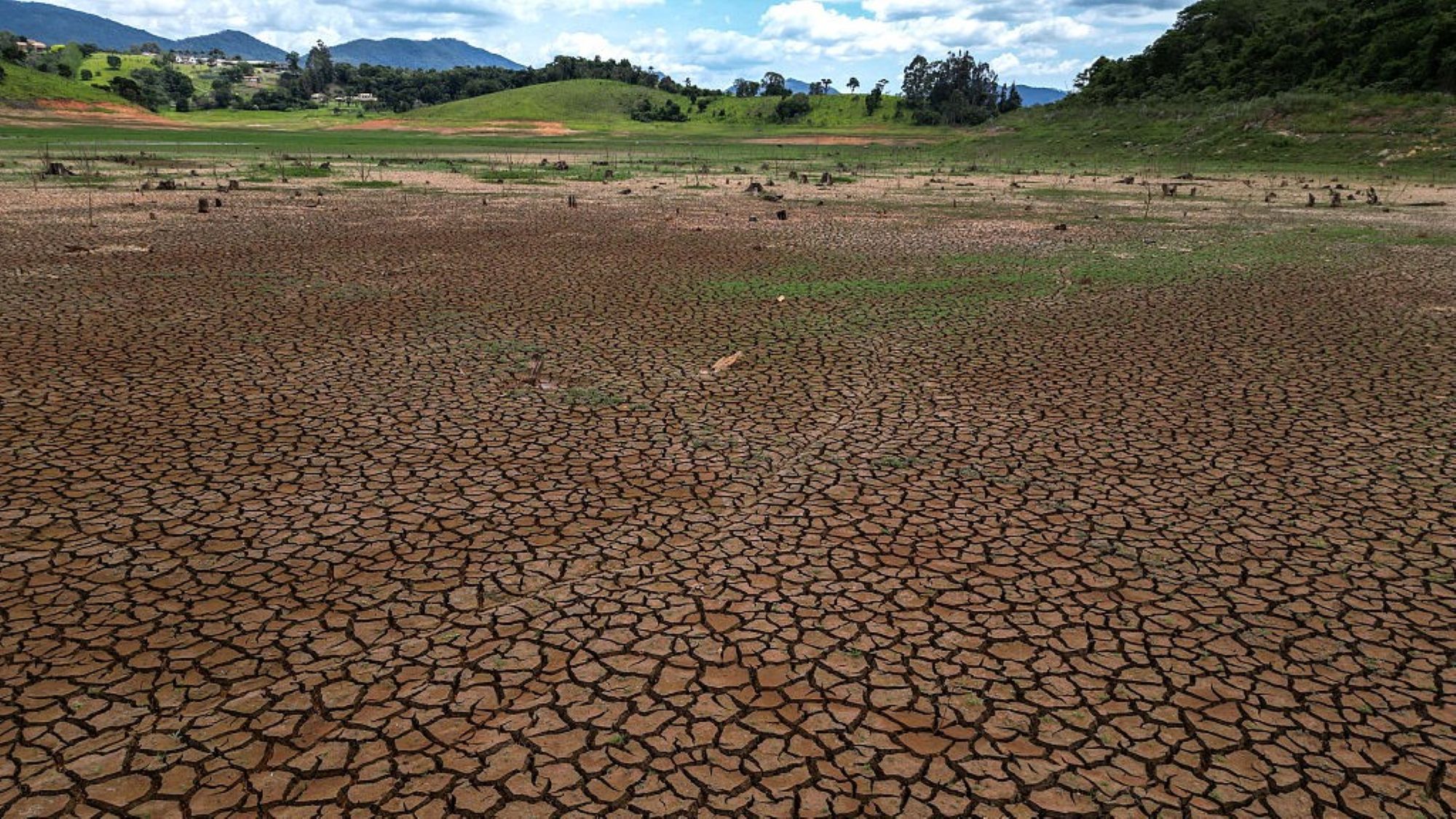
Brazil contains some of the world’s largest aquifers, yet many of the groundwater reserves supplying an estimated 55% of the country’s water have declined significantly over the past 25 years. New research suggests that drought, rising evaporation linked to climate change and increased groundwater pumping are driving the depletion, which could cause lasting damage to Brazil’s water security.
The decline could have consequences far beyond Brazil. Much of the world’s soybeans, sugar cane, oranges and coffee—as well as significant shares of global cotton and corn production—is grown in regions where groundwater levels are falling. Reduced groundwater availability could therefore affect international food markets, including supplies to the United States, Europe, Asia and the Middle East.
Declining aquifers could also weaken the river systems that support Brazil’s hydropower network. If river flows fall significantly, the country may have to rely more heavily on coal, fossil fuels and biomass to generate electricity, experts told Live Science.
Groundwater depletion is unlikely to reduce Brazil’s total agricultural output over the next 10 to 20 years. However, researchers warn that the risks could become much more serious if current trends continue for several decades.
“Brazil is one of the world’s major breadbaskets, so its water security has implications beyond the country itself,” said study lead author Augusto Getirana, a researcher at NASA’s Goddard Space Flight Center Hydrological Sciences Laboratory.
Brazil’s groundwater decline shows a sharp geographical contrast
Brazil has the largest reserves of renewable freshwater of any country, largely because of the Amazon Basin and its rainforest ecosystem. However, unlike the United States and India, Brazil has relatively few groundwater monitoring wells, making it difficult to track changes across the country.
To fill those data gaps, Getirana and his colleagues trained artificial intelligence models using measurements from 398 monitoring wells, satellite observations of changes in Earth’s gravity, geological data, land-cover information and other environmental datasets.
The AI model reconstructed monthly groundwater-level changes across Brazilian aquifers from 2002 through 2023 at a resolution of approximately 6 miles (10 kilometers). The researchers then estimated aquifer recharge, or the amount of water that reaches and replenishes underground reservoirs.
Published June 3 in the journal Science Advances, the study found severe and persistent groundwater losses across parts of central, northeastern and southeastern Brazil.
The affected areas include sections of the São Francisco, Paraná, Southeast Atlantic and Eastern Atlantic river basins. Together, the regions cover approximately 760,000 square miles (1.97 million square kilometers), or about 23% of Brazil’s total land area.
Map showing Brazil’s hydrological regions and groundwater systems.
Some of Brazil’s most important aquifers have gone years without significant recharge. By contrast, parts of the Amazon Basin and southern Brazil have experienced stable groundwater levels or localized increases, partly because of changes in rainfall patterns and natural climate variability.
“There is no single trend across the country,” Getirana said. “We found a clear geographical contrast.”
Climate change is intensifying Brazil’s water crisis
Although the study did not assign groundwater changes to a single cause, Getirana said the findings show that climate change is playing a major role. Some of the fastest aquifer declines occurred after prolonged droughts and large-scale climate events, including the El Niño cycle of 2015 and 2016.
Limited monitoring makes it difficult to measure the precise effects of agriculture, industry and household water use. However, the areas with the greatest groundwater losses also overlap with regions experiencing intensive irrigation, urban and industrial demand, mining, land-use change and high well density.
“The most scientifically defensible interpretation is that climate change is creating the underlying water scarcity, while mining and land-use change are likely amplifying its magnitude and duration in heavily used areas,” Getirana said.
Javier Tomasella, an environmental scientist and hydrologist at Brazil’s National Institute for Space Research who was not involved in the study, also identified climate change as a major factor in Brazil’s aquifer depletion.
“Droughts are lasting longer and becoming more intense,” Tomasella told Live Science. As droughts worsen, groundwater recharge declines while demand for water rises. That combination leads to increased pumping from aquifers, particularly in irrigated agricultural regions.

Two coffee plantations photographed in 2024 in São Paulo state, Brazil. One uses irrigation, while the other is experiencing water shortages caused by drought.
Image credit: Tuane Fernandes/Bloomberg via Getty Images
Brazil’s major farming regions could face water shortages severe enough to limit the production of certain crops if droughts intensify in the coming decades. Groundwater acts as a critical buffer when rainfall and surface-water supplies become unreliable, supporting both agriculture and municipal water systems.
The greatest concern is not necessarily that aquifers will dry up completely. Instead, water levels could fall so low that pumping becomes too expensive compared with the profits generated by crop production.
“Water does not necessarily disappear overnight,” Getirana said. “It becomes progressively more difficult to access, less reliable and more expensive to obtain.” Similar patterns have been observed in heavily developed aquifers in the High Plains and Central Valley in the United States, as well as in northern India and Bangladesh.
Brazil’s groundwater crisis could disrupt global food supply chains
Farmers may respond to declining water supplies by switching from water-intensive crops such as soybeans to crops that require less irrigation, including corn and wheat. This strategy is already used in parts of northern Paraná, where farmers often rely on double-cropping systems and adjust planting decisions during the dry season.
However, crop choices will depend on market prices, expected profits and the rising cost of irrigation. Rain-fed soybean and corn production is unlikely to experience major declines in the near term, although the balance between different crops could change.
Irrigated crops such as coffee, sugar cane and oranges may face greater risks if drought conditions worsen over the next 20 years. Countries that depend on Brazilian agricultural exports could then experience supply disruptions, although the scale of those effects remains difficult to predict.
China imports approximately 80% of its soybeans from Brazil, Getirana said. Imports of Brazilian coffee, sugar and oranges could also be affected in the United States and Europe, while cotton and corn supplies could face risks in Asia and the Middle East.
“The United States relies heavily on Brazil for coffee and orange juice imports,” Getirana said.
Brazil’s beef production is less likely to decline in the short term because demand remains strong and cattle production could become more intensive. However, cattle release methane, a potent greenhouse gas, meaning increased beef production could add to the country’s climate impact.
Groundwater depletion could threaten Brazil’s hydropower system
Brazil’s groundwater and river systems are closely connected. As aquifer levels fall, rivers may receive less groundwater input, potentially reducing river flows and putting additional pressure on Brazil’s hydropower network, which supplies approximately 60% of the country’s electricity.
If hydropower generation declines, Brazil could turn to fossil fuels and biomass as alternatives. That shift would increase carbon emissions, intensify climate change and potentially worsen the drought and groundwater problems already affecting the country.
In the short term, groundwater depletion may affect drinking-water supplies in major cities such as Rio de Janeiro and São Paulo before it causes widespread agricultural losses.
“If droughts intensify, we may reach a point where we have to make very difficult decisions,” Tomasella said. “The real question is: Is this the new normal? If it is, we are in very serious trouble.”
Getirana, A., Camacho, C.R., Mourão, M.A.A. and Filho, O.C.R. (2026). Over two decades of human and climate change, Brazil’s groundwater reserves have changed. Science Advances, 12(23), eaee0266.
Source: www.livescience.com