


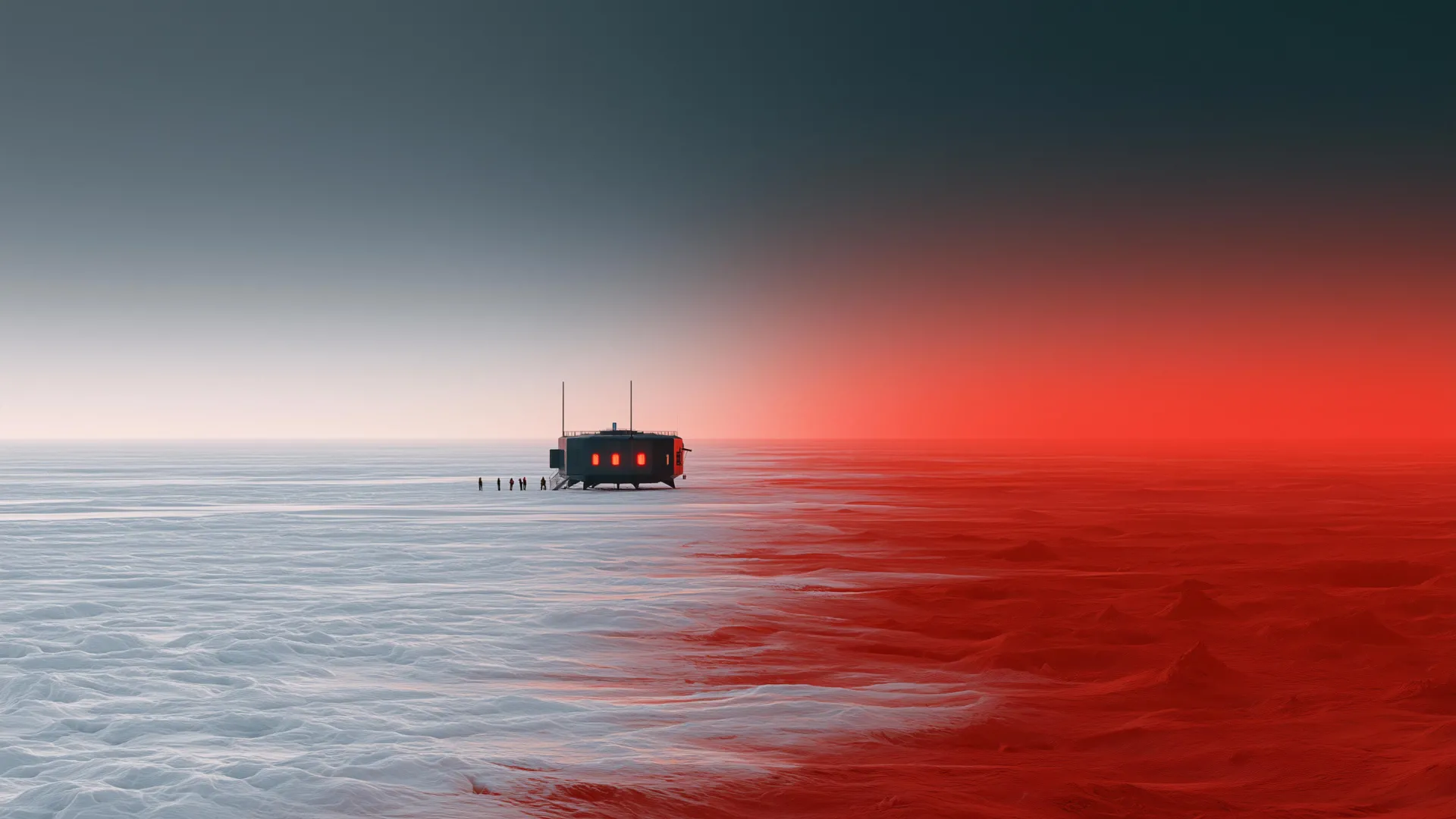
A ten-month Antarctic isolation study is offering new insight into how extreme environments affect teamwork, trust, and social relationships—information that could help prepare crews for future missions to the Moon and Mars.
The international research team was led by Jan Schmutz, a professor in the Department of Psychology at the University of Zurich, and Andrea Cantisani, a psychiatrist and research associate at the University of Bern. The study took place at Concordia Station, one of the most isolated locations on Earth, where winter temperatures can fall to minus 80 °C (-112 °F). Its extreme remoteness makes the station a valuable analog for long-duration space missions.
Researchers Track Social Behavior During Extreme Isolation
The study followed 12 crew members during a ten-month overwintering mission. Participants completed questionnaires at four stages of the mission and wore wearable sensors that automatically recorded when they were physically near other crew members and how long those interactions lasted.
By combining self-reported data with sensor-based proximity measurements, researchers tracked changes in loneliness, trust, conflict, social connections, team cohesion, and perceived team performance over time.
More Face-to-Face Contact Did Not Always Improve Teamwork
One of the study’s most significant findings was that spending more time near other crew members was not consistently associated with better social outcomes. Participants who had more frequent physical contact were also more likely to report higher levels of conflict, increased mistrust, and lower perceived performance.
The findings suggest that constant proximity can become an additional source of stress in confined environments. Although isolation can be challenging, limited privacy and a lack of personal space may create their own psychological pressures.
“In small teams under extreme conditions, more contact doesn’t automatically equate to social support, but can actually increase tensions,” says Jan Schmutz.
The researchers emphasize that the study identified correlations rather than direct cause-and-effect relationships. For example, crew members who felt lonely may have sought more interaction, even when those encounters did not provide meaningful emotional support.
Crew Members Gradually Formed Smaller Social Groups
Data from the wearable sensors showed that the crew increasingly divided into smaller social groups as the mission progressed. Participants tended to spend more time with colleagues who shared their language or nationality.
These smaller connections may provide comfort, familiarity, and emotional support during stressful periods. However, they could also contribute to social divisions and make it more difficult to maintain cohesion in culturally diverse teams.
Implications for Future Moon and Mars Missions
The results could have important implications for future lunar and Martian missions, where small crews may live and work together for months or even years. Astronauts on long-duration missions are likely to have limited privacy and restricted communication with people outside their spacecraft or habitat.
The findings may also apply to other high-pressure environments, including submarines, offshore oil platforms, military deployments, and remote research stations.
“The results show how important it is to identify social dynamics early on and provide teams with targeted support,” says Schmutz.
Wearable Sensors Successfully Monitored Crews in Antarctica
The research also demonstrated that wearable proximity sensors can function reliably in harsh, remote environments. The devices enabled scientists to monitor everyday social patterns with minimal disruption to the crew’s normal routines.
Future research will examine which types of social interaction help reduce stress, strengthen team cohesion, and support mental health—and which interactions may increase tension during long periods of confinement and isolation.
Source: www.sciencedaily.com