


Despite the high level of coverage, even 7% of the Sun’s surface will provide significant daylight and illumination, he explained.
Parkin encouraged people to watch the solar eclipse, recalling how witnessing his first eclipse had a profound impact and left him “smitten”.
For viewers on the Isle of Man, Parkin recommended heading to the west coast for the best eclipse experience, with Peel and Niarbyl among the top viewing locations.
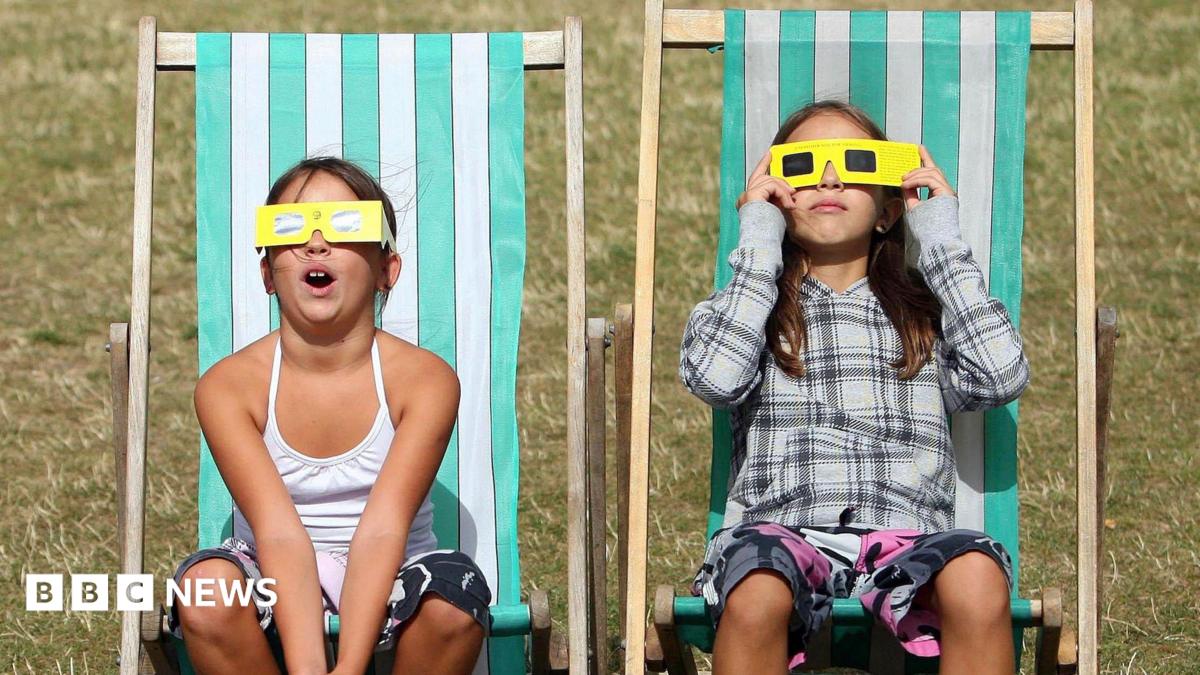
He also stressed that anyone observing the partial solar eclipse must use certified solar eclipse glasses or other approved protective eyewear to avoid serious eye damage.
The eclipse will reach totality in parts of Iceland, northern Spain, northern Portugal, the Atlantic and North America. Totality is expected to last for a maximum of approximately one and a half minutes.
Ireland’s west coast will experience an even greater partial solar eclipse, with around 95% to 96% of the Sun covered, he said.
The solar eclipse visible from the Isle of Man on Wednesday will be the most significant since the total eclipse of 1999. A comparable or more substantial eclipse is not expected until 2151.
Source: www.bbc.co.uk