


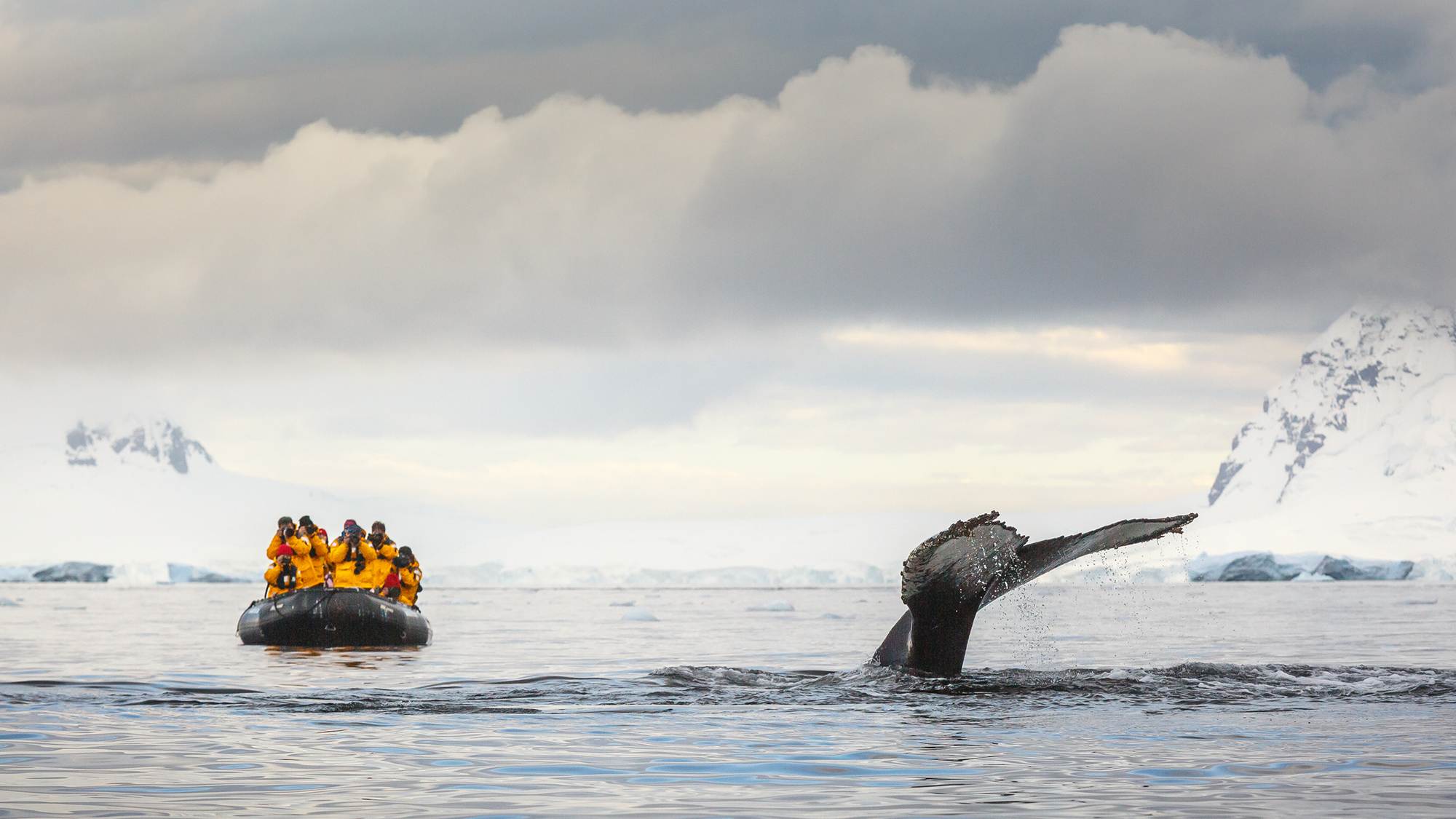
Antarctic Tourism Is Growing — But Former Guides Warn of a Heavy Environmental Cost
Antarctica may be one of the most remote destinations on Earth, but it is attracting more visitors every year. More than 100,000 tourists travel to the frozen continent annually, and that figure could rise to as many as 450,000 visitors in the coming years.
Although Antarctic tourism remains smaller than tourism to destinations such as the Great Barrier Reef or Grand Canyon National Park, traveling to Antarctica can produce a particularly large carbon footprint. The continent is also home to fragile ecosystems and wildlife that may be highly sensitive to human activity.
A study published July 8 in the journal Annals of Tourism Research examined the environmental and emotional consequences of Antarctic tourism through interviews with 25 former polar guides. These guides spent years taking cruise passengers to some of the most isolated places on the planet before eventually leaving the industry.
The study, along with an accompanying article in The Conversation, describes why many guides felt they could no longer reconcile their love of Antarctica with the environmental effects of cruise tourism.
Why do Antarctic tour guides leave the industry?
To understand what prompted the guides to leave and whether individual decisions can influence the future of Antarctica, Live Science spoke with two authors of the study: social anthropologist Zdenka Sokolickova and polar tourism researcher Liz Cooper of the University of Groningen in the Netherlands.
Sokolickova and Cooper interviewed 14 men and 11 women who had worked as Antarctic or polar guides. Their accounts revealed the practical, ethical and emotional pressures involved in leaving what many considered their dream job.
Zdenka Sokolickova is a social anthropologist at the University of Groningen. Her research focuses on environmental change, climate change, globalization, tourism, migration and social justice. She works on the GUIDE-BEST project, which explores how tourists and guides behave during and after visits to Antarctica.

Liz Cooper is a polar tourism researcher at the University of Groningen who studies sustainable tourism, traveler behavior and the psychological tensions involved in visiting fragile and remote environments. She is also part of the GUIDE-BEST project.
Researchers wanted to hear from former Antarctic guides
Sascha Pare: What led you to interview people who had left Antarctic tourism?
Zdenka Sokolickova: We initially interviewed guides who were still working in Antarctica because we wanted to understand how they viewed the rapid growth of the industry. Antarctic tourism is expanding quickly, with more ships, operators and passengers traveling to the region. That growth increases demand for guides, but it may also create concerns about training, qualifications and safety.
At the same time, we learned that some guides were leaving. We thought former guides could offer an especially valuable perspective because they no longer had a professional interest in defending the industry. We recruited participants through private Facebook groups used by polar guides. Within six days, 30 people volunteered, suggesting that many members of the guiding community wanted an opportunity to discuss their concerns.
Liz Cooper: Tourism research often focuses on people who remain connected to the industry. It is much less common to hear from people who have deliberately withdrawn from it. Former guides can describe the tensions that led them to leave without worrying about protecting their current jobs.
Why Antarctic tourism has such a large environmental footprint
Antarctic tourism is still relatively small on a global scale, with roughly 120,000 people visiting each year as of 2025 and 2026. However, the environmental impact of each trip can be substantial because Antarctica is so far from the tourists’ homes.
Visitors typically rely on long-haul flights to reach departure points in South America, followed by lengthy cruise journeys. This combination makes Antarctic travel one of the most carbon-intensive forms of tourism. Once ships arrive, passengers may visit wildlife colonies and other areas that have evolved with very little human contact.
Scientists still do not fully understand how tourism affects Antarctica’s ecosystems. Researchers know that human activity can disturb wildlife and damage fragile environments, but the scale and long-term consequences remain uncertain. That uncertainty makes the continued expansion of Antarctic tourism a potentially risky experiment.

A former guide described penguin colonies receiving only a few hours of quiet overnight before visitors returned.
(Image credit: Mint Images via Getty Images)
Disturbing wildlife became a tipping point for some guides
SP: Did particular incidents influence the guides’ decisions to leave?
ZS: In our study, we describe these moments as “tipping points.” Some were caused by external events, while others developed internally as guides became increasingly uncomfortable with their work.
One example involved a cruise ship breaking through sea ice so passengers could reach a landing site and view wildlife. Another guide described working in the Arctic when a ship struck a whale. The guide had seen the animal and tried to alert the crew, but the hierarchy on the ship made it impossible to stop what was happening. After the collision, the guide confronted the captain and decided to quit.
A different guide found a penguin chick trapped in a hole in a boot print. Visitors are expected to cover holes and depressions in the snow before leaving a site, but not everyone follows the rules. The chick was struggling to escape, and the guide realized that it could have died if nobody had noticed it. That moment made the guide question whether continuing to participate in Antarctic tourism was ethically acceptable.
“Antarctica is the most remote place on Earth that tourists can visit. That also makes it one of the most carbon-intensive tourism destinations in the world.”
Liz Cooper, polar tourism researcher at the University of Groningen
LC: One of the most powerful accounts involved a ship attempting to position itself against sea ice so passengers could walk directly onto it. The ice was unstable, and the gangway repeatedly broke through the surface. To find a more secure position, the ship moved farther into the ice.
The guide remembered that penguins and their chicks were on the ice floe. Young penguins have fluffy down that is not waterproof, meaning they cannot safely swim until they develop adult feathers. As the ship moved, the ice floe fractured and separated the chicks onto smaller pieces of ice. The guide feared the chicks would not survive until they were old enough to swim.
Leaving a dream job was emotionally difficult
SP: How difficult was it for the guides to leave?
ZS: The decision was easier for some people than for others. Paradoxically, those who felt the strongest environmental connection to Antarctica often struggled the most. Their bond with the place was powerful, so giving up the opportunity to return was extremely painful.
The emotions were usually mixed. Former guides described feeling angry and sad, but also relieved, as if a heavy burden had been removed. For many, the process took years. They first recognized that their personal values conflicted with their work, then concluded that small compromises were not enough, and finally decided that leaving was the only honest option.
Even after making the decision, some continued working while they searched for another path. Knowing that they wanted to quit and actually leaving the job were often two separate stages.
Some former guides moved into environmental work
SP: Did the guides find careers that better reflected their values?
LC: Many participants who left primarily because of environmental concerns redirected their lives toward conservation and sustainability. Some moved into environmental organizations, wildfire response, sustainability roles and other forms of environmental work.
For these people, leaving Antarctic tourism was more than a difficult career decision. It changed the direction of their lives and encouraged them to become more active in addressing environmental problems.

A former guide recalled seeing tourists cheer during enormous glacier collapses, despite the event’s connection to a changing climate.
(Image credit: Andrew Peacock via Getty Images)
Can one person’s decision make a difference?
SP: Did any participants regret leaving, or question whether their decision mattered?
ZS: Many still regret the loss of the job. They wish Antarctic tourism could be less damaging and that they could have continued doing work they loved. Their feelings reflected both the importance of the experience and the pain of giving it up.
LC: Several participants believed that their individual decision would have little effect on Antarctica because another guide could simply replace them. I understand that concern, but I do not agree that their decisions were meaningless.
Leaving reduced the guides’ own carbon emissions from repeated long-haul flights and cruise travel. Flying less is one of the most effective individual ways to reduce a personal carbon footprint, and these guides had been making multiple long-distance journeys each year.
Their choices also represent what researchers call high-impact, pro-environmental behavior. One person cannot solve the climate crisis, but individual decisions can influence professional communities, public debate and the way people think about high-carbon travel.
Former guides said they often felt isolated
SP: Was anything about the interviews particularly surprising?
ZS: Several former guides said they felt alone while deciding whether to leave and after they had quit. Many worried about criticism or professional consequences if they spoke openly about the industry while still employed.
Being invited to share their experiences helped them feel connected to a wider community. It also confirmed that people in the polar tourism sector wanted their concerns to be acknowledged and discussed publicly.
Antarctica, the Arctic and other overtouristed destinations
SP: Did participants compare Antarctic tourism with tourism in places such as the Galápagos Islands and the Arctic?
ZS: Some participants had also worked in the Arctic and compared the two regions. One distinction they identified was that the Arctic includes permanent human communities. If residents choose to support tourism and receive meaningful benefits from it, tourism can contribute to local economies.
Antarctica has no permanent human population. Its wildlife — including penguins, krill and orcas — has no way to express whether tourism is acceptable or beneficial. The journey to Antarctica is also generally longer and more carbon-intensive for many visitors than travel to Arctic destinations.
One participant also discussed tourism in Bali and other parts of Southeast Asia, where Indigenous communities may have little control over tourism or may not receive a fair share of its benefits. That guide ultimately left cruise tourism altogether because they viewed the industry as destructive.
LC: Other participants remained involved in tourism, but shifted to local activities such as kayaking. They still wanted to help people experience nature, but no longer believed that traveling across the world was necessary to create that connection.

“Antarctica remains one of the most extraordinary and vulnerable environments on Earth,” a former guide told the researchers.
(Image credit: David Merron Photography via Getty Images)
What travelers should consider before visiting Antarctica
SP: What should people think about before booking a high-impact vacation?
LC: Travelers should research the environmental effects of their trip and consider whether they can choose a lower-impact alternative. For example, people can ask whether a train journey could replace a flight, or whether the trip is necessary at all.
ZS: Former guides often wished travelers would ask themselves why they wanted to visit Antarctica. If the goal is simply to collect another country or continent, or to post a photograph on social media, the environmental cost may not be justified.
People seeking a deeper connection with nature do not necessarily need to travel to one of the most remote places on Earth. A nearby coastline, forest, wetland or national park may offer a similar experience with a much smaller carbon footprint.
For people who have dreamed of visiting Antarctica for decades, the decision is more complicated. The researchers did not claim that everyone should be prohibited from going. However, they noted that some guides were especially critical of “bucket-list” tourism, in which visitors briefly consume a spectacular and fragile environment before moving on to another international vacation.
The central question is not simply whether Antarctic tourism is possible, but whether the benefits of a visit justify its climate impact and potential effects on wildlife. As tourism numbers continue to rise, that question is likely to become increasingly important.
This interview has been condensed and lightly edited for clarity.
Source: www.livescience.com