


Close Menu
HitechubHitechub
    What's Hot
    Science

    UK Weather Update: Heatwave Nears Two-Week Milestone

    Technology

    AI Experts Conduct High-Stakes Research in Public

    Science

    Castle Espy: All Birds Captured in the County’s Downtown Core Are Lost

    Important Pages:
    • About Us
    • Privacy Policy
    • Terms & Conditions
    Facebook X (Twitter) Instagram Pinterest
    Facebook X (Twitter) Instagram
    HitechubHitechub
    Friday, November 27
    • Shop
      • Fashion
        • Mens
        • Womens
        • Accessories
          • Handbags
          • Keychain
          • Masks
          • Money clicps
          • Neck Pillow
          • Rings
          • Towels
          • Wallets
        • Jewelry
        • Watches
        • T-shirts
        • Hawaiian shirts
        • Vests
        • Swim trunks
        • Swimsuits
      • Fun
        • Magic cubes
        • Magnifiers
        • Misc
        • Photo books
        • Puzzles
        • Toys
      • Home
        • Cleaning/Care
        • Mailbox covers
        • Mugs
        • Pot Holders
        • Spoon
      • Office and Electronics
        • Chairs
        • Office Supplies
        • IPad cases
        • Laptop stickers
        • Mouse pads
        • Notebooks
        • Pencil bags
        • Pens
        • Phone cases
      • Personalized
      • Pets
      • Sports
        • Cycling
          • Balaclava Mask
          • Bike Bell
          • Bike Computer
          • Bike Fender
          • Bike Grips
          • Bike Kickstand
          • Bike Light
          • Bike Locks
          • Bike Mitts
          • Bike Pumps
          • Bike Repair Stand
          • Bike Seat
          • Bike Trainer
          • Bike Wheels
          • BIKES
            • Folding Bikes
            • Road Bikes
          • Carbon Fiber Bike Products
          • Cycling Mask
          • Kid’ Bike Helmets
          • Inner Tube
          • Motorcycle Bag
          • Nylon Pedals
          • Adult Helmets
          • Photochromic Sunglasses
          • Soft Coolers
          • Suction Cup Bike Rack
          • Tool accessories
          • Winter Cloth
          • Heart Rate Monitor
        • Outdoors/Camping
          • Outdoor Bags
        • Sweatband
    • Technology
      1. AI
      2. Gadgets
      3. View All

      This is the most popular CEO in the world

      Sectors in which “Chat-GPT” is most often used

      Artificial intelligence has begun to “swallow” professions

      The unusual robot conductor of a concert in Seoul

      Here’s how you can tell if your phone is being tapped

      PlayStation 5 becomes a completely silent console and gets more space

      This is the first phone that can be used to park a car

      Best Gaming Laptops 2023: Powerful Portables for PC Games

      Ars Live Summary: Why Military Attacks on Data Centers Are Unlikely to Stop

      Etsy Clarifies AI Policy and Terms Following Seller Backlash

      Why Is There a Shortage of Elevator and Escalator Mechanics?

      NordVPN Black Friday 2026 Deal: Save 78% on VPN Plans

    • Science
      1. Space
      2. Wheels
      3. View All

      Space Perspective: A Journey to the Edge of Space

      5 Fascinating Facts About Space

      Space Exploration: Unveiling the Wonders of the Universe

      Toyota wants to make a new generation battery with a range of up to 1,200 km

      Meet Toyota’s lunar “baby” that could make exploring the Moon easier

      What does a night drive look like with one of the most beautiful cars in the world: the Rolls-Royce Ghost

      NASA Hubble Observes a Sea of Stars During Roman Space Telescope Construction

      Live Science Readers Reveal the Archaeological Discoveries They Want to Find, Including Attila’s Tomb

      Alpha-Gal Syndrome: Why Tick-Bite Red Meat Allergy Is Puzzling Scientists

      How to Overcome Sadness in Academia and Find Balance

    HitechubHitechub
    Home » Protective Brain Cells May Contribute to Cognitive Decline
    Science

    Protective Brain Cells May Contribute to Cognitive Decline

    Share Facebook Twitter Pinterest WhatsApp
    Share
    Facebook Twitter LinkedIn Pinterest WhatsApp

    Brain Cells Linked to Myelin May Drive Age-Related Cognitive Decline

    Brain cells that normally protect the brain may play an unexpected role in age-related cognitive decline. Scientists have discovered that cells responsible for maintaining the protective membranes around nerve fibers can malfunction with age, potentially contributing to gradual losses in memory and thinking skills.

    This research, published in Nature Medicine, challenges the long-held belief that these cells are always beneficial. By examining human brain tissue and conducting experiments in mice, researchers found evidence that dysfunctional support cells can damage nerve fibers and interfere with cognitive function.

    The findings also point to a potential new way to protect the aging brain. Drugs that act on related biological pathways are already used to treat other neurological diseases, raising the possibility that existing treatments could eventually help address age-related cognitive decline.

    Study links myelin changes to cognitive decline

    The study was led by researchers from the University of Edinburgh and the UK Dementia Research Institute. Scientists investigated how changes in the brain are linked to cognitive decline later in life.

    Researchers focused on the 1936 Lothian birth cohort, a group of people whose cognitive abilities have been tracked from childhood into old age. This unusually extensive record allowed scientists to examine how memory and thinking changed over several decades.

    The participants, who were between 70 and 82 years old, completed assessments measuring memory, information-processing speed and their ability to understand spatial relationships.

    Of the 1,091 people enrolled in the cohort, 866 completed additional cognitive testing after age 70. Almost everyone experienced some degree of functional decline, but the extent varied widely. These differences allowed researchers to investigate what might distinguish brains that age more rapidly from those that age more slowly.

    When scientists examined postmortem brain tissue from some participants, they found a notable pattern. People who experienced greater cognitive decline tended to have fewer thick nerve fibers and an abnormal accumulation of unhealthy myelin.

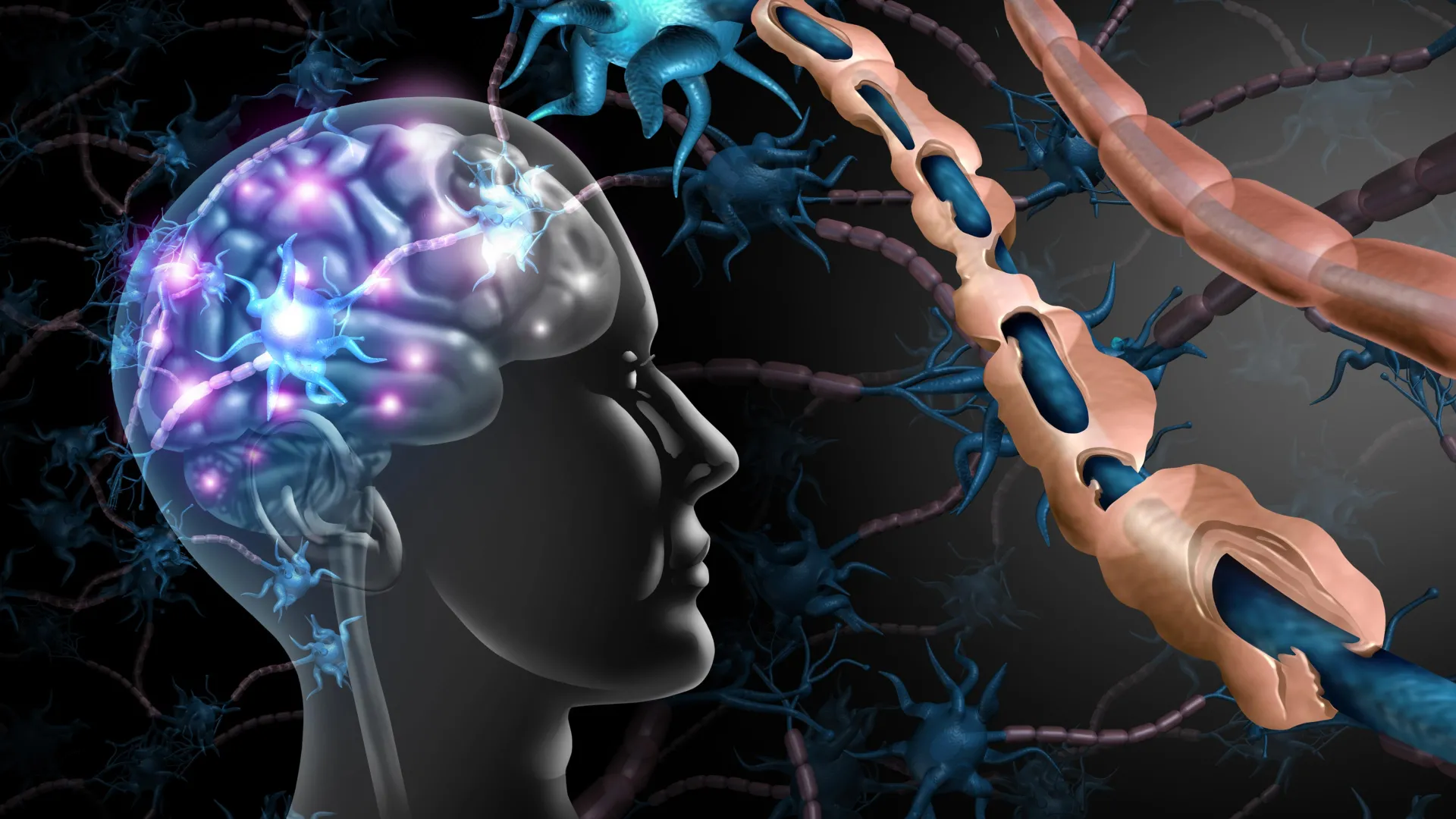
    Myelin is a protective membrane surrounding nerve fibers. It helps electrical signals travel efficiently through the brain and is essential for normal brain function. However, the findings suggest that excess or abnormal myelin may contribute to cognitive problems.

    The changes were particularly noticeable around the remaining thick nerve fibers. Importantly, these abnormalities were associated with the rate of cognitive decline rather than with how well participants performed on cognitive tests at a particular age.

    Oligodendrocytes may become harmful with age

    To understand the causes of these changes, researchers examined oligodendrocytes, specialized brain cells that produce and maintain myelin.

    Oligodendrocytes have traditionally been considered beneficial because they insulate nerve fibers and help them function properly. The new findings suggest, however, that these cells can become dysfunctional as people age and contribute to the problems they normally help prevent.

    Researchers found that people with more severe cognitive decline had lower levels of a protein called NRF2 in their oligodendrocytes.

    NRF2 helps protect cells by regulating hundreds of genes involved in defending against damage and maintaining normal cellular function. When NRF2 activity decreases, cells may become less able to protect themselves and carry out their usual tasks.

    To investigate whether NRF2 was directly involved in the brain changes, the researchers conducted experiments in mice.

    When scientists specifically reduced NRF2 in oligodendrocytes, the animals developed excess myelin and lost large nerve fibers. These changes closely resembled abnormalities observed in human brain tissue. The mice also showed reduced age-related improvements in cognitive performance.

    These experiments provided evidence that reduced NRF2 activity can directly disrupt oligodendrocyte function and cause changes in myelin and nerve fibers that contribute to cognitive decline.

    NRF2 pathway could offer a new treatment target

    The findings could have important implications for developing treatments designed to preserve cognitive abilities in older adults.

    One promising aspect is that the NRF2 pathway is already targeted by drugs used to treat other conditions, including multiple sclerosis (MS).

    Previous studies have shown that increasing NRF2 activity can improve cognitive function in people with MS. This raises the possibility that drugs acting on the same pathway could eventually be repurposed to address oligodendrocyte dysfunction and age-related cognitive decline.

    Further research is needed to determine whether these treatments could benefit older adults experiencing cognitive decline. For now, the findings identify NRF2 and oligodendrocyte function as potentially valuable therapeutic targets.

    Veronique Miron, MRC Senior Non-Clinical Fellow and UK Dementia Research Institute Group Leader at St Michael’s Hospital, part of the University of Edinburgh and Unity Health Toronto, said:

    “While the prevalence of cognitive decline is increasing as the population ages, and no current treatments exist, we are excited about this study, which suggests a potential new therapeutic strategy to preserve cognitive performance as we age.”

    Study changes understanding of brain aging

    Beyond its potential medical applications, the research may change how scientists understand the role of oligodendrocytes in the aging brain.

    Rather than simply supporting healthy neurological function throughout life, these cells may malfunction with age and contribute to problems with memory and thinking.

    Georgina Craig, lead author of the study and a postdoctoral fellow at St Michael’s Hospital in Toronto and Dementia Research UK, said:

    “This study fundamentally changes the way we think about these brain cells in aging. We have always thought of oligodendrocytes as purely beneficial, but here we surprisingly discovered that they malfunction with age and may contribute to cognitive impairment.”

    The findings suggest that maintaining healthy oligodendrocyte function could be an important strategy for protecting memory and thinking skills as people age.

    Published in Nature Medicine, the study was funded by the UKRI Medical Research Council (MRC) and the Canadian Institutes of Health Research (CIHR). It also involved scientists from the University of Edinburgh’s Lothian Birth Cohort Study and Northwestern University.

    Source: www.sciencedaily.com

    Share. Facebook Twitter Pinterest LinkedIn WhatsApp
    Previous ArticleDrupal Fixes Critical Remote Code Execution Vulnerability, Warns Exploits Could Emerge Soon
    Next Article ConnectWise Supply Chain Attack Infiltrates Microsoft 365 Tenants

    Related Posts

    Science

    NASA Hubble Observes a Sea of Stars During Roman Space Telescope Construction

    Science

    Live Science Readers Reveal the Archaeological Discoveries They Want to Find, Including Attila’s Tomb

    Science

    Alpha-Gal Syndrome: Why Tick-Bite Red Meat Allergy Is Puzzling Scientists

    Science

    How to Overcome Sadness in Academia and Find Balance

    Science

    Stephen Colbert-Named Tiny Spider Has a Genome 50% Larger Than the Human Genome

    Science

    Oldest Male Killer Whale on Record May Have Been Identified Using Historic Atomic Bomb Test Data

    Science

    345-Million-Year-Old Fossil Fooled Scientists for Decades

    Science

    Has AI Cracked Internet Encryption? Rumored Breakthrough Claim Surprises Scientists

    Add A Comment
    Leave A Reply Cancel Reply

    Stay In Touch
    • Facebook
    • Twitter
    • Instagram
    • Pinterest
    Top Picks
    Science

    Anthropic AI Formalizes Fermat’s Last Theorem Proof in Just 11 Days

    Mathematician Andrew Wiles completed the proof of Fermat’s Last Theorem in 1994, more than 350…

    Top New Science Fiction Novels Released in July 2026: Must-Reads for Genre Fans

    UK County Rejects Palantir Amid Growing Scrutiny

    Hackers Exploit Citrix NetScaler Zero-Day Vulnerability to Deploy Web Shell

    How Tech Billionaires Are Undermining Biomedical Science

    Most Popular
    Technology

    Most Powerful Obesity Drug in Clinical Trials Reduces Body Weight by Up to 25%

    Technology

    Agility’s New Humanoid Robot Stops and Crouches to Protect Human Workers

    Categories
    • AI (9)
    • Gadgets (6)
    • Science (3,603)
    • Space (3)
    • Technology (3,034)
    • Wheels (3)
    Our Picks
    Technology

    Ted Cruz Seeks to Align FCC With Republicans Before Democrats Take Senate Control

    Science

    Super El Niño Predictions: Increasing Likelihood of Humanitarian Crisis Ahead

    © 2026 Hitechub.
    • Home
    • About Us
    • Privacy Policy
    • Terms & Conditions

    Type above and press Enter to search. Press Esc to cancel.

    GDPR Cookie Banner

    We are using cookies to give you the best experience on our website.

    You can find out more about which cookies we are using or switch them off in .

    Ad Blocker Enabled!
    Ad Blocker Enabled!
    Our website is made possible by displaying online advertisements to our visitors. Please support us by disabling your Ad Blocker.