


The dream of an interstellar human civilization could help ensure humanity’s long-term survival. It remains both a popular science fiction concept and a potential roadmap for the future of space exploration. However, Chao takes a more stoic view, believing that humanity’s ultimate escape into space may be an illusion.
“Developing ways to divert asteroids and creating sustainable habitats for humans on worlds such as Mars are important, but to me, everything comes to an end at some point,” he told me. “It may sound a little strange, but there is some comfort in that knowledge. We are not in this race simply to save ourselves. There seems to be an order to the universe, and perhaps every intelligent species follows its own cycle. We can be okay with extinction.”
In that scenario, robotic spacecraft could outlive humanity. They remain some of our most ambitious messengers, capable of surfing the Sun, exploring hostile planets, and reaching the frontiers of interstellar space. Yet while robotic probes serve as our scouts, many people still want to see humans explore space directly.
“When humans are doing it, people recognize it,” Chao told me. “We are excited and surprised by what returns from robotic missions, but I think we need both human and robotic space exploration.”
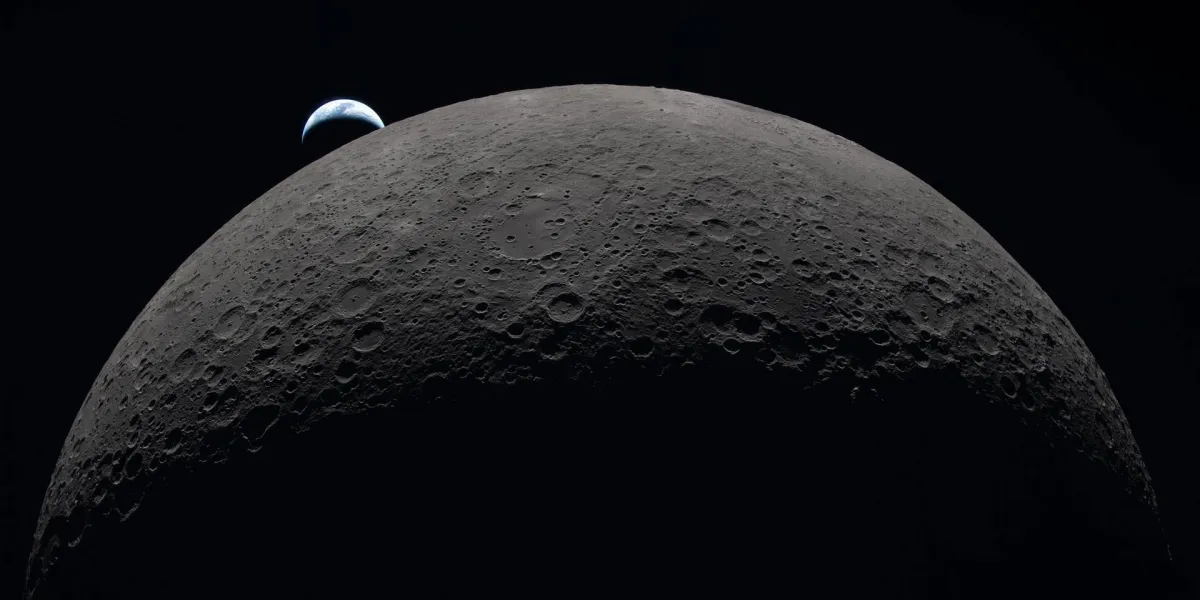
Waibel points out that robotic spacecraft photographed Earth from lunar orbit during the Apollo era. However, it was not until Apollo 8 astronaut Bill Anders captured the famous ‘Earthrise’ photograph that the public experienced the emotional impact of seeing our planet from space. A similar image taken by Artemis II astronaut Christina Koch also went viral online. Koch’s photograph of Earth from the Orion spacecraft offered another powerful perspective on our planet.
There are many reasons for humanity to remain on Earth, including the dangers of spaceflight, the medical challenges of living beyond our planet, and the serious health risks associated with long-term radiation exposure. Even so, it is unlikely that humans will stay on Earth forever. Our ancestors crossed deserts, oceans, and mountains for the same reason we continue to explore space: curiosity, survival, and the desire to discover what lies beyond the horizon.
“Knowing that someone actually went there and can describe it when they return makes the experience far more compelling,” Waibel told me. “We do not know exactly why, but we trust the testimony of witnesses,” she added.
Becky Ferreira is a science reporter based in upstate New York and the author of First Contact: The Story of Our Obsession With Aliens.
Source: www.technologyreview.com