


NASA and Catalyst Abandon Robotic Rescue Mission for Swift Gamma-Ray Telescope
NASA and Catalyst Space Technologies announced Wednesday that they will abandon an ambitious robotic rescue mission before the Neil Gehrels Swift Observatory falls back into Earth’s atmosphere.
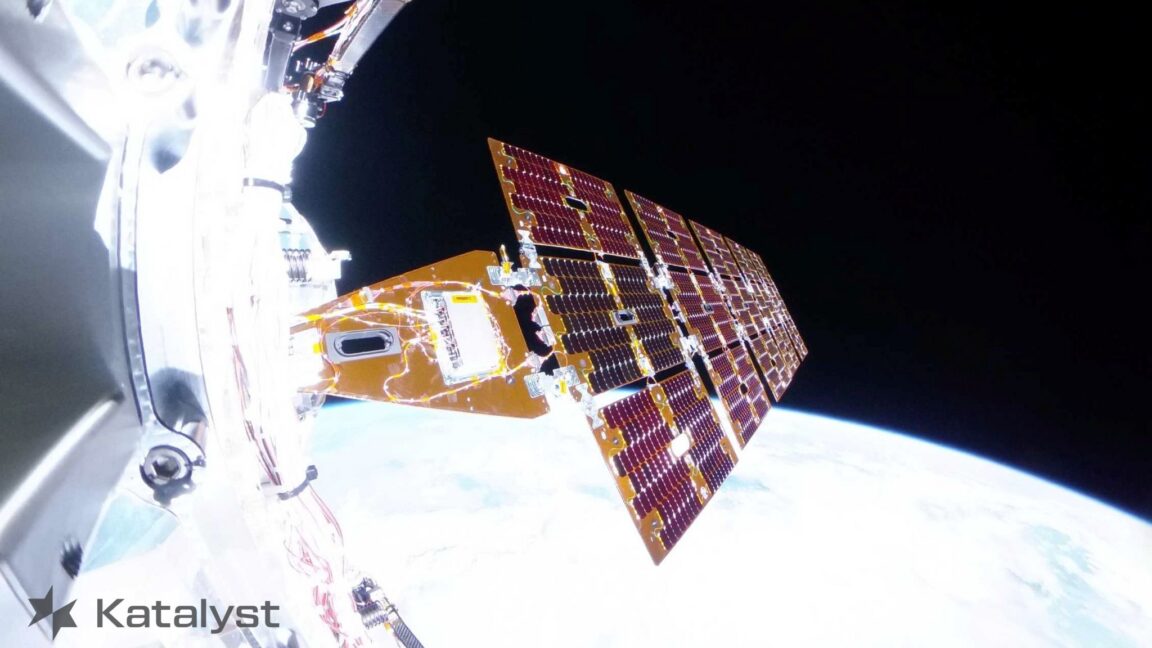
The rescue spacecraft, named Link, launched on July 3 and traveled to NASA’s Swift gamma-ray telescope. After reaching the observatory, Link used three robotic arms to capture it and raise its orbit, potentially giving Swift more time before atmospheric reentry.
About the size of a refrigerator, Link is equipped with two solar arrays and three xenon-fueled electric thrusters designed to move Swift into a safer, higher orbit.
However, ongoing attitude-control problems have prevented the spacecraft from completing the rescue operation.
“Due to ongoing attitude control issues, the Link satellite will not be able to complete the rescue mission,” Catalyst, the startup leading the Swift rescue effort, said Wednesday.
Although the spacecraft remains operational, Catalyst said Link may still be able to approach Swift and use some of its remaining capabilities. The company also hopes to demonstrate Link’s close-navigation system before the mission ends.
“While this mission will not reach the conclusion we originally intended, NASA and Catalyst are evaluating what milestones remain ahead,” Catalyst said in a statement. “We continue to strive to derive technical and operational value from our spacecraft.”
NASA’s Swift rescue mission faced significant risks
Swift’s rescue mission was challenging from the beginning. Less than a year ago, NASA awarded Catalyst a $30 million contract to design, build, and launch the Link spacecraft. The agency said the rescue attempt had to begin by this summer to give Link enough time to reach Swift before the observatory descended into Earth’s atmosphere and burned up.
“NASA should be prepared to act quickly and take smart risks when the potential benefits are worth it, and that’s exactly what we did with this mission,” NASA Administrator Jared Isaacman said. “While this is not the result we were aiming for, it still made this mission worth the effort.”
NASA gave Catalyst an unusually short development schedule. Spacecraft of this type typically require several years to design and prepare for launch, but Catalyst completed Link in just nine months. That accelerated timeline forced engineers to make difficult trade-offs and accept technical risks that would normally be considered unacceptable.
For the first several weeks after launch, the mission appeared to be progressing as planned. The situation changed in late July, when Link unexpectedly lost control.
Catalyst has not disclosed the precise cause of the failure, but two of Link’s three reaction wheels—which are used to control the spacecraft’s orientation—stopped functioning. The satellite also experienced problems with its cold-gas thrusters, which provide more precise pointing control.
With those systems impaired, Link’s only remaining method of controlling its direction is its three low-impulse plasma thrusters. The spacecraft travels around Earth at approximately 8 miles per second, making precise navigation and rendezvous operations especially difficult.
Even though Link will not complete the planned Swift rescue, NASA and Catalyst are continuing to assess whether the spacecraft can achieve additional technical objectives before the mission concludes.
Source: arstechnica.com