


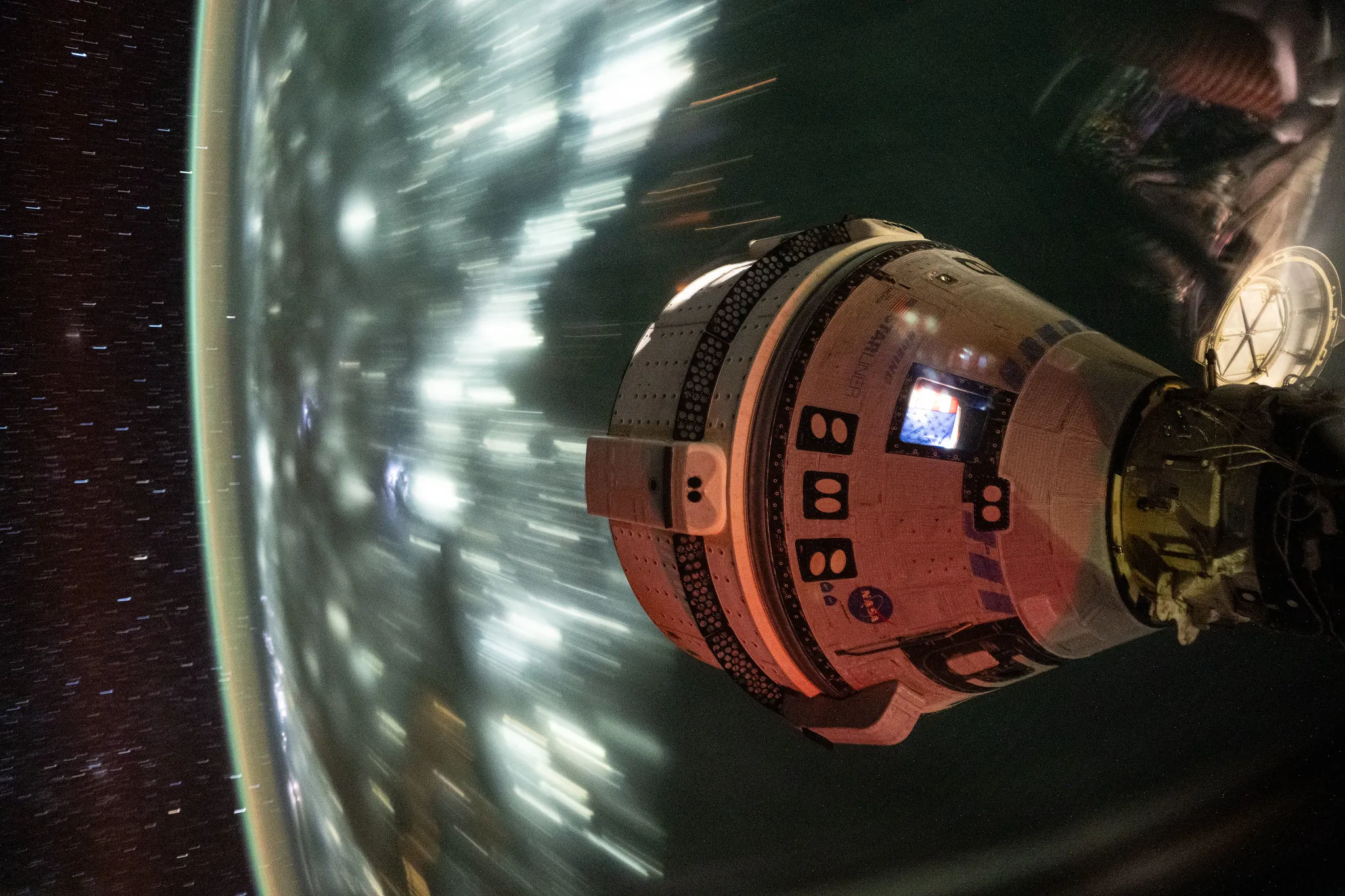
NASA Plans Starliner Return With Uncrewed Test Flight and Future Crew Missions
NASA and Boeing have announced new plans for the Starliner spacecraft, including a potential uncrewed mission to the International Space Station, additional crewed missions, and certification of United Launch Alliance’s Vulcan rocket to transport astronauts to low Earth orbit.
NASA Plans Fifth and Sixth Starliner Missions to the Space Station
NASA plans to exercise options for a fifth and sixth round trip to the space station using Boeing’s Starliner spacecraft. The agency will also work with Boeing and United Launch Alliance to certify the Vulcan rocket for crewed launches after the Atlas V rocket completes its final flight.
“We are living in the most exciting era of space exploration since Apollo,” said NASA Administrator Jared Isaacman. “As this area continues to be developed, the demand for spacecraft to carry launch vehicles, delivery stages, landers, and, of course, astronauts will also increase. NASA has been working to prepare multiple crew transportation options since the inception of the commercial crew program. We have worked closely with Boeing to address the issues identified on previous Starliner flights, and we intend to see this spacecraft return to flight in support of the International Space Station and future commercial destinations.”
Uncrewed Starliner 1 Mission Could Launch in Late 2026 or Early 2027
NASA’s current plan begins with an uncrewed Starliner 1 mission to the International Space Station. The flight will validate improvements made to the spacecraft, collect essential performance data, and help identify any remaining risks before crewed missions resume.
The uncrewed Starliner 1 mission could launch in December 2026 or January 2027. NASA intends to use the flight as a technology evaluation mission to verify improvements to the spacecraft’s thermal environment, obtain data needed for system qualification, and support the certification process for human spaceflight.
“We are starting with an uncrewed Starliner 1 mission to the International Space Station to validate improvements made to the spacecraft and collect necessary flight data,” Isaacman said. “From there, we will leverage what we learn, continue to implement corrective actions identified by the program investigation team, and complete the testing and certification required for human flight. Our current plan is to return astronauts on Starliner 2 by 2028.”
Starliner 2 Could Return Astronauts to Orbit by 2028
NASA’s current plan calls for astronauts to return on Starliner 2 by 2028, pending the spacecraft’s successful testing and certification. The commercial crew program is designed to maintain U.S. crew transportation capabilities and ensure continued access to low Earth orbit.
This work is also important to NASA’s plans to responsibly decommission the space station, transition to commercial space stations, and expand commercial access to space.
NASA Identified 61 Recommendations After Starliner’s 2024 Crew Flight
In February, NASA announced the findings of its Program Investigation Team, which examined the programmatic and technical issues that led to Starliner’s uncrewed return during its first crewed flight in 2024. The investigation identified 61 recommendations for NASA to help ensure that future missions meet the agency’s standards for human spaceflight.
The report identified an issue involving Starliner’s service module reaction control thrusters. During the crew flight test, a thruster operated beyond its technical qualifications, resulting in a loss of control. Ground testing and analysis indicated that the thruster performance problems were caused by a combination of factors, including the thermal environment and design features specific to the spacecraft.
Boeing to Modify Starliner’s Thrusters and Service Module
Based on the investigation’s findings, Boeing will make thermal modifications to Starliner’s service module. NASA will evaluate those changes to improve the spacecraft’s performance during Starliner 1.
NASA and Boeing have also jointly decided to introduce additional thruster valve design changes to support spacecraft certification and future human flights.
“Starliner’s next flight is an important step in achieving full system certification and ensuring a sustained human presence in low Earth orbit,” said Dana Weigel, NASA’s Low Earth Orbit Program Manager. “With the safety of the space station crew and public as our top priority, we will test Starliner’s propulsion system through targeted demonstration objectives and disciplined operational management. These steps are essential to validating Starliner’s thermal performance, a key element of certification.”
After the flight, NASA and Boeing will complete modifications to the service module’s thruster valve design to address poppet seal extrusion and its negative impact on thruster performance.
Boeing also plans additional upgrades throughout the spacecraft to support system certification. These improvements include new crew module thrusters, battery installations, and minor parachute-system changes intended to improve performance and reliability.
NASA Commercial Crew Program Information
NASA’s commercial crew efforts aim to preserve U.S. crew transportation capabilities while supporting continued access to low Earth orbit and future commercial destinations.
For more information about NASA’s mission, visit:
-end-
George Alderman / Josh Finch
Headquarters, Washington
202-358-1600
[email protected] / [email protected]
Source: www.nasa.gov