


NASA’s CHAPEA Mission 2 Crew Nears the End of a Year-Long Mars Simulation
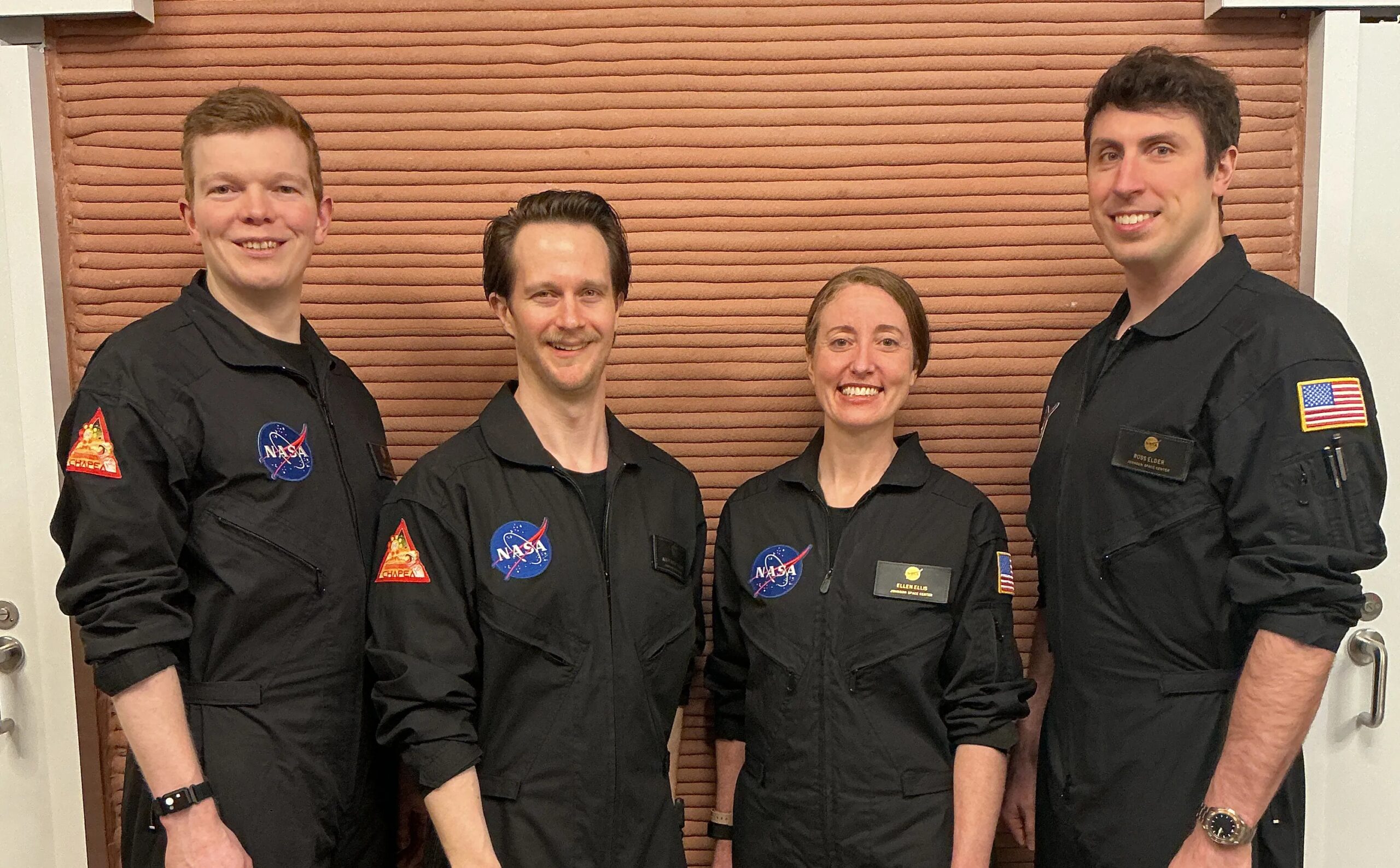
The four-member crew of NASA’s Crew Health and Performance Exploration Analog (CHAPEA) Mission 2 has spent the past year living and working in isolation inside a confined habitat at NASA’s Johnson Space Center in Houston.
For 365 days, the crew has operated as if they were living on the surface of Mars. Their simulated mission has included growing crops, managing limited resources, coping with communication delays, and conducting spacewalks on a simulated Martian surface.
Meet the CHAPEA Mission 2 Crew
The crew members are:
- Ross Elder, mission commander
- Ellen Ellis, medical officer
- Matthew Montgomery, science officer
- James Spicer, flight engineer
The crew entered the 1,700-square-foot, 3D-printed habitat on October 19, 2025. During the first year of the 378-day mission, NASA’s science team prepared to process health and performance data collected from the crew.
This data will help NASA balance mission priorities and develop ways to counter the risks of long-duration spaceflight during future crewed missions to Mars.
“We are extremely proud of the dedication and accomplishments of our crews on such a fast-paced and highly demanding mission over the last year,” said Grace Douglas, CHAPEA principal investigator. “The entire CHAPEA team is thrilled to be able to congratulate the crew in person.”
When Will the NASA Mars Simulation End?
The crew will leave the habitat on Saturday, October 31, concluding their mission. They will then have the opportunity to reunite with family members they have communicated with only by email during the mission, which included Mars-like communication delays.
After exiting the habitat, the crew will begin a two-week post-mission evaluation and debriefing with NASA scientists.
How CHAPEA Will Help Future Mars Missions
The reports and assessments from CHAPEA Mission 2 will help scientists understand what crews need to adapt to the demands of daily life during long-duration missions. The findings will also give NASA insight into the spacecraft systems and resources needed to keep astronauts healthy, productive, and connected far from Earth.
For example, the data could reveal how a limited diet and exercise system affect NASA’s ability to accomplish mission goals such as spacewalks on the surface of Mars. The findings could also help NASA build decision-support systems that promote crew autonomy and assist astronauts in managing communication delays that can last up to 45 minutes each way.
“This mission was very valuable in starting to teach us how we understand the requirements of a year-long mission, including medical and psychological care, through communication delays,” said Michael Stenger, chief scientist in NASA’s Human Research Program.
“Combining this realistic Mars mission analog with a series of physiological, psychological, and performance measurements in a tightly controlled environment will allow us to apply the knowledge from these experiences to the moon base and beyond.”
How to Watch the CHAPEA Mission 2 Escape Ceremony
NASA will hold the CHAPEA Mission 2 escape ceremony on October 31. To watch the event, please visit:
NASA’s CHAPEA Mission 2 escape ceremony
About NASA’s Human Research Program
NASA’s Human Research Program develops methods and technologies to support safe and productive human space travel. The program studies how spaceflight affects the human body and behavior through research conducted in laboratories, ground-based analogs, commercial missions, the International Space Station, and the Artemis mission.
This research supports NASA’s efforts to keep astronauts healthy and mission-ready as human space exploration expands to the Moon, Mars, and beyond.
Source: www.nasa.gov