


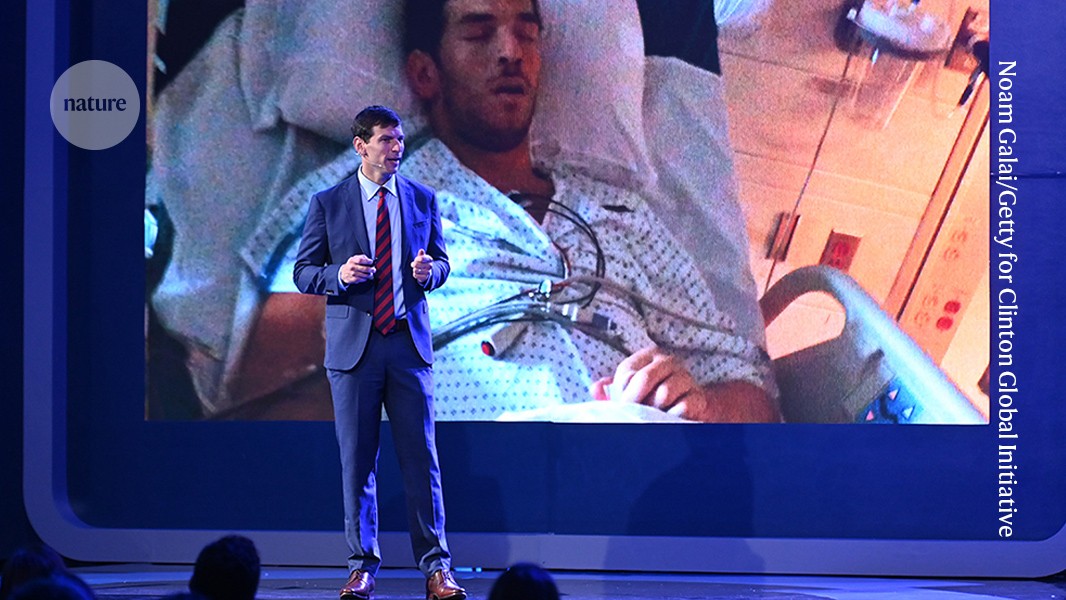
David Fajgenbaum discovered how to repurpose a drug to treat his own rare disease and has dedicated much of his career to repurposing medicines. Credit: Noam Galai/Getty Images for Clinton Global Initiative
As a child, molecular biologist Francesca Granata experienced episodes of skin pain so severe that she could not tolerate even a hug from her mother. The sensation felt like boiling water scalding her skin, and relief came only after spending up to ten days in a darkened room. Yet doctors repeatedly suggested that her symptoms were psychological. “A lot of physicians said things like, ‘You are so beautiful, why are you here?’” she recalls.
“Deep down, I knew something was wrong,” Granata says. In 2003, at the age of 16, she turned to Orphanet, a database now used by patients and medical professionals, and began reading through its entries alphabetically, one syndrome at a time. At 21, while studying at the University of Milan in Italy, she heard a biochemistry lecturer describe porphyrias. This group of rare genetic disorders is caused by the accumulation of porphyrins, the building blocks of heme, a component of oxygen-carrying haemoglobin. Some forms of porphyria cause burning or intensely itchy skin.
Granata returned to the letter “p” in Orphanet and found a reference to dermatologist Gianfranco Biolcati, a porphyria specialist at the San Gallicano Dermatological Institute in Rome. She travelled there in 2008, where Biolcati diagnosed her with erythropoietic protoporphyria (EPP). This inherited condition causes protoporphyrins to accumulate in red blood cells, triggering acute, searing sensitivity to light and potentially leading to liver disease.
“After years without a diagnosis, erythropoietic protoporphyria has become not only my disease, but also the focus of my work,” Granata explains. In 2011, while completing a master’s degree at the Policlinico of Milan research hospital, she chose a research career focused on porphyrias. She is now a specialist in rare haematological diseases and inflammation there. Granata also founded Vivi Porfiria, an Italian patient-advocacy organization established to “give a voice to people living with porphyria, raise awareness and promote early diagnosis”. In 2018, she co-founded the International Porphyria Patient Network, a global organization that connects national porphyria groups and supports international collaboration.

Francesca Granata has created patient-advocacy groups to raise awareness of porphyrias, rare genetic disorders, and is driven to find a cure for herself and others. Credit: Francesca Granata & Valentina Brancaleoni
Scientists who study rare diseases they personally experience may seem unusual, but many patient-researchers say that their motivation is rooted in empathy and a desire to improve care. Their direct experience with illness can help them understand the practical and emotional challenges faced by other patients, inspiring research into better treatments and more effective clinical trials.
These researchers also recognize the risk of bias when studying their own disease. However, they argue that personal involvement can bring important advantages, including a deeper understanding of patient needs and a strong commitment to finding treatments for conditions that often have no cure. Many say that learning more about their disease helps them regain a sense of control and gives their scientific work a clear purpose.
For Granata, the pain caused by EPP “drives my soul, my person” to identify treatments and make discoveries that could improve her life and the lives of others with the condition.
Fuelled by personal experience
Biomedical researcher Sonia Vallabh is using her family history to develop preventive treatments for prion disease, a rare and fatal neurodegenerative disorder caused by misfolded proteins that destroy neurons. In 2010, Vallabh watched her 52-year-old mother die from rapidly progressive dementia. An autopsy revealed that the disease was genetic prion disease.
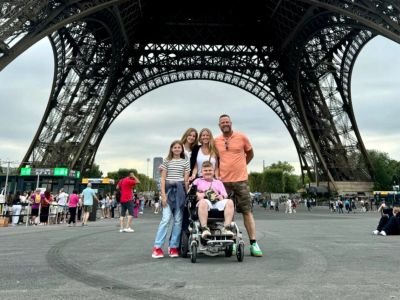
Meet the biotech-company founders driven by their child’s rare disease
After her mother’s death, Vallabh was tested for a mutation in the PRNP gene, which encodes the prion protein. The normal prion protein appears to support nerve cells. Vallabh discovered that she also carries a mutation associated with prion disease. Rather than retreating into grief, she left her legal career and retrained as a scientist. “I needed to educate myself so that I can be my own advocate going forward,” she says. “I didn’t feel like there was an ‘ignorance is bliss’ option — not for me.”
Vallabh and her husband, computational biologist Eric Minikel, now co-lead a prion-disease drug-development programme at the Broad Institute of MIT and Harvard in Cambridge, Massachusetts. In the PRiSM clinical trial, which began in April, the researchers are evaluating the safety, tolerability and pharmacokinetics of small interfering RNAs, or siRNAs, in people with symptomatic prion disease. siRNAs regulate gene expression.
The researchers aim to reduce the amount of normal prion protein throughout the brain. In prion disease, this protein can misfold and initiate a destructive process. “In pre-symptomatic people at risk, if we can lower the amount of normal protein, I’m hoping we can delay or even prevent the formation of the first misfolded prion,” Vallabh explains.

Sonia Vallabh (right), along with her husband Eric Minikel, runs a clinical trial to test potential therapies for people with symptomatic prion disease. Credit: Allison Colorado
Some people might view Vallabh’s personal experience as a conflict of interest. She disagrees. “After many years of doing this, I really believe, as I did in the beginning, that I am as close as it gets to a person without a conflict of interest. I will never do something just to advance my own career, just to keep the lights on in the lab, to try to get a high-impact paper or to get a promotion,” she says.
“This is not to malign the people in my field,” she adds. Instead, she says she would be delighted if another researcher developed a safe and effective treatment first: “If someone beats me to developing a safe and effective therapy and preventive treatment for prion disease, no one will be happier than me.”
Physician-researcher David Fajgenbaum was diagnosed with Castleman disease, a rare immune disorder, at the age of 25 while he was a medical student in 2010. He also recognizes the possibility of bias when researchers investigate their own illnesses.
“In biomedical research, we’re all looking for patterns,” Fajgenbaum says. The best protection against finding false patterns, he argues, is to work with trusted experts and invite critical feedback. Researchers should “surround yourself with brilliant people and ask them what they think. Build in external checks from colleagues and collaborators to make sure that you’re looking for real signals.” He also advises scientists to “always work with institutional review boards. These ethics committees exist for a reason.”
Several patient-researchers highlighted the empathy they bring to work on their own conditions. That understanding can help scientists design more practical clinical trials, says stem-cell biologist Valentina Fossati of the Jackson Laboratory-NYSCF (JAX-NYSCF) in New York City.
Fossati was 30 when she was diagnosed with multiple sclerosis (MS), an autoimmune disorder. It was as if “a huge bomb exploded in my head”, she says. At the time, she was a postdoctoral researcher at the same institution — then known as the New York Stem Cell Foundation — studying infection-fighting T cells. Her initial reaction was to leave science and return to Italy, but after speaking with the late Susan Solomon, co-founder of the NYSCF, Fossati decided to remain and shift her research towards MS.

Valentina Fossati (pointing at screen) says that patient-researchers are well placed to study their disease because they understand the challenges of living with it. Credit: Rebecca Arian
“I was extremely scared at the beginning,” Fossati says. But reading widely about MS soon sparked her interest. In the disease, the immune system attacks myelin, the fatty protective sheath surrounding nerve fibres. Fossati now leads JAX-NYSCF’s MS programme and has developed laboratory methods for transforming human stem cells into the major cell types found in the brain, including oligodendrocytes, which produce myelin around neurons in the central nervous system. Her work aims to clarify the biological mechanisms that drive MS.
Fossati says patient-researchers can make valuable contributions to clinical-trial design. “You can be more mindful of designing a clinical trial where the patient can be more compliant, because you design it around things you have tried,” she explains. Participants may struggle to follow a trial regimen because of medication side effects, fear of injections or anxiety about undergoing an MRI scan in a narrow, noisy machine.
Having experienced these challenges herself, Fossati understands what might make trial participation uncomfortable. She can therefore suggest practical changes to a protocol, such as using a skin cream instead of an injectable medicine when appropriate.
A purpose in repurposing medicines
Like many scientists who study their own diseases, Fossati says her greatest inspiration comes from patients, colleagues and the wider disease community. Fajgenbaum similarly credits the collaborators involved in Every Cure, his major drug-repurposing initiative. The project uses artificial intelligence to screen thousands of existing medicines for potential use against rare diseases, aggressive cancers and frequently fatal inflammatory disorders.
When drug discovery fails: scientists share their frustrations with the process
During the first years after his diagnosis, Fajgenbaum says, “I almost died on five separate occasions” because Castleman disease caused multiple-organ failure. Doctors initially treated him with intensive chemotherapy designed for blood cancers, but the disease continued to relapse. By analysing his own blood samples and reviewing scientific literature, he identified sirolimus, an immunosuppressant that blocks the mTOR cell-growth pathway, as a possible treatment. The drug stopped his immune system from becoming activated1. “This repurposed drug has prevented a relapse of my condition for over 12 years. It saved my life,” he says.
Fajgenbaum’s laboratory at the University of Pennsylvania in Philadelphia continues to study Castleman disease and related disorders, but he now spends much of his time leading Every Cure. “We’ve reviewed over 14,000 of the best repurposing ideas from our platform and we currently have 12 active repurposing programmes,” he says. Two programmes have identified drug regimens that have shown promising results in early clinical studies for Rosai-Dorfman-Destombes disease, a non-cancerous overgrowth of white blood cells, and Bachmann-Bupp syndrome, a disorder associated with developmental delays.
Granata advises scientists who plan to study their own disease to maintain a degree of emotional distance. She protects her objectivity by using what she calls her “anthropological brain” when advising patients about possible treatments and warning them against unproven remedies. For Granata, this means separating scientific evidence from emotion and not taking unexpected results personally.
Fossati also recommends compartmentalization. Researchers who feel strongly about their own disease should pursue that interest, she says, but they must recognize the emotional risks. “If you have a more progressive disease or you know that there is no available cure now, it may become overwhelming. So, it’s important that you compartmentalize to separate your personal life from what you are studying, otherwise the anxiety really heats up.”
For Fossati, working at the cellular and molecular level creates distance from worries about her own future. Concentrating on the immediate scientific task helps her manage that separation. “When you choose to work on a disease that affects you personally, you gradually develop your own strategies for managing that balance in a way that works best for you,” she says.

Monkol Lek (right) and his wife Angela Lek both work in the field of muscular dystrophy and related neuromuscular diseases.Credit: Angela Lek
Monkol Lek, a geneticist at Yale School of Medicine in New Haven, Connecticut, offers practical guidance for researchers investigating their own rare diseases. He recommends connecting with rare-disease organizations, attending patient conferences and learning directly from laboratories working in the field. It can also be valuable to “spend a day in a lab that researches your disease”, he says.
Source: www.nature.com