


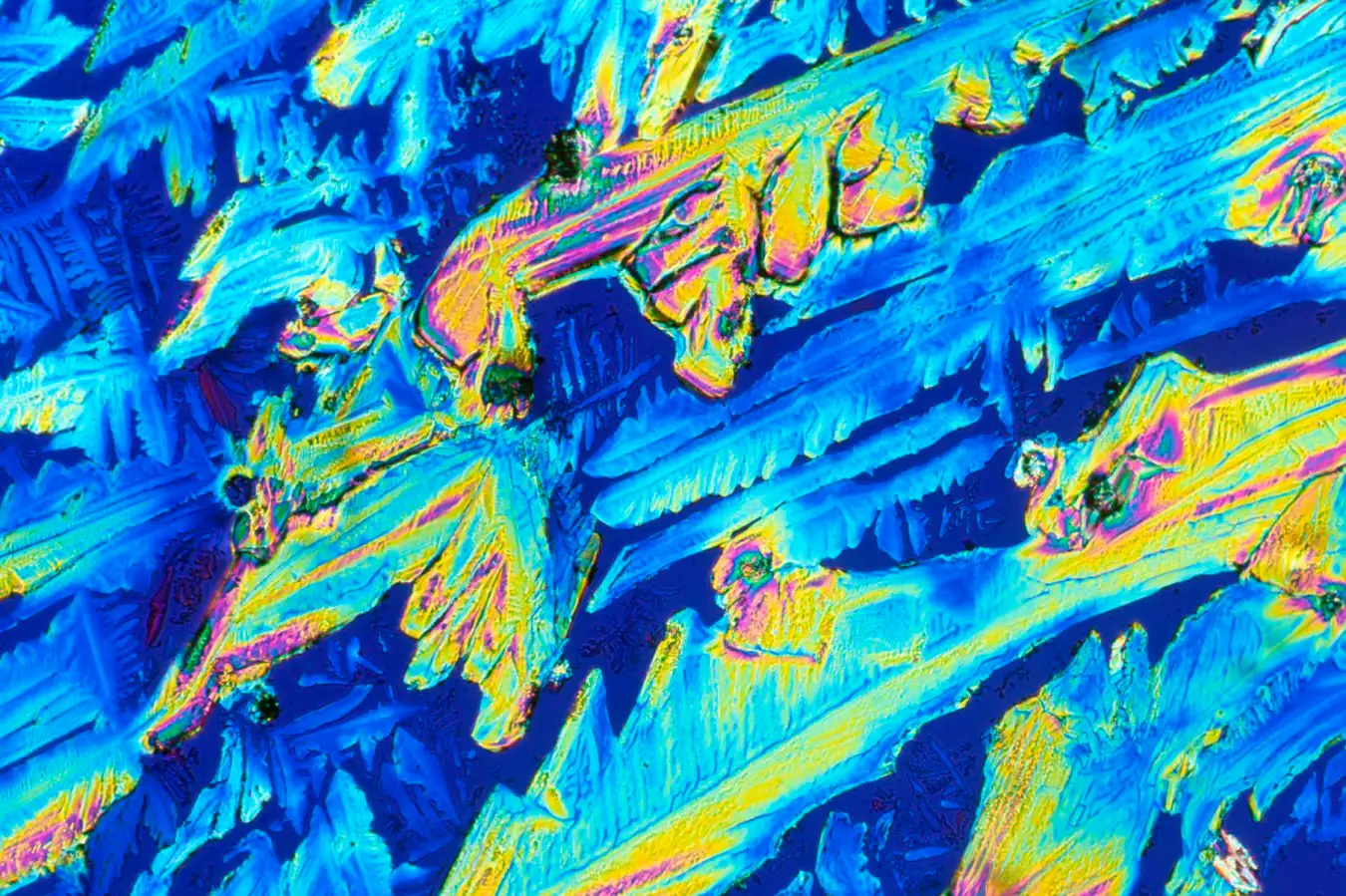

Polarized Light Micrograph of Chemical Histamine Crystals
Alfred Pasieka/Science Photo Library
Individuals suffering from hay fever are well aware that histamine initiates an immune reaction throughout the body. However, within the brain, histamine serves an entirely different purpose. Recent studies have shown a 10% improvement in memory accuracy when histamine levels are increased.
“We believe it influences what we call excitement associated with novelty,” explains Michael Colwell from Oxford University. “It raises our alertness when encountering new stimuli in our surroundings.”
Research has long identified histamine receptors in the brain. “These receptors cluster around areas critical for learning and memory,” Colwell remarks. Animal studies support this theory: Histamine’s role in learning has been established.
This correlation may shed light on certain memory-related side effects of early antihistamines. “Many of the earlier antihistamines penetrated the brain,” Colwell notes. “This led to impaired memory retention, a common issue for frequent antihistamine users.”
So, what occurs when histamine levels surge in the brain? Until now, human testing was unfeasible, but Colwell and his team observed that an existing narcolepsy medication, pitolisant, elevates histamine levels by binding to histamine-3 receptors throughout the brain.
In their study, 60 volunteers were recruited, with half receiving pitolisant and the other half a placebo. MRI scans revealed that those on pitolisant exhibited stronger neuronal connectivity between the histamine-producing region and the hippocampus—key for memory. These individuals also demonstrated an 11% increase in memory retrieval accuracy during the scans.
However, Colwell cautions against using pitolisant as a cognitive enhancer. “It significantly impacts sleep patterns, and I suspect long-term memory may suffer as a result.”
Roland Seifert, a researcher at Hannover Medical University in Germany, mentioned that the potential for misuse of pitolisant as a smart drug is low, considering its accessibility challenges. He emphasized that findings aligning with animal studies highlight the potential for targeting histamine receptors in treating various neurological disorders.
Patients prescribed pitolisant for conditions like narcolepsy or Prader-Willi syndrome have reported heightened alertness and cognitive enhancement. Holger Stark, who contributed to the drug’s development at Heinrich-Heine University in Düsseldorf, states, “In cases where cognitive function is compromised due to disease, pitolisant has repeatedly shown promise in reversing cognitive decline and increasing alertness. However, it typically rectifies impaired functions rather than providing enhancements beyond normal cognition.”
This dual role of histamine within the body exemplifies the resourcefulness of evolution. “On a larger scale, this indicates how efficient the human body can be,” Colwell concludes.
Topics:
Source: www.newscientist.com