



Artificial intelligence is rapidly reshaping the global economy and the future of work. However, concerns about AI go beyond the uncertainty and disruption associated with previous technological revolutions. Much of the debate centers on the direction of AI development, as leading technology companies continue to pursue artificial general intelligence (AGI).
Why AI isn’t causing a jobs apocalypse – so far
AGI is generally understood as an AI system capable of matching or exceeding human performance on the most economically valuable tasks. In such a future, workplace automation would extend far beyond individual industries or routine jobs. AI systems could perform many types of work, including highly skilled professional roles. The consequences of replacing human labor on this scale would be unprecedented.
I joined thousands of economists and AI researchers in signing a petition to highlight this urgent public-policy challenge. We must act now to urge policymakers and technology leaders to guide AI toward complementing human workers rather than replacing them.
Research on the US labor market suggests that, since 1980, automation has significantly reduced demand for workers performing routine tasks while contributing to rising inequality (D. Acemoglu and P. Restrepo, Econometrica 90, 1973–2016; 2022). The introduction of industrial robots in manufacturing is a clear example. Although robotics has increased productivity, evidence shows that communities most exposed to automation have experienced declines in employment and wages (D. Acemoglu and P. Restrepo, J. Polit. Econ. 128, 2188–2244; 2020).
The labor-market effects already associated with industrial robots could become even more pronounced as AI adoption accelerates. At stake is not only shared prosperity, but also the stability of democratic institutions. Societies cannot remain economically and politically stable if large numbers of people are excluded from meaningful opportunities.
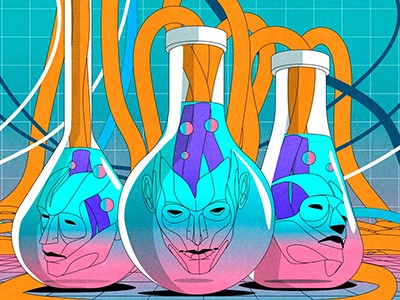
AI is transforming the economy – understanding its impact requires both data and imagination
However, widespread job displacement is not inevitable. Technology has no predetermined social purpose and does not dictate a single future. This is particularly true of AI, which encompasses a broad range of tools and applications. Much of today’s development focuses on automation and replacing human labor wherever possible.
There is another path: worker-centered AI that complements human skills instead of replacing them. AI systems designed to expand workers’ capabilities could improve productivity, support better decision-making and distribute the benefits of technological progress more broadly.
Education provides one example. Rather than replacing teachers, AI tools could identify where students are struggling and help educators deliver more personalized support at scale. Policymakers could promote this type of innovation through responsible regulation, public investment and targeted incentives that reward technologies designed to complement workers.
Source: www.nature.com