


NVIDIA Expands Open Model Portfolio for AI Agents, Robotics, Biology and Quantum Computing
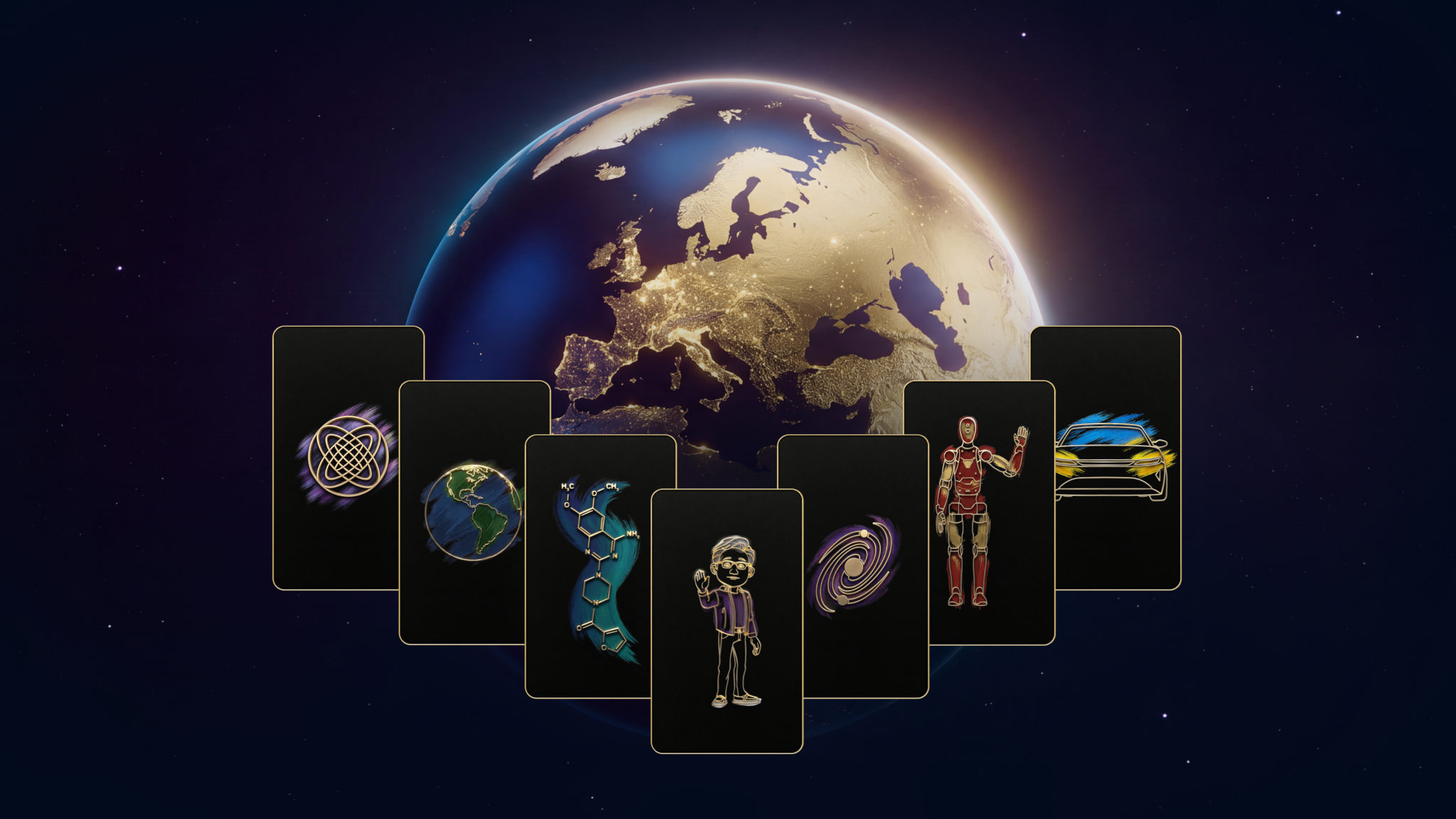
NVIDIA is expanding its family of open models across languages, robotics, biology and quantum computing. The portfolio is designed to help developers, researchers and businesses build applications for local languages, specialized industries and domain-specific workloads.
The open models provide organizations with foundations they can deploy on infrastructure they customize and manage using their own local data.
NVIDIA’s New Open Models at a Glance
- NVIDIA Nemotron 3.5 Super VL and Nemotron 3.5 Volt: Open models for agentic AI applications.
- NVIDIA Nemotron Retriever: Models for embedding, reranking and document analysis.
- NVIDIA Kumo: Open-weight foundation models and libraries for structured business data.
- NVIDIA Cosmos 3.5: World models for robotics, autonomous vehicles and physical AI.
- NVIDIA Alpamayo 2 Edge: Real-time inference for self-driving vehicles.
- NVIDIA BioNeMo: Open models for healthcare and scientific discovery.
- NVIDIA Ising: Open models for quantum computing development.
NVIDIA Nemotron Powers Agentic AI Development
NVIDIA Nemotron provides open language models, datasets and recipes that developers can use to build AI agents. The models support text and images, helping agents orchestrate workflows, reason through complex problems and complete specialized tasks at low cost.
Nemotron models are built on data, research and expertise from the NVIDIA Nemotron Coalition, including European partners such as the Black Forest Research Institute, Company H and Mistral.
Nemotron gives companies a foundation for building applications based on their own knowledge and expertise. Organizations associated with Nemotron include Dassault Systèmes, Domin, Dream, Palantir customers, Salesforce, SAP, Shopify, Synopsis and WPP. Professional services providers including Accenture and Stingray also use Nemotron models and datasets to create custom models and domain-specific agents.
NVIDIA also identifies a broad post-training ecosystem supporting Nemotron customization for enterprise workloads. Partners include AfterQuery, Agile RL, AI21, Alice, Applied Computing, Base Ten, CoreWeave, Distillation Laboratory, Aeon, Fastino, Fireworks, Google Cloud, Melkor, Multiverse Computing, Nevius, Handshake AI, Pururai, Prime Intelligence, River.AI, Scale AI, Trajectory and TNG.
NVIDIA Kumo Brings Predictive AI to Structured Enterprise Data
NVIDIA Kumo provides open foundation models, libraries and tools that help agents and applications predict outcomes, score fraud risk and recommend actions using structured business data.
As part of the NVIDIA Agent Knowledge Foundation, Kumo is designed to reduce prediction time and the cost and complexity of building separate machine learning pipelines for individual tasks.
Developers can use pretrained Kumo models to deliver predictions across more applications. They can also fine-tune predictions with their own data when higher performance is required.
The Kumo portfolio includes:
- NVIDIA Kumo Structuring: Models for relational and tabular forecasting, forecasting and anomaly detection.
- NVIDIA Kumo Engine: An open library stack for developing and deploying structured-data foundation models.
Cognite, Coinbase, Databricks, DoorDash, Revolut, Tubi and Snowflake are among the companies referenced in connection with Kumo. Customers are using Kumo models to accelerate AI development in advertising, energy, financial services and retail.
NVIDIA Cosmos Accelerates Robotics Training and Simulation
NVIDIA Cosmos is a family of open world foundation models that helps developers build robots, autonomous vehicles and vision agents capable of understanding and interacting with the physical world.
NVIDIA has introduced new Cosmos post-training and optimization tools designed to help developers improve world models with less computing. Cosmos also provides simulation checkpoints for evaluating behavior in interactive driving and robot-handling scenarios before real-world testing.
NVIDIA Cosmos Data Factory includes blueprints and core agent skills for curating, labeling, generating and evaluating training data. Developers can use these capabilities for driving scenarios, product defects, image enhancements and event generation. They can use complete workflows or individual functions, with agents orchestrating the process.
Porsche, Voxel 51, Anybotics, Encord, Zalando, CEVA Logistics, Celeact and Siemens use Cosmos Data Factory to create high-quality and diverse training datasets intended to improve model accuracy.
NVIDIA Alpamayo 2 Edge Enables Real-Time Inference for Self-Driving Cars
NVIDIA Alpamayo 2 Edge is a compact inference model that brings real-time scene understanding and motion planning directly to autonomous vehicles.
Built on NVIDIA Cosmos and optimized for the NVIDIA DRIVE AGX Thor platform, Alpamayo 2 Edge is designed to help developers bring advanced driving features to vehicles with low computing requirements.
NVIDIA BioNeMo RFD4-Proteina Advances Protein Design
NVIDIA BioNeMo RFD4-Proteina is an open protein design model associated with the Baker Laboratory, the Protein Design Institute and the University of Washington.
The model generates protein sequences and three-dimensional structures to help researchers design proteins that bind to difficult targets, assemble into complex structures and bind to small molecules.
NVIDIA says BioNeMo RFD4-Proteina delivers performance across more than 10 protein design tasks and generates designs approximately 13 times faster than RFdiffusion3 on the 200-amino-acid protein benchmark.
Researchers can use the model through agents to generate and evaluate candidates against design goals and molecular constraints, then select designs for laboratory testing.
NVIDIA Ising Accelerates Quantum Computing Development
The NVIDIA Ising family of open models provides a common, extensible foundation for developing useful quantum supercomputers. Applications include real-time hardware calibration and error correction tailored to different hardware needs and qubit modalities.
IQM used Ising to calibrate a quantum processor and showed that a specialized open calibration model can outperform a large general-purpose model. SEEQC combines the NVIDIA NVQLink platform and Ising with a proprietary digital link to meet the low-latency requirements of real-time quantum error correction.
AWS is integrating the Ising model family into AWS Parallel Computing Service. Quantum error decoding is typically performed on traditional hardware located near quantum processors because of latency requirements. The AWS integration allows researchers to build with Ising before deployment.
Availability of NVIDIA’s Open Models
- NVIDIA Nemotron 3.5 Super VL: Available through Hugging Face, ModelScope, OpenRouter and build.nvidia.com. It is also available as NVIDIA NIM microservices and through NVIDIA Cloud, post-training and inference partners.
- Nemotron 3.5 Volt E4B 4GB: Scheduled to be available on Friday, October 23.
- NVIDIA Nemotron Retriever: Available through Hugging Face, partner platforms, NVIDIA NIM microservices and build.nvidia.com.
- NVIDIA Kumo: Open models are available through Hugging Face. Kumo is also optimized and packaged as an NVIDIA NIM microservice through build.nvidia.com.
- NVIDIA Cosmos: Published through Hugging Face, GitHub and selected reasoning partners.
- NVIDIA Alpamayo 2 Edge: Scheduled for download from GitHub and Hugging Face later this month.
- NVIDIA BioNeMo RFD4-Proteina: Available through build.nvidia.com, with availability as an NVIDIA NIM microservice on GitHub, Hugging Face and through selected inference partners.
- NVIDIA Ising: Available through GitHub, Hugging Face and build.nvidia.com.
Source: blogs.nvidia.com