


Close Menu
HitechubHitechub
    What's Hot
    Technology

    Russian Gamers Unite to Prevent Nuclear War: Join the Fight Online

    Science

    Webb Telescope Discovers Methane in Interstellar Comet 3I/ATLAS

    Science

    New discoveries in physics suggest that we are living in a simulation

    Important Pages:
    • About Us
    • Privacy Policy
    • Terms & Conditions
    Facebook X (Twitter) Instagram Pinterest
    Facebook X (Twitter) Instagram
    HitechubHitechub
    Friday, June 5
    • Technology
      1. AI
      2. Gadgets
      3. View All

      This is the most popular CEO in the world

      Sectors in which “Chat-GPT” is most often used

      AI Pioneer Expresses Concern About Potential for AI to Surpass Humanity

      Artificial intelligence has begun to “swallow” professions

      What’s new in Android 14

      Europeans have about 700 million old mobile phones in their drawers

      Here’s how you can tell if your phone is being tapped

      “Sneaker X” – computer case in the shape of a sneaker

      Russian Gamers Unite to Prevent Nuclear War: Join the Fight Online

      Challenges of Space Travel: Why Journeying to Space is So Difficult

      NASA Astronaut Casts Historic Vote from Space

      Discover the Future of Comfort: What If You Could Wear a Chair?

    • Science
      1. Space
      2. Wheels
      3. View All

      Galaxies in the universe are growing more slowly than they should

      “Espace” presented the new lander “Apex 1.0”

      The largest asteroid sample ever collected has arrived on Earth

      (VIDEO) Incredible flight of the Parker Solar Probe

      Toyota wants to make a new generation battery with a range of up to 1,200 km

      Meet Toyota’s lunar “baby” that could make exploring the Moon easier

      Microlino – Is this the perfect city car?

      Alfa Romeo 4C gets an electric successor

      AI Overload: How the Surge of Low-Quality Tools is Straining Open Source Developers

      Neil deGrasse Tyson Discusses New Book: Exploring Aliens on Earth and the Fascinating Science of Wormholes

      Red Stripes in Welsh Caves: Britain’s Oldest Art Finally Recognized After Natural Phenomenon Dismissal

      Timeless Math Memes That Have Captivated Mathematicians for Over a Century

    HitechubHitechub
    Home » Combatting Fungal Brown Rot with Bacteria: A Sciworthy Exploration
    Science

    Combatting Fungal Brown Rot with Bacteria: A Sciworthy Exploration

    Share Facebook Twitter Pinterest WhatsApp
    Share
    Facebook Twitter LinkedIn Pinterest WhatsApp

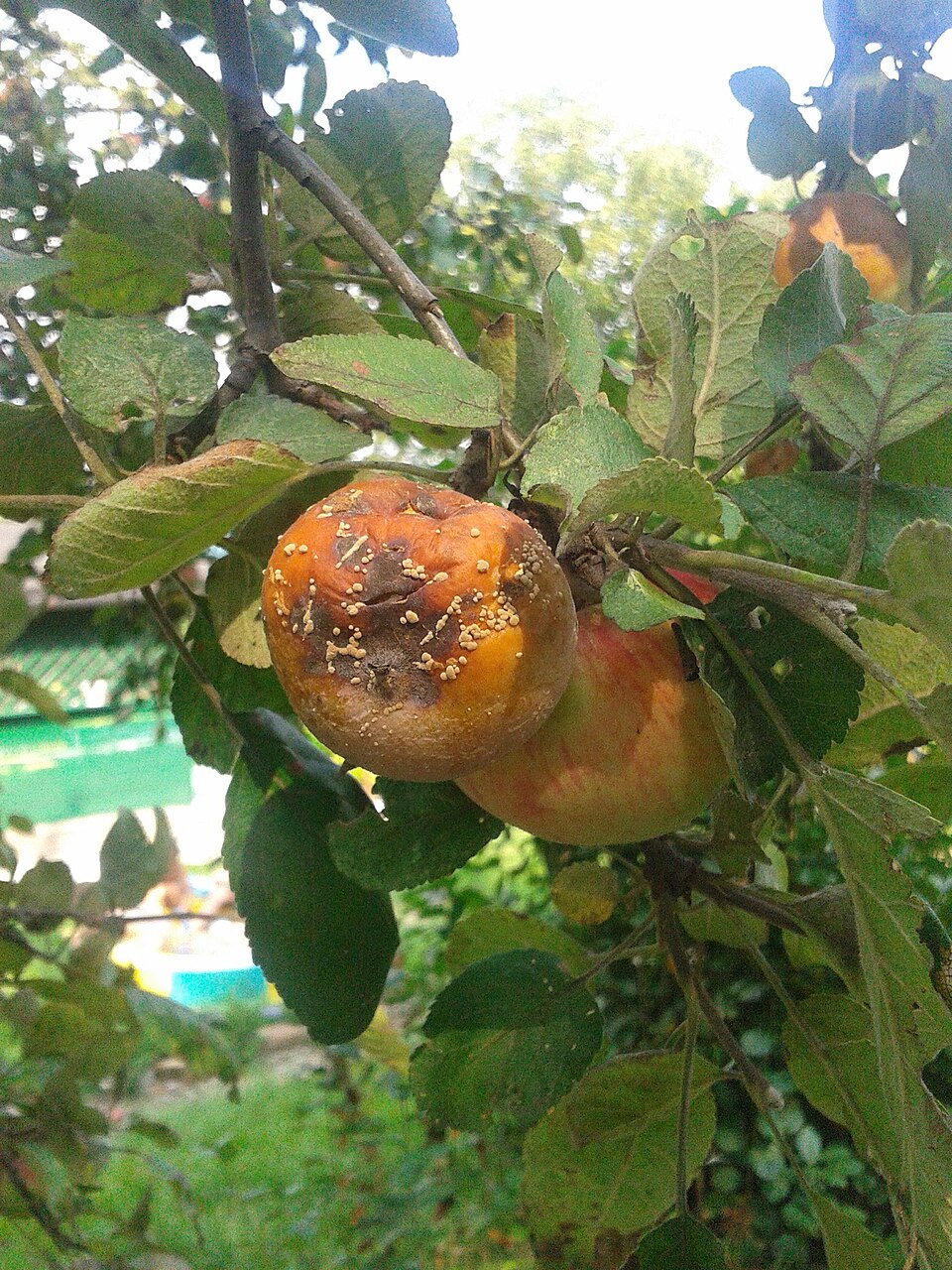
    Brown rot is a widespread fungal disease affecting stone fruits in the southeastern United States, notably peaches, cherries, and plums. This disease is primarily caused by the fungus Monilinia fructicola, a fuzzy yellow-brown organism that infests flowers, twigs, and fruit, resulting in severe crop losses for commercial orchards. Once a tree is infected with brown rot, the damage is irreversible. To manage this threat, farmers apply chemical treatments called fungicides during the spring growth season.

    The M. fructicola fungus contains a crucial biosynthetic gene, MfCYP51, which encodes a protein vital for its survival. Certain fungicides known as Demethylation Inhibitors (DMI) are designed to inhibit this protein, but over the past two decades, they have become less effective as M. fructicola has developed increased resistance.

    An alternative to chemical fungicides is the use of live microorganisms and their metabolites to combat fungal diseases. These biological disinfectants include bacteria that produce harmful compounds, such as hydrogen cyanide and pyrrolnitrin, which can damage fungal cells. However, a commercially viable biofungicide has yet to be identified. A group of researchers from Clemson University and Huazhong Agricultural University is investigating soil bacteria, particularly Pseudomonas chlororaphis and Bacillus subtilis, for their potential effectiveness against brown rot.

    In their experiments, researchers analyzed how fungal cells exhibit the expression of the MfCYP51 gene under various fungicide treatments. They utilized three susceptible strains of M. fructicola and three resistant strains, testing against five different treatment types, including DMI fungicide and combinations with bacterial metabolites. A control group was treated with sterile water.

    After six hours, the researchers assessed gene expression by extracting RNA from the fungal samples. They observed that both treatments with P. chlororaphis and the combination of DMI fungicide with P. chlororaphis significantly reduced MfCYP51 expression in both susceptible and resistant fungal isolates. Conversely, treatments involving Bacillus subtilis resulted in increased MfCYP51 expression among resistant strains. This led researchers to conclude that P. chlororaphis uniquely reduces gene expression in comparison to other biofungicides.

    To further explore the mode of action of these biofungicide treatments, the research team evaluated how P. chlororaphis and Bacillus subtilis produce the antifungal metabolite pyrrolnitrin. They employed a high-performance liquid chromatograph to separate and identify the compounds present in each treatment solution, hypothesizing that pyrrolnitrin contributes to the reduction in gene expression.

    Furthermore, researchers conducted tests on five treatments for fruit brown rot. They selected 10 Gala apples, disinfected them, and applied fungicide. After 24 hours, they punctured the apples and introduced M. fructicola cells. The apples were then stored in a humid environment for five days, after which brown rot spots were measured.

    Despite the reduced MfCYP51 expression, the results indicated that treatment with P. chlororaphis alone did not effectively reduce brown rot compared to controls. However, the combinations of DMI fungicide with both Bacillus subtilis and P. chlororaphis were observed to reduce brown rot effectively; notably, the DMI fungicide combined with P. chlororaphis treatment proved most effective.

    In conclusion, while biofungicides may not yet be fully effective on their own, their commercialization could assist farmers in reducing dependency on DMI fungicides, ultimately slowing the development of resistance in M. fructicola. The researchers recommend future studies to explore biofungicide mixtures containing pyrrolnitrin in field conditions to monitor their real-world impact on stone fruit trees.


    Post views:
    398

    Source: sciworthy.com

    Share. Facebook Twitter Pinterest LinkedIn WhatsApp
    Previous ArticleNew Scientist Highlights Rowan Hooper’s ‘Oneness’: A Revolutionary Perspective on Life
    Next Article Exploring Galaxies During Cosmic Noon: A Sciworthy Analysis

    Related Posts

    Science

    AI Overload: How the Surge of Low-Quality Tools is Straining Open Source Developers

    Science

    Neil deGrasse Tyson Discusses New Book: Exploring Aliens on Earth and the Fascinating Science of Wormholes

    Science

    Red Stripes in Welsh Caves: Britain’s Oldest Art Finally Recognized After Natural Phenomenon Dismissal

    Science

    Timeless Math Memes That Have Captivated Mathematicians for Over a Century

    Science

    Exploring Distant Galaxies: Uncovering New Planets – Sciworthy

    Science

    As Africa Splits in Two, Magma Surge Accelerates – Insights from Sciworthy

    Science

    Boost Your Mood Daily with a Glass of Fruit Juice: Study Insights

    Science

    Ancient Human Settlement Unearthed at 2,000 Meters in the Mountains: Experts in Awe

    Add A Comment
    Leave A Reply Cancel Reply

    Stay In Touch
    • Facebook
    • Twitter
    • Instagram
    • Pinterest
    Top Picks
    Science

    As Africa Splits in Two, Magma Surge Accelerates – Insights from Sciworthy

    The African continent is divided by tectonic plates in the heart of Ethiopia. Recent investigations…

    A revolutionary technique for connecting electronic devices with human cells

    Meet Toyota’s lunar “baby” that could make exploring the Moon easier

    PlayStation 5 becomes a completely silent console and gets more space

    How much does it really cost to make an iPhone?

    Most Popular
    Science

    A revolutionary technique for connecting electronic devices with human cells

    Technology

    The most powerful supercomputer in Europe

    Categories
    • AI (13)
    • Gadgets (10)
    • Science (71)
    • Space (9)
    • Technology (37)
    • Wheels (9)
    Our Picks
    Space

    “Espace” presented the new lander “Apex 1.0”

    Science

    Exploring Earth’s Mysterious Triple Symmetry and Its Impact on Climate Change

    © 2026 Hitechub.
    • Home
    • About Us
    • Privacy Policy
    • Terms & Conditions

    Type above and press Enter to search. Press Esc to cancel.

    We are using cookies to give you the best experience on our website.

    You can find out more about which cookies we are using or switch them off in .

    Ad Blocker Enabled!
    Ad Blocker Enabled!
    Our website is made possible by displaying online advertisements to our visitors. Please support us by disabling your Ad Blocker.
    Go to mobile version
    Hitechub
    Powered by  GDPR Cookie Compliance
    Privacy Overview

    This website uses cookies so that we can provide you with the best user experience possible. Cookie information is stored in your browser and performs functions such as recognising you when you return to our website and helping our team to understand which sections of the website you find most interesting and useful.

    Strictly Necessary Cookies

    Strictly Necessary Cookie should be enabled at all times so that we can save your preferences for cookie settings.