


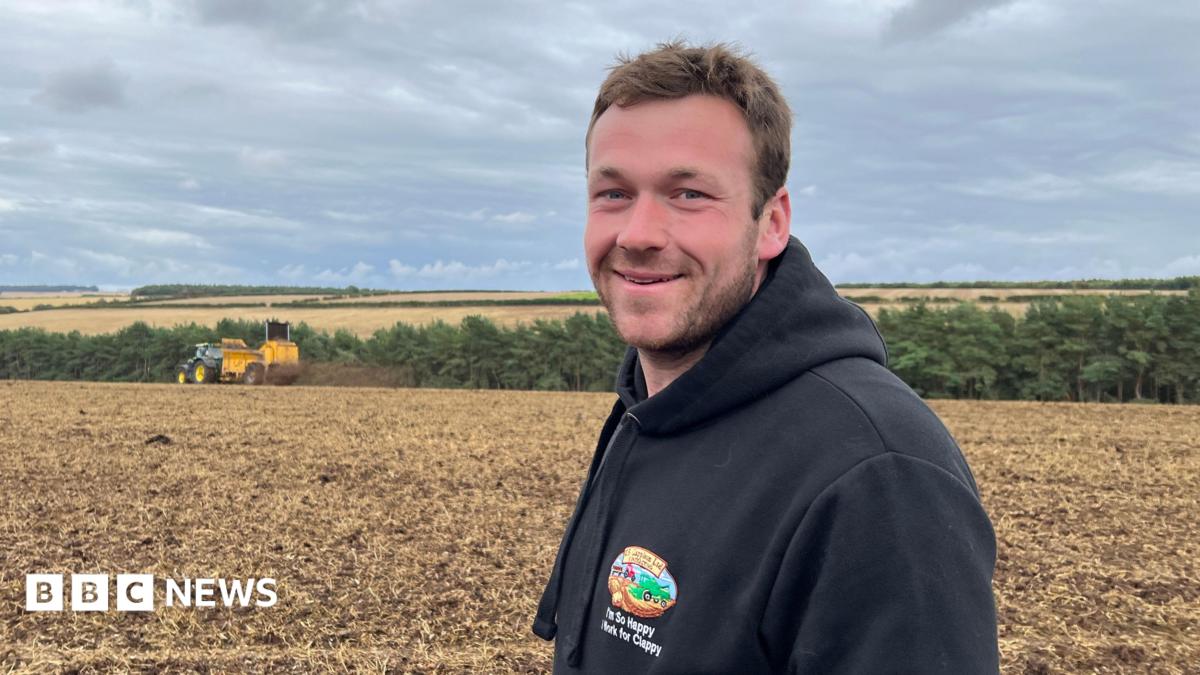
Farmers are asking the public to tolerate the smell as they spread natural fertiliser across fields to prepare the soil for next year’s crops.
Manure spreading involves applying animal waste as an organic fertiliser on farmland, usually twice a year during spring and late summer. The process helps improve soil quality and supports future crop growth.
Ben Clapisson, a farmer from Cowram in East Yorkshire, said spreading manure is important because it improves the land and reduces the need for chemical fertilisers, although he acknowledged that “it can be a bit smelly”.
He said: “It is about making everything healthier, improving soil organic matter and promoting the use of organic fertilisers rather than inorganic alternatives.”
Ben added: “Manufactured fertilisers require minerals and raw materials, much of which comes from overseas. They involve long transport distances, create carbon emissions during production and are expensive. By comparison, this material comes directly from the farm where it was produced.”
Ben, who also works as a contractor for other farms, said manure spreading is carefully planned and carried out using the latest agricultural technology.
Cattle, pig and poultry manure is collected from field storage piles, then weighed and distributed evenly across the land to provide essential nutrients for crops.
Ben also uses treated human waste, known as sewage sludge, which is collected from wastewater treatment plants and used to enrich the soil.
However, farmers must follow strict regulations when spreading sewage sludge. Ben said GPS technology is used to ensure the material is applied only in approved areas.
The Department for Environment, Food and Rural Affairs (DEFRA) says sewage sludge can only be spread on crops that are not eaten directly from the land, including wheat, barley and oilseed rape.
“We have a spreading app that maps everything, including buffer zones and areas where spreading is not permitted,” Ben said.
“We have to protect the fields, the soil and the environment because farming must be sustainable not only for my generation, but also for generations to come.”
Source: www.bbc.co.uk