


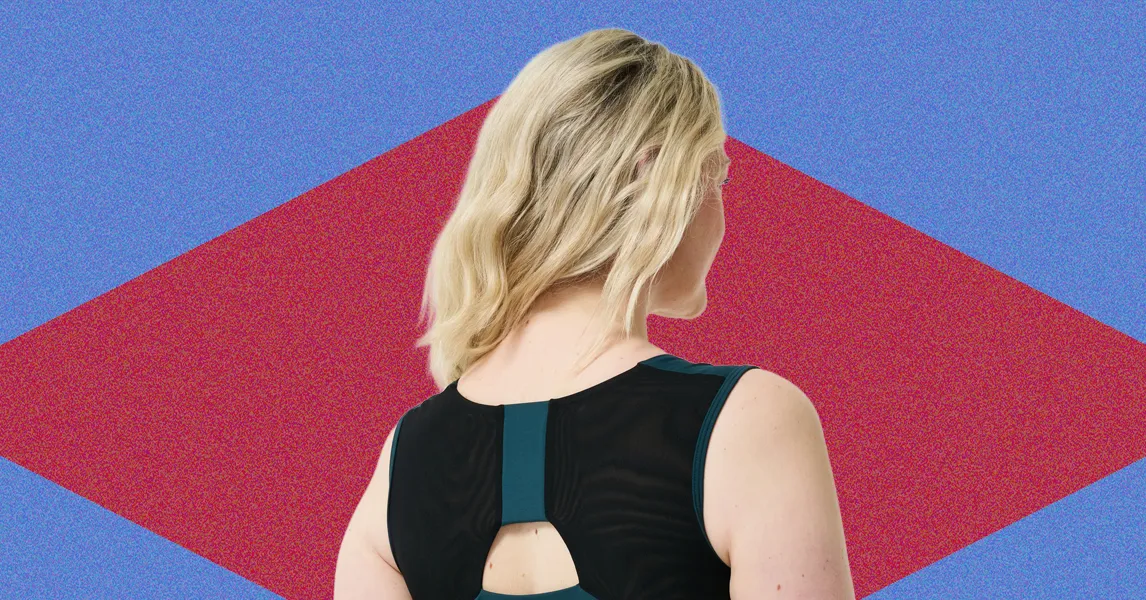
Honorable Mentions: Posture Correctors Worth Considering
Provided by Etalon
Etalon Posture Bra $199:
The Etalon Posture Bra uses six adjustable straps to help distribute weight across the back and shoulders. Although it is marketed for desk work and low-impact activities such as walking and hiking, we found it supportive enough for strength training. The bra may look complicated to adjust, but setting it up is surprisingly simple. Etalon recommends wearing the default configuration for about three weeks so your body can adapt before making changes. However, people looking for firm, rigid support may find it too flexible. I had already used the maximum adjustment to achieve the most supportive fit.
BackEmbrace Posture Corrector $70:
Like the ComfyBrace, the BackEmbrace is an adjustable posture brace designed to gently pull the shoulders back and encourage a more upright position. Its lumbar support may provide temporary relief from upper-back discomfort. The split-strap design can be difficult to put on at first, but it becomes easier with practice. It also allows more freedom of movement than the ComfyBrace, making it easier to bend and more comfortable to wear beneath loose clothing. The fabric is less irritating against bare skin than neoprene, and the brace can be worn over clothing while working from home or outdoors. It is also machine washable; simply lay it flat to dry.
More Posture Accessories to Consider

Courtesy of Branch
Branch Adjustable Laptop Stand $65:
An ergonomic workstation can make it easier to maintain good posture at your desk. The Branch Adjustable Laptop Stand is one of our favorites because it has a sturdy design and adjustable height and angle settings. Pairing it with an external monitor, keyboard, and mouse can create a more comfortable upright position. If your budget allows, you may also want to consider a standing desk or ergonomic office chair.
Gaiam Yoga Strap $10:
A long yoga strap can serve as a temporary shoulder posture brace. To use it, wrap the strap around your back at the base of your shoulder blades and along your bra line. Bring the ends over your shoulders, cross them behind your back to create an X, then pull the ends forward and secure the buckle at your chest. The ideal length depends on your body size, but we recommend using a strap that is at least 10 feet long. Shorter straps may be uncomfortable and difficult to position correctly.
Learn more about this yoga strap posture technique.
Posture Corrector FAQ
What is good posture?
The spine naturally has three curves: the cervical spine in the neck, the thoracic spine in the middle back, and the lumbar spine in the lower back. Good posture supports these natural curves without adding unnecessary strain.
- When standing, keep your head aligned over your shoulders and your shoulders aligned over your hips. Stand with your feet about hip-width apart and distribute your weight evenly.
- When sitting, keep your feet flat on the floor, your knees bent at approximately 90 degrees, and your lower back supported. Change positions regularly and take breaks to walk or stretch.
What causes poor posture?
Poor posture can result from prolonged sitting, looking down at screens, carrying a bag on one shoulder, repetitive movements, or an improperly arranged workstation. Genetics, injuries, and muscle imbalances can also affect posture. When your shoulders remain rounded forward, the muscles in your chest and upper back may become tense, making it more difficult to sit or stand upright.
Simple ergonomic changes can help. Position your screen at eye level, keep your feet supported, and avoid staying in one position for too long. Regular movement and stretching are also important for maintaining healthy alignment.
Are posture correctors effective?
Posture correctors are not a permanent solution for slouching or rounded shoulders. Instead, think of them as reminders that encourage you to become more aware of your body position. The best posture correctors provide gentle guidance while allowing your muscles to remain active.
A brace should not hold you rigidly in place. Excessively firm orthotic supports can cause discomfort and may allow your muscles to become dependent on external support. Use a posture corrector as a training aid while also working on strengthening, mobility, and healthier daily habits.
Are posture correctors safe to wear every day?
Posture correctors are generally intended for short-term or intermittent use rather than all-day wear. Wearing one continuously may cause discomfort or encourage dependence on external support. Start with short sessions and use the brace as a reminder to engage your postural muscles.
Some posture-correcting bras and wearable devices are gentler and may be suitable for longer use, but always follow the manufacturer’s instructions. Stop wearing the product if it causes pain, numbness, skin irritation, or restricted movement.
What else can improve posture?
- Exercise regularly. Yoga, stretching, planks, chest presses, and other core-strengthening exercises can improve mobility and body awareness. Even short movement breaks throughout the day can help counteract the effects of prolonged sitting.
- Improve your workstation. Keep your monitor near eye level, support your lower back, and use a separate keyboard and mouse with a laptop stand.
- Consult a medical professional. A doctor or physical therapist can recommend appropriate treatment and support. If you have persistent or severe back or neck pain, kyphosis, scoliosis, numbness, or an injury, seek medical advice before using a posture brace.
Who is Matthew P. Smith?
- Matthew P. Smith, M.D. is an instructor in the Department of Physical Therapy and Human Movement Sciences at Northwestern University Feinberg School of Medicine.
Power up with unlimited access to WIRED. Get best-in-class reporting and subscriber-only content that’s too important to ignore. Subscribe now.
Source: www.wired.com