


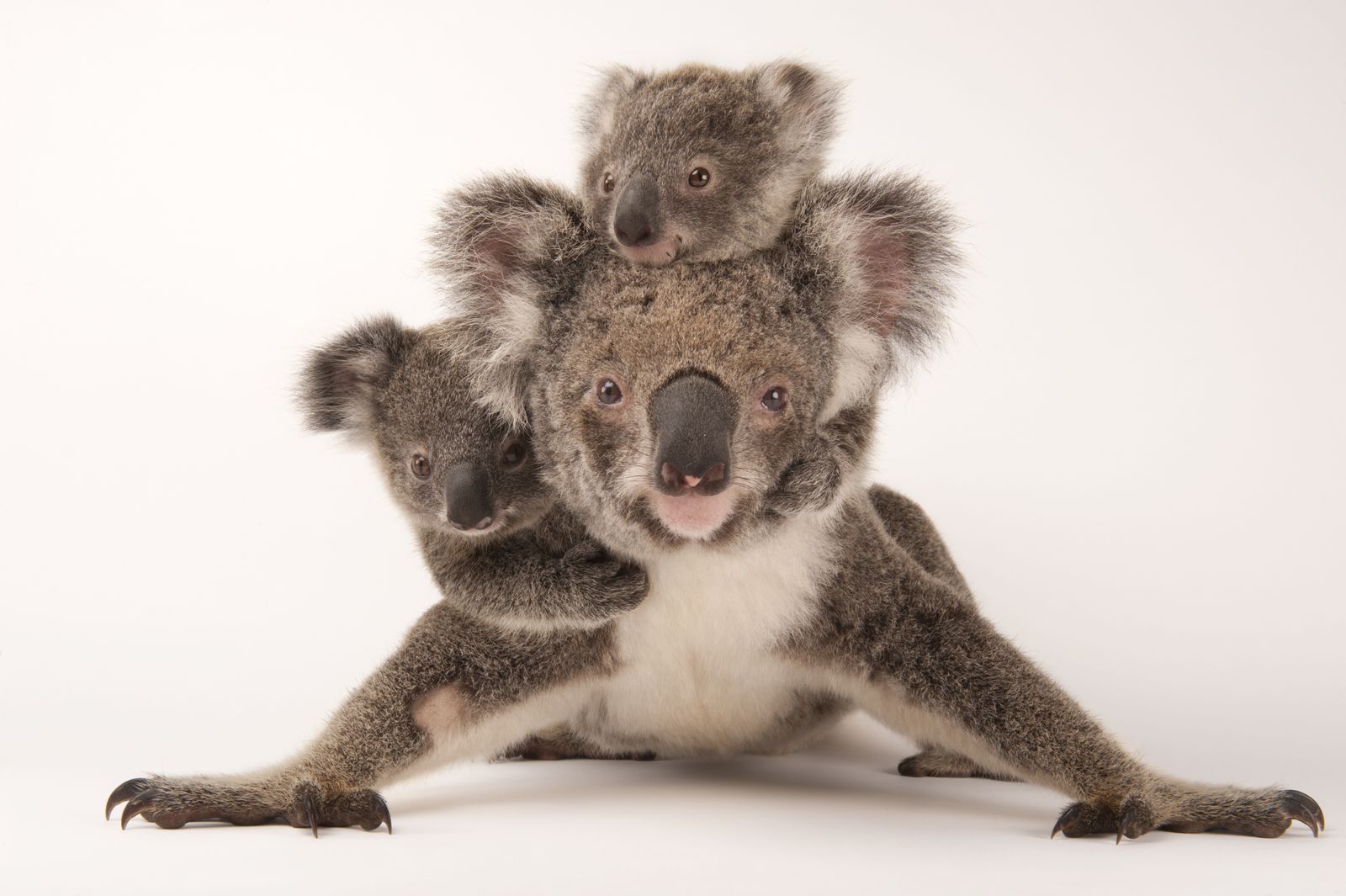
For two decades, National Geographic photographer Joel Sartore has used powerful animal portraits to make Earth’s smallest creatures impossible to overlook—and inspire global efforts to protect biodiversity
The naked mole-rat was the first animal photographed for Joel Sartore’s National Geographic Photo Ark. On August 9, 2006, at the Lincoln Children’s Zoo in Nebraska, the National Geographic photographer trained his camera on the small rodent and its prominent front teeth, creating the first portrait in what would become a landmark wildlife photography project.
As a longtime field photographer for National Geographic, Sartore had spent years documenting the natural world. The naked mole-rat, however, sent his work in a new direction. It became the inaugural species in the Photo Ark, an ambitious effort to photograph the world’s animal species and preserve a visual record of Earth’s biodiversity.
Supported by the National Geographic Society, Sartore and his team travel to zoos, aquariums, wildlife sanctuaries, research institutions and conservation centers around the world. Their studio-style animal portraits celebrate the beauty of wildlife while drawing attention to the growing threat of biodiversity loss.
/https://tf-cmsv2-smithsonianmag-media.s3.amazonaws.com/filer_public/c5/ef/c5ef42a1-2233-4e23-9890-7719fe7fa6df/12_-_ocotopus_cr_joel_sartore-national_geographic_photo_ark_2359348.jpg)
The inspiration for the Photo Ark emerged during a difficult period in Sartore’s personal life. In late 2005, his wife, Kathy, was diagnosed with breast cancer. Sartore stayed home to care for her and their three children while she underwent treatment. The experience changed how he viewed life and led him to imagine a portrait collection focused on both the beauty and vulnerability of animals.
“That year at home gave me a new perspective on the shortness and fragility of life,” Sartore wrote. Kathy recovered fully, and the family continues to support the photographer’s conservation mission.
Twenty years after the first Photo Ark images were taken, Sartore continues to photograph fish, reptiles, amphibians, birds, mammals and insects. In July, he had just returned from photographing insects in Minnesota’s Northwoods, where he typically captures several species in a single day.
On August 3, the National Geographic Society announced that Sartore had photographed his 18,000th species for the Photo Ark: the critically endangered red handfish. About the size of a thumb, this unusual fish moves along the seafloor using its fins. Sartore photographed the animal at a red handfish breeding laboratory, placing one in a small photo tank on a tabletop.
/https://tf-cmsv2-smithsonianmag-media.s3.amazonaws.com/filer_public/a9/51/a9518e38-1b67-4fb2-978f-0843460ea7fc/01_female_red_handfish_white_bg_cr_joel_sartore_national_geographic_photo_ark_ng-3002033.jpg)
Sartore’s goal is to photograph “all animals that you can see with the naked eye,” from animals living in tree canopies and underground burrows to species found in rivers and oceans. By giving each creature a carefully composed portrait, he hopes to encourage people to care about wildlife while there is still time to protect habitats and prevent extinction.
Some of the animals in the Photo Ark are already extinct in the wild. They include the Guam kingfisher and the Monterrey platyfish, which survive only through conservation programs in human care. Sartore has also photographed a preserved young thylacine, the extinct carnivorous marsupial commonly known as the Tasmanian tiger.
Most Photo Ark subjects are photographed in zoos, aquariums, sanctuaries and scientific laboratories. These locations provide researchers and photographers with safe access to animals that are accustomed to human presence, allowing Sartore to create detailed portraits without disturbing wildlife in the field.
/https://tf-cmsv2-smithsonianmag-media.s3.amazonaws.com/filer_public/af/c9/afc9af18-acab-41ad-93a2-93e9d71bb20d/05_-_springbok_mantis_cr_joel_sartore-national_geographic_photo_ark_2325314.jpg)
/https://tf-cmsv2-smithsonianmag-media.s3.amazonaws.com/filer_public/c1/c3/c1c3551b-7dd6-4eff-9078-b316c1ee5bf0/17_-_african_leopard_cr_joel_sartore-national_geographic_photo_ark_1559049.jpg)
/https://tf-cmsv2-smithsonianmag-media.s3.amazonaws.com/filer_public/ce/9d/ce9d549d-c792-410e-99ae-63aef02c5ba5/20_-_west_african_slender-snouted_crocodile_cr_joel_sartore-na-71ed16824288682ac2631c36f8eef7fd.jpg)
/https://tf-cmsv2-smithsonianmag-media.s3.amazonaws.com/filer_public/75/98/7598cf17-fb45-4f2b-8f26-d555fb0ac375/07_-_ribboned_pipefish_cr_joel_sartore-national_geographic_photo_ark_2359350.jpg)
The portraits typically use black or white backgrounds and controlled lighting. This minimalist approach removes visual distractions and preserves each animal’s natural colors, patterns and expressions. The result is an intimate encounter in which viewers can focus on the individual animal rather than its size or surroundings.
That approach applies even to animals without eyes, including corals, anemones and sponges. By photographing each species as an individual, Sartore gives even the tiniest organisms a powerful visual presence.
“We photograph a lot of animals that the world would never see without this project,” Sartore says. Many of those animals, he adds, “can fit in the palm of your hand.”
/https://tf-cmsv2-smithsonianmag-media.s3.amazonaws.com/filer_public/8c/41/8c4127b1-edab-497e-b2ff-2afc7e3f6e70/06_-_sierra_nevada_ensatina_salamander_cr_joel_sartore-national_geographic_photo_ark_1406375.jpg)
/https://tf-cmsv2-smithsonianmag-media.s3.amazonaws.com/filer_public/e0/e4/e0e4b249-1d28-4708-b843-06984a8864bf/10_-_female_snowy_owl_cr_joel_sartore-national_geographic_photo_ark_1456290.jpg)
/https://tf-cmsv2-smithsonianmag-media.s3.amazonaws.com/filer_public/9d/21/9d21208e-df1d-42a8-9d78-25cf239cbb12/14_-_coquerel_s_safika_cr_joel_sartore-national_geographic_photo_ark_1582509.jpg)
/https://tf-cmsv2-smithsonianmag-media.s3.amazonaws.com/filer_public/9e/29/9e294462-689e-45be-b484-9f1710d399e1/04_-_orange_spotted_filefish_cr_joel_sartore-national_geographic_photo_ark_1933227.jpg)
Every Photo Ark image captures a moment in the history of Earth’s biodiversity. Together, the photographs form a visual record of the species living alongside us today—and a reminder of what could be lost without effective conservation.
In South Florida, Sartore has photographed species living in the Pine Rocklands, a rare and highly fragmented ecosystem. The habitat supports threatened animals including the Miami tiger beetle, Bartram’s scrub-hairstreak butterfly and the Florida bonneted bat.
George Gann, an ecological restoration expert and founder of the Institute for Regional Conservation, says the Photo Ark has helped bring public attention to species that are often overlooked.
After identifying the Miami tiger beetle and Bartram’s scrub-hairstreak butterfly as conservation priorities, Sartore and the Photo Ark team awarded the inaugural Photo Ark Species Impact Initiative grant to Gann in 2023. The funding supports restoration work in the Pine Rocklands and helps scientists protect the insects’ remaining habitat.
By showcasing individual species, the Photo Ark can also help explain why habitat protection matters. Gann says images of the insects help the public understand their ecological needs and support long-term restoration efforts.
/https://tf-cmsv2-smithsonianmag-media.s3.amazonaws.com/filer_public/d3/1d/d31d5fb0-ca2f-4d62-95b5-20d345bee5b2/24_-_joel_sartore_2694257_cr_cole_sartore-national_geographic_photo_ark.jpeg)
/https://tf-cmsv2-smithsonianmag-media.s3.amazonaws.com/filer_public/48/c0/48c09166-3ee9-43ea-9185-57e1f1b8ba27/23_-_joel_sartore_with_serval_cr_cole_sartore-national_geographic_photo_ark_ona001-00013_hr.jpg)
The Photo Ark’s conservation impact extends beyond North America. In Ecuador, the project has highlighted amphibians threatened by habitat loss and disease. Luis A. Coloma, an amphibian biologist and director of the Jambatu Center for Amphibian Research and Conservation, says some species had not been seen since the 1980s despite extensive searches.
The Jambatu Center received a 2025 Photo Ark Species Impact Initiative grant. Its scientists breed endangered amphibians in laboratory conditions and raise them for possible reintroduction into the wild.
/https://tf-cmsv2-smithsonianmag-media.s3.amazonaws.com/filer_public/86/4b/864b890e-3096-462e-980f-4f176ab1f353/02_longnose_harlequin_frog_black_background_cr_joel_sartore-national_geographic_photo_ark_spi-2760596.jpg)
One of the center’s conservation subjects is the longnose harlequin frog. Coloma and his team rediscovered the species in 2016 after it was believed to be extinct.
Harlequin frogs are known for their vivid colors, but they may also have scientific importance. Research suggests that compounds in their skin could have potential biomedical applications.
When Sartore photographed the longnose harlequin frog in January 2019, only four known individuals remained in Ecuador. His portraits document the frog’s brown body and distinctive yellow markings while helping communicate the severity of the amphibian conservation crisis.
/https://tf-cmsv2-smithsonianmag-media.s3.amazonaws.com/filer_public/a6/2b/a62b7e08-e4bd-419c-87de-0e5da543b275/16_-_male_arctic_fox_cr_joel_sartore-national_geographic_photo_ark_2321014.jpg)
/https://tf-cmsv2-smithsonianmag-media.s3.amazonaws.com/filer_public/93/bd/93bdd1d9-4933-42a9-a44c-34345557b22d/13_-_saint_vincent_parrot_cr_joel_sartore-national_geographic_photo_ark_2331484.jpg)
/https://tf-cmsv2-smithsonianmag-media.s3.amazonaws.com/filer_public/29/99/2999b76a-4ef5-4243-a850-e666df30640f/15_-_brazilian_rainbow_boa_cr_joel_sartore-national_geographic_photo_ark_1096457.jpg)
/https://tf-cmsv2-smithsonianmag-media.s3.amazonaws.com/filer_public/14/04/1404c958-6c55-4322-a84a-11c50bb2df02/11_-_bornean_orangutans_cr_joel_sartore-national_geographic_photo_ark_12323107.jpg)
/https://tf-cmsv2-smithsonianmag-media.s3.amazonaws.com/filer_public/17/bb/17bb64c1-47cd-4ee0-aac2-ab326cff762c/03_-_victoria_crowned_pigeon_cr_joel_sartore-national_geographic_photo_ark_2165607.jpg)
/https://tf-cmsv2-smithsonianmag-media.s3.amazonaws.com/filer_public/2c/3c/2c3caccb-4342-44a6-946b-28dd529c5dc5/01_-_florida_panther_cr_joel_sartore-national_geographic_photo_ark_1762957.jpg)
/https://tf-cmsv2-smithsonianmag-media.s3.amazonaws.com/filer_public/c1/91/c1917cf0-0a54-4d2f-8363-2b00c8779950/18_-_bobtail_squid_cr_joel_sartore-national_geographic_photo_ark_2325448.jpg)
At 64, Sartore is planning for the future of the Photo Ark. His son, Cole Sartore, already joins him on international assignments and is expected to continue the project when his father can no longer travel.
For now, Sartore’s work continues. Approximately 25,000 animal species live in human care around the world, and he hopes to photograph every one of them.
“My thing is to give my life to this,” Sartore says. “I’m a photographer and a storyteller—what else was I supposed to do?”
The Photo Ark’s growing collection is intended to outlast its creator. Sartore hopes the images will help people recognize the extraordinary variety of life on Earth and understand that protecting it is a choice.
When viewers see these animals up close, he says, “they can see what it is that’s out there and decide whether or not they want to save it, because it really is a choice.”
Source: www.smithsonianmag.com