


Medieval Russian Treasure Hoard Reveals More Than 350 Previously Unknown Silver Coins
Archaeologists in Russia have discovered a remarkable medieval treasure hoard containing approximately 2,600 silver coins. More than 350 of the coins appear to represent a previously unknown variety, making the find one of the most significant discoveries of medieval Russian currency in recent years.
The hoard was uncovered in the historic center of Kolomna, a city located about 71 miles (114 kilometers) southeast of Moscow. Archaeologists found the coins inside an ornate ceramic jug buried in a small pit.
Kolomna was one of the most important cities in the region during the 14th and 15th centuries. The discovery was reported in an statement from the Institute of Archaeology of the Russian Academy of Sciences.
Rare denga coins from medieval Moscow
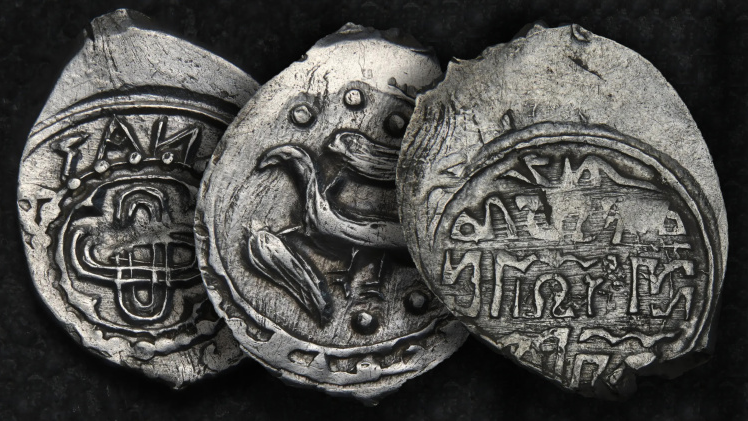
Most of the coins are silver denga, a type of currency first minted by the Grand Duchy of Moscow in the late 14th century. A denga was worth half a kopek, while one ruble equaled 100 kopecks.
The coins were primarily minted in Kolomna during the reigns of Vasily I, who ruled from 1389 to 1425, and Vasily II, who ruled from 1425 to 1462. Both rulers were Grand Dukes of Moscow at a time when the surrounding territories were divided among independent principalities.
from the latest videoslive science
One especially unusual coin depicts a bird in flight. According to archaeologists, this rare design was produced during the final years of Vasily I’s reign.
Experts are now examining the more than 350 coins that appear to belong to a previously unknown variety minted in Kolomna. Their study could provide new information about medieval Russian coin production, trade and the political history of the region.
Who buried the Kolomna coin hoard?
The identity of the person who buried the treasure remains unknown. However, the size of the hoard suggests that its owner may have been wealthy and influential, possibly a government official or a successful merchant.
The latest coins in the hoard date to the late 1420s, providing an important clue about when it was buried. Researchers believe the owner may have died or been forced to abandon the treasure soon afterward.
One possible explanation is the series of plague outbreaks that affected the Russian principalities between 1424 and 1427. Although there is no definitive evidence linking the hoard to the epidemic, the timing raises the possibility that its owner may have fallen victim to disease or another crisis.
Can you identify these mysterious archaeological artifacts? Take the archaeology fragment quiz!
Source: www.livescience.com