


Scientists estimate that the Local Group—the collection of galaxies that includes the Milky Way and our closest galactic neighbors—may contain trillions of planets. Many of these worlds could orbit within their stars’ habitable zones, where conditions may support liquid water and life. If life is common throughout the universe, why have we found no reliable evidence of alien civilizations?
This question lies at the heart of the Fermi paradox. The paradox suggests that if intelligent life is widespread, humanity should have detected clear signs of extraterrestrial civilizations by now. Scientists and futurists have proposed several possible explanations, including the existence of a “Great Filter” that prevents advanced civilizations from developing, expanding, or sending probes beyond their home worlds.
Philip Johnston has spent considerable time thinking about the Fermi paradox. The British mathematician and physicist has recently become known in the space industry as a leading advocate for orbital data centers. In 2024, he co-founded StarCloud to develop data centers in space, and the company is now reportedly valued at $2.3 billion.
Johnston is currently focused on expanding StarCloud, solving complex engineering challenges, and raising hundreds of millions of dollars. Despite that demanding schedule, he also wants to launch an interstellar mission to the star system closest to the Sun: Alpha Centauri.
Introducing the Fermi Explorer Mission
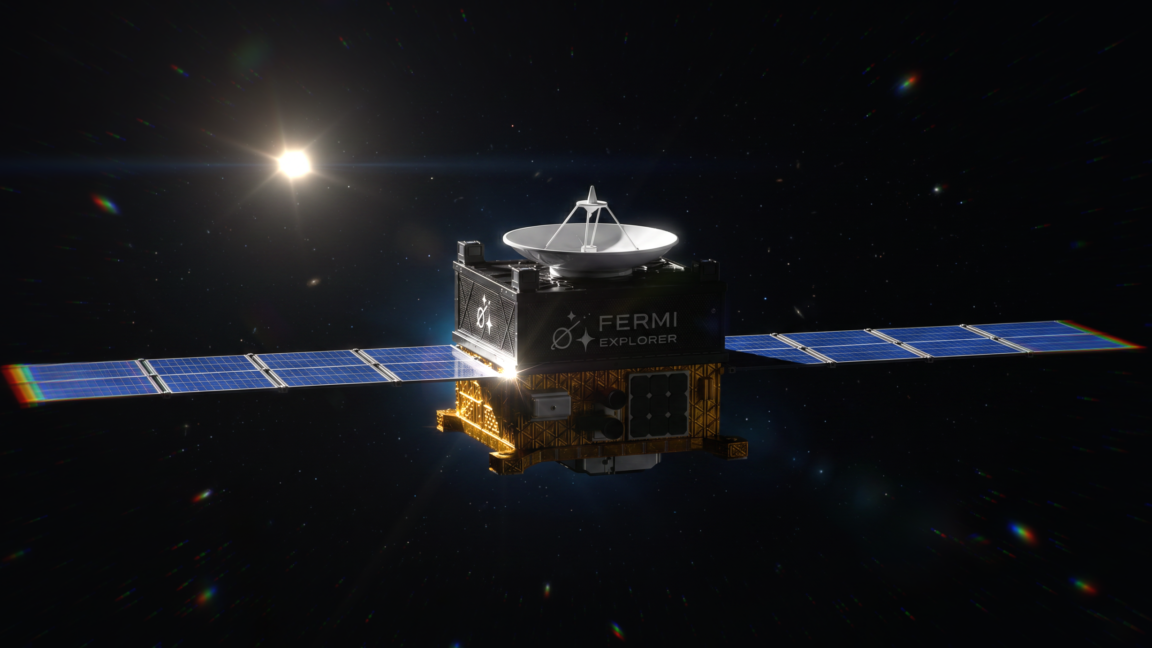
On Tuesday, Johnston and several other entrepreneurs announced the Fermi Explorer mission, a proposed spacecraft designed to explore the challenges of interstellar travel. The concept is straightforward: raise $15 million to build a small spacecraft carrying a 1-kilogram payload and send it toward Alpha Centauri.
Under the current plan, the spacecraft would reach the Alpha Centauri system in approximately 80,000 years. While that timeline is far beyond a human lifetime, Johnston believes the mission could still provide valuable insight into the Fermi paradox.
In particular, the Fermi Explorer could help test two possible explanations for humanity’s lack of contact with extraterrestrial civilizations. The first is that advanced species may eventually lose interest in sending spacecraft beyond their home planets. The second is that interstellar travel may be so technically difficult, expensive, or time-consuming that even advanced civilizations choose not to attempt it.
Source: arstechnica.com