


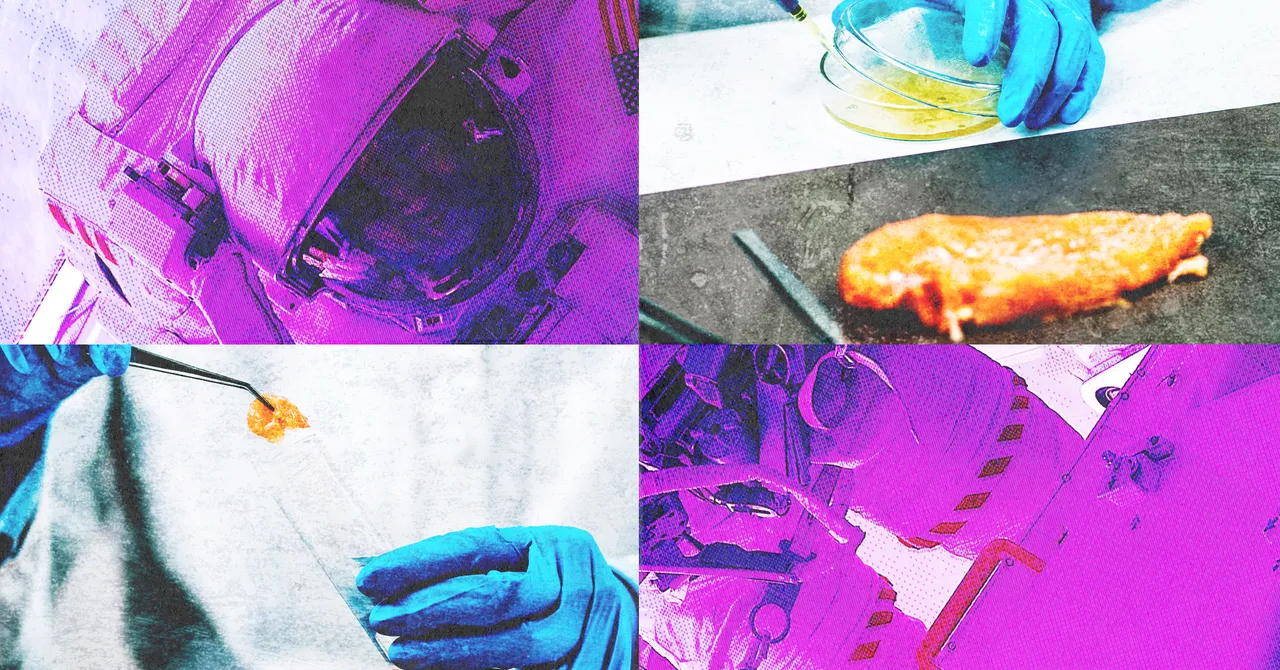
In 1906, public outrage following the publication of Upton Sinclair’s The Jungle helped drive the passage of the Federal Meat Inspection Act. Sinclair’s detailed account of filthy conditions in Chicago meatpacking plants shocked the nation and prompted the U.S. government to create a federal meat inspection system that eventually became the Food Safety and Inspection Service (FSIS). Federal inspectors worked in stockyards and processing plants, examining livestock for disease before and after slaughter. Using their eyes, noses, and hands, they relied on a method informally known as “poke and sniff.” This 100% inspection system was effective at detecting visible lesions linked to tuberculosis and cysticercosis, a tissue infection caused by tapeworms. The presence of federal inspectors also discouraged meatpacking facilities from using illegal preservatives and maintaining unsanitary practices.
By the end of the 20th century, however, Americans’ growing appetite for beef exposed the limitations of this traditional inspection model. A system designed to detect every problem could not keep pace with high-speed plants processing hundreds of animals per hour. More importantly, inspectors had largely eliminated diseases that could be seen, smelled, or felt—yet they could not detect microscopic pathogens such as Escherichia coli.
The danger became painfully clear in 1993, when contaminated hamburgers served at Jack in the Box restaurants sickened more than 700 people and killed four children. The outbreak triggered public outrage comparable to the reaction to The Jungle and led to two major responses from the Food Safety and Inspection Service. As an immediate measure, the agency added 160 meat inspectors. More significantly, it accelerated a transformation in food safety that had been developing since NASA began preparing astronauts for longer missions in space.
The shift began in the early 1960s. NASA’s Mercury program, which had first sent Americans into space, gave way to Gemini, a program designed to test the equipment and procedures required for the longer Apollo missions. Keeping astronauts healthy for several days meant solving a wide range of nutritional challenges, from swallowing and digestion to waste elimination in zero gravity. Paul Lachance, NASA’s chief food scientist, was especially concerned about the effects of foodborne illness during a mission. Food poisoning is dangerous on Earth; inside a spacecraft or spacesuit, it could become catastrophic.
The obvious solution was to test every portion of food for pathogens and adopt a zero-tolerance policy. In practice, that approach was impossible. Many food-safety tests are destructive, meaning the sample must be removed or rendered unusable to determine whether an entire batch is safe. Testing every bite would leave little food available for astronauts. Private industry offered few reliable alternatives, and many pathogen tests used during the 1960s were neither sufficiently scientific nor appropriate for NASA’s needs. In some cases, pathogens were identified only after people consumed the contaminated food.
Lachance and his colleagues developed a fundamentally different approach to food safety. While Walter Shewhart’s control chart helped identify manufacturing problems after they occurred, NASA’s system proactively mapped the points where contamination was most likely and concentrated controls there. The goal was not simply to test food after production, but to control the manufacturing process so thoroughly that extensive final testing was unnecessary. This preventive system became known as Hazard Analysis and Critical Control Points, or HACCP.
A simple comparison helps explain HACCP. Basic acceptance sampling is like a waiter tasting a small amount of wine to determine whether the bottle is spoiled before serving it to guests. Shewhart’s approach resembles making a test pancake to check whether the batter and griddle are working properly. HACCP is more like preparing soup: each time salt, broth, lemon juice, or cream is added, the cook checks the flavor and adjusts the process before the dish is finished. Instead of relying only on the final product, HACCP monitors the critical steps that determine safety and quality.
For NASA, the hazards identified through HACCP could be physical, such as crystallized ingredients that might damage a tooth; chemical, such as pesticide residues; or microbial, including pathogens that pose the greatest risk in space. A critical control point is any stage of production where a hazard can be prevented, eliminated, or reduced—from sourcing raw materials to vacuum-sealing the finished package. “We’ve identified a critical step that separates something from being safe to being unsafe,” Lachance explained. “The temperature, the pressure, whatever the criteria are, whatever the critical control points are.” Chickens prepared for space missions are plucked, deboned, cut into freeze-drying portions, and cooked until sterile. Because the meat may be handled by multiple workers, it is inspected before entering the freeze dryer, again before packaging, and once more after vacuum sealing. To date, no astronaut has suffered food poisoning during a space mission.
Source: www.wired.com