


Live Eel Causes Rare Intestinal Perforation in 55-Year-Old Man
Patient: A 55-year-old man from Bangladesh.
Symptoms: The man arrived at an emergency department with severe abdominal pain that had begun approximately five hours earlier.
What happened next: During the physical examination, doctors found that the patient’s temperature and blood pressure were normal. However, his heart rate was elevated at 110 beats per minute. A typical resting heart rate for adults is between 60 and 100 beats per minute.
Latest videos fromLive Science
The patient told doctors that a live eel had accidentally entered his rectum the previous day. According to the case report, the eel entered through the bottom opening of the lungi he was wearing, then moved into the anal canal.
He did not seek immediate medical care because he hoped the eel would leave his body on its own.
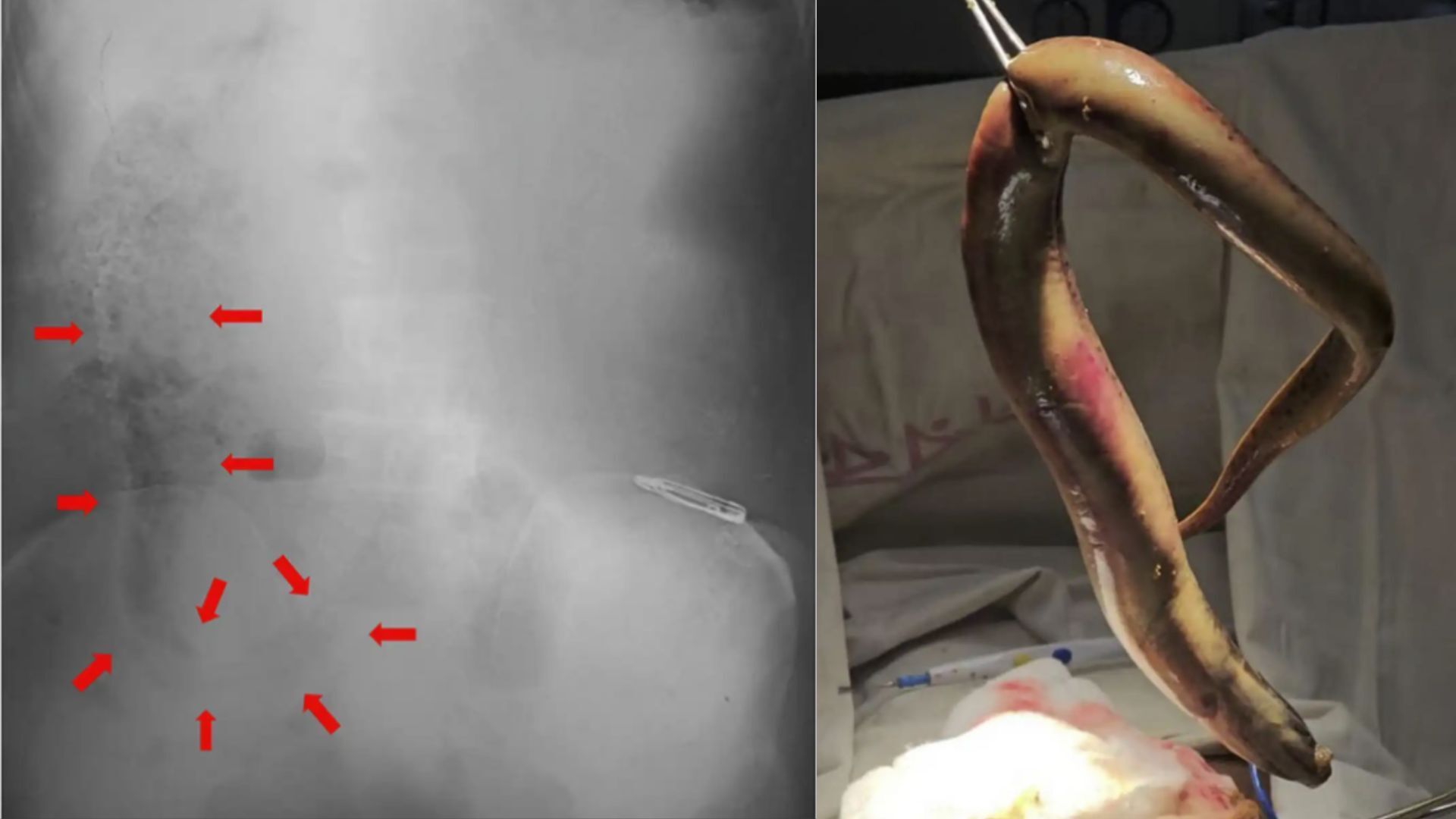
Doctors examined the man’s abdomen and ordered an X-ray. The scan revealed an eel-shaped shadow on the right side of his abdomen, indicating the presence of a foreign object.
Diagnosis: The X-ray also showed a crescent-shaped pocket of gas beneath the right side of the diaphragm. This finding, known as pneumoperitoneum, suggested that part of the intestine had been perforated. The patient had developed peritonitis, an inflammation of the peritoneum—the membrane surrounding the abdominal organs.
Get the world’s most fascinating discoveries delivered straight to your inbox.
Peritonitis can become life-threatening if it is not treated quickly. The infection may spread through the bloodstream and lead to sepsis, a dangerous response to infection that can affect the entire body.
Treatment: Doctors immediately gave the patient intravenous antibiotics, fluids and medication to protect the stomach and intestinal lining. Because the perforation created a serious risk of infection and sepsis, surgeons decided to remove the eel through a laparotomy. This procedure involves making an incision in the abdominal wall to access the abdominal and pelvic organs.
Surgeons made an incision in the sigmoid colon, the S-shaped section of the large intestine located near the rectum, and removed the eel. The object had entered the peritoneal cavity, the space surrounding the abdominal organs.
The eel measured approximately 0.6 meters—nearly 2 feet—and was still alive when surgeons removed it. The doctors suggested that it may have survived by breaking through the colon wall and entering the peritoneal cavity, which contains fluid that helps reduce friction between abdominal organs.
The surgical team also performed a sigmoid colostomy. This procedure creates an opening in the abdomen through which stool can leave the body, bypassing the damaged section of the colon and reducing the risk of further contamination and infection.
The patient’s symptoms disappeared after four days, and he was discharged from the hospital. The case report did not provide information about any later medical visits.
Why this case is unusual: Intestinal perforation caused by a foreign object is uncommon, while injuries involving live animals are considered extremely rare. Foreign objects can enter the digestive tract through accidental swallowing or intentional insertion into the rectum. Reported objects have included chicken bones, light bulbs, metal rods and glass bottles.
A live eel entering the colon is an exceptionally unusual and poorly documented medical event. The report’s authors noted that a previous case involved a 50-year-old man from Hong Kong who reportedly inserted an eel more than 0.5 meters long into his rectum in an attempt to relieve constipation.
This article is for informational purposes only and does not provide medical advice.
Mokbul, M. I., Roy, S., Roy, A. N., Shrestha, A., and Nawys, M. (2024). “It’s not your typical stomach ache”: A case report of intestinal perforation caused by an eel. International Journal of Surgical Case Reports, 124.
Can you identify the diagnosis in unusual medical cases? Test your knowledge with our diagnostic dilemma quiz!
Topics
Source: www.livescience.com