


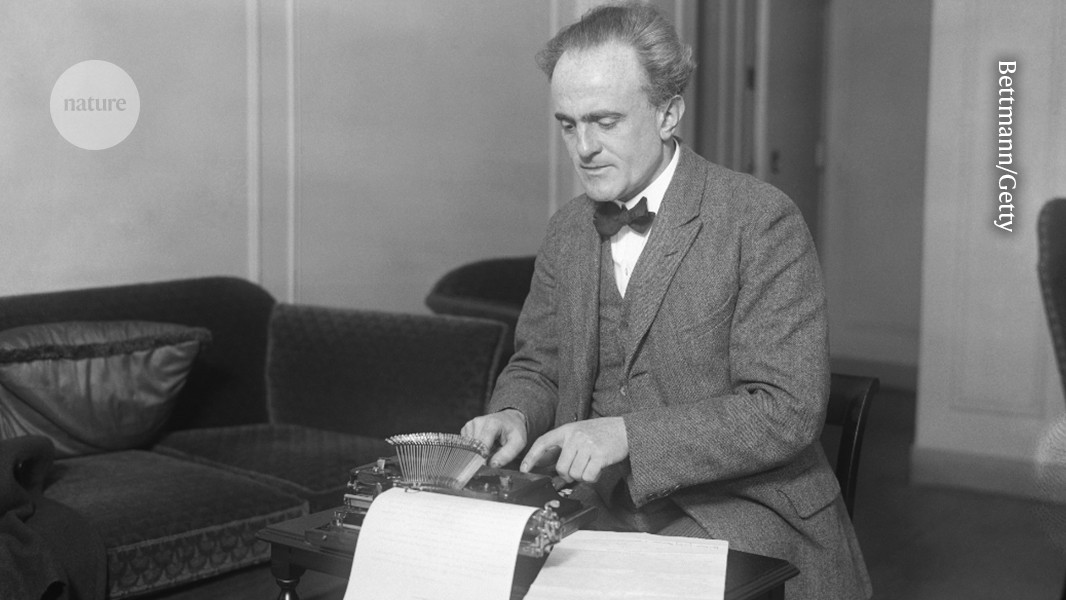
Paul Kammerer: The Controversial Zoologist Who Tried to Prove Acquired Traits Could Be Inherited
On September 23, 1926, Austrian zoologist Paul Kammerer died by suicide on Hochschneeberg, a mountain plateau southwest of Vienna. His death came only weeks after he was accused of manipulating evidence in his most famous experiment—an allegation that continues to shape his scientific legacy.
Once described as “Darwin’s successor,” Kammerer was an internationally recognized scientist, prolific author, and gifted public speaker. He was also a controversial figure whose unconventional theories challenged the emerging science of genetics and revived an idea many researchers believed had already been disproved: the inheritance of acquired characteristics.
Kammerer’s work focused on how environmental conditions could alter animals’ bodies and reproductive biology. He argued that some of these changes could be passed to future generations, potentially offering a biological mechanism that connected Lamarckian evolution with Darwinian natural selection.
His claims made him famous, but they also attracted fierce criticism. In 1926, American herpetologist Gladwin Noble examined Kammerer’s last surviving specimen of a male midwife toad and reported evidence that appeared to support accusations of scientific fraud. The controversy damaged Kammerer’s reputation and led many scientists to dismiss his research entirely.
Paul Kammerer’s Early Life and Career
Paul Kammerer was born in Vienna in 1880. His father, Karl, owned a successful optical factory, while his mother, Sophie, was a talented pianist. Kammerer inherited interests in both science and the arts, studying biology and musicology—including composition and piano—at the University of Vienna.
He completed his doctoral research at Vienna’s Private Institute of Experimental Biology, commonly known as the Vivarium. The institute became the center of his scientific career and provided the setting for many of his experiments on amphibians and other animals.
Contemporaries often described Kammerer as charismatic, sincere, and exceptionally engaging. His charm helped him attract public attention, but his ambition and turbulent personal relationships also contributed to his controversial image.
Kammerer married Baroness Felitas Maria Teodora von Wiedersperg, known as Dora, in 1907. His personal life later included several complicated relationships, including a highly publicized pursuit of Alma Mahler-Werfel, the widow of composer Gustav Mahler. In 1922, Kammerer briefly remarried painter Anna Walt, during a troubled period in which he attempted suicide twice, before returning to von Wiedersperg the following year.
Experiments on Salamanders and Inherited Traits
Kammerer’s scientific reputation initially grew from his studies of salamanders. In 1904, he received an award for doctoral research investigating how environmental conditions affected the reproductive biology of two closely related species.
The fire salamander (Salamandra salamandra) generally lives in warm, humid lowland environments and produces numerous aquatic larvae. The alpine salamander (Salamandra atra) is adapted to colder, drier mountain habitats and typically gives birth to fully developed young.
Kammerer claimed that when lowland salamanders were kept under conditions resembling those inhabited by alpine salamanders, their reproductive behavior gradually changed. He further argued that some of these changes could be transmitted to their descendants.
At the beginning of the 20th century, this idea was scientifically contentious. Researchers accepted that environmental conditions could influence an organism’s appearance, much as sunlight can darken human skin. However, the prevailing view was that changes acquired during an individual’s lifetime were not inherited by offspring.
Genetic research supported this position. Gregor Mendel’s work on pea plants, rediscovered around 1900, demonstrated that inherited characteristics were transmitted through distinct biological factors later known as genes. German biologist August Weismann also argued that reproductive cells were separate from the rest of the body and were responsible for passing hereditary information to the next generation.
Kammerer’s research examined how environmental conditions could alter salamander reproduction.Credit: The Picture Art Collection/Alamy
Weismann famously tested his theory by cutting the tails off mice for several generations. The offspring of those mice continued to develop normal tails, suggesting that physical changes acquired during an animal’s lifetime were not automatically passed to its descendants.
The Midwife Toad Experiment
Kammerer’s most famous research involved the midwife toad, Alytes obstetricans. Unlike many amphibians, midwife toads typically mate on land. Kammerer kept them in hot, dry conditions and encouraged them to spend more time in water.
He reported that the male toads developed dark, rough patches called nuptial pads on their forelimbs. These structures help aquatic amphibians grip females during mating but are not normally present in terrestrial midwife toads.
Kammerer claimed that the newly developed nuptial pads were passed on to later generations. He believed this demonstrated that environmental pressure could produce a heritable biological change—apparently supporting the inheritance of acquired characteristics.
He made similar claims in other animals. His studies included sea squirts, whose feeding siphons he said became longer after repeated use, and olm salamanders (Proteus anguinus), whose eye development appeared to change when larvae were raised under particular wavelengths of light.
To Kammerer, these results suggested that genes were not the only factors shaping an organism. He accepted the importance of Darwinian natural selection and heredity, but argued that environmental conditions could influence the body in ways that eventually affected inherited traits.
Lamarckism, Eugenics, and Kammerer’s Evolutionary Ideas
Kammerer’s theories were closely related to Lamarckism, the evolutionary concept associated with French naturalist Jean-Baptiste Lamarck. Lamarck proposed that characteristics acquired during an organism’s lifetime could be transmitted to its offspring.
Although Kammerer did not reject genetics or natural selection, he opposed what he saw as an overly mechanical interpretation of evolution. He believed organisms could respond actively to their environments and that these responses might shape future generations.
His optimism extended into social and political ideas. Kammerer suggested that education, musical training, and even a parent’s lifestyle could influence descendants. He also supported a form of “active eugenics,” arguing that biological improvement could be deliberately encouraged.
These views reflected the scientific and political debates of his era, but they also made his work vulnerable to criticism. His ideas were ambitious, publicly promoted, and sometimes presented with more confidence than the available evidence could justify.
A Scientist and Public Intellectual
World War I disrupted Kammerer’s laboratory research. Classified as unfit for military service, he worked as a censor while writing and lecturing about pacifism, internationalism, evolution, and chance.
After the war, Kammerer left the Vivarium. His living collection and preserved specimens were largely lost, forcing him to support himself through newspaper articles, books, and public lectures.
His ability to communicate science helped make him famous. He lectured at Cambridge University and the Linnean Society in London in 1923 and toured the United States in 1924 and 1925.
However, some academic colleagues viewed his public profile with suspicion. In 1919, a committee at the University of Vienna described him as “journalistic,” “unscientific,” and self-promoting while considering his unsuccessful application for promotion to associate professor.
Kammerer’s popular writing also contributed to his unusual reputation. In his 1919 book The Law of Series, he argued that seemingly random coincidences might reflect a universal organizing principle. The theory attracted attention but reinforced the view that Kammerer was more interested in provocative ideas than conventional scientific caution.
The Scientific Fraud Allegations
Kammerer’s research had long been criticized by geneticists, including Cambridge biologist William Bateson. In a 1919 paper published in Nature, Bateson outlined his doubts about Kammerer’s experimental results.
After Kammerer’s visit to England in 1923, criticism intensified. Scientists questioned his work on midwife toads and sea squirts, leading to a lengthy public exchange of letters and arguments.
The most damaging episode occurred in 1926, when American herpetologist Gladwin Noble traveled to Vienna to inspect Kammerer’s last surviving preserved male midwife toad. The specimen was supposed to provide physical evidence of the prominent nuptial pads Kammerer had described.
Noble reported that the specimen did not contain the expected structures. Instead, he claimed the dark patches appeared to have been artificially injected with ink. The allegation suggested that Kammerer—or someone in his laboratory—had falsified the evidence.
Kammerer publicly rejected the accusation and maintained that his experiments were genuine. Nevertheless, the report effectively destroyed his scientific reputation. Within weeks, he was dead.
Why Paul Kammerer’s Work Still Matters
For decades, Kammerer was remembered primarily as a cautionary tale about scientific fraud. His midwife toad experiment was treated as proof that controversial evolutionary claims could be manufactured to support a desired theory.
Modern biology, however, has made the relationship between genes and the environment more complicated. Research into epigenetics shows that environmental conditions can influence gene activity, and in some cases these effects may persist across generations. Such findings do not prove Kammerer’s specific experiments were accurate, but they have renewed interest in some of the questions he asked.
Today, scientists distinguish between changes to DNA sequences and heritable changes in gene regulation. This distinction is different from classical Lamarckism, yet it demonstrates that heredity is not always as simple as a fixed genetic blueprint passed unchanged from parent to child.
Paul Kammerer’s legacy therefore remains unsettled. His experiments were never reliably reproduced, and the evidence of tampering seriously undermined his conclusions. At the same time, his willingness to investigate how organisms respond to their environments anticipated questions that modern evolutionary biology continues to explore.
Kammerer was neither simply a misunderstood genius nor merely a fraudulent scientist. He was an ambitious, charismatic, and deeply complicated researcher whose work existed at the boundary between established genetics, Lamarckian evolution, and emerging ideas about environmental inheritance.
Source: www.nature.com