


First Diplodocus Fossils Found Outside North America Reveal How the Giant Dinosaur Reached Spain
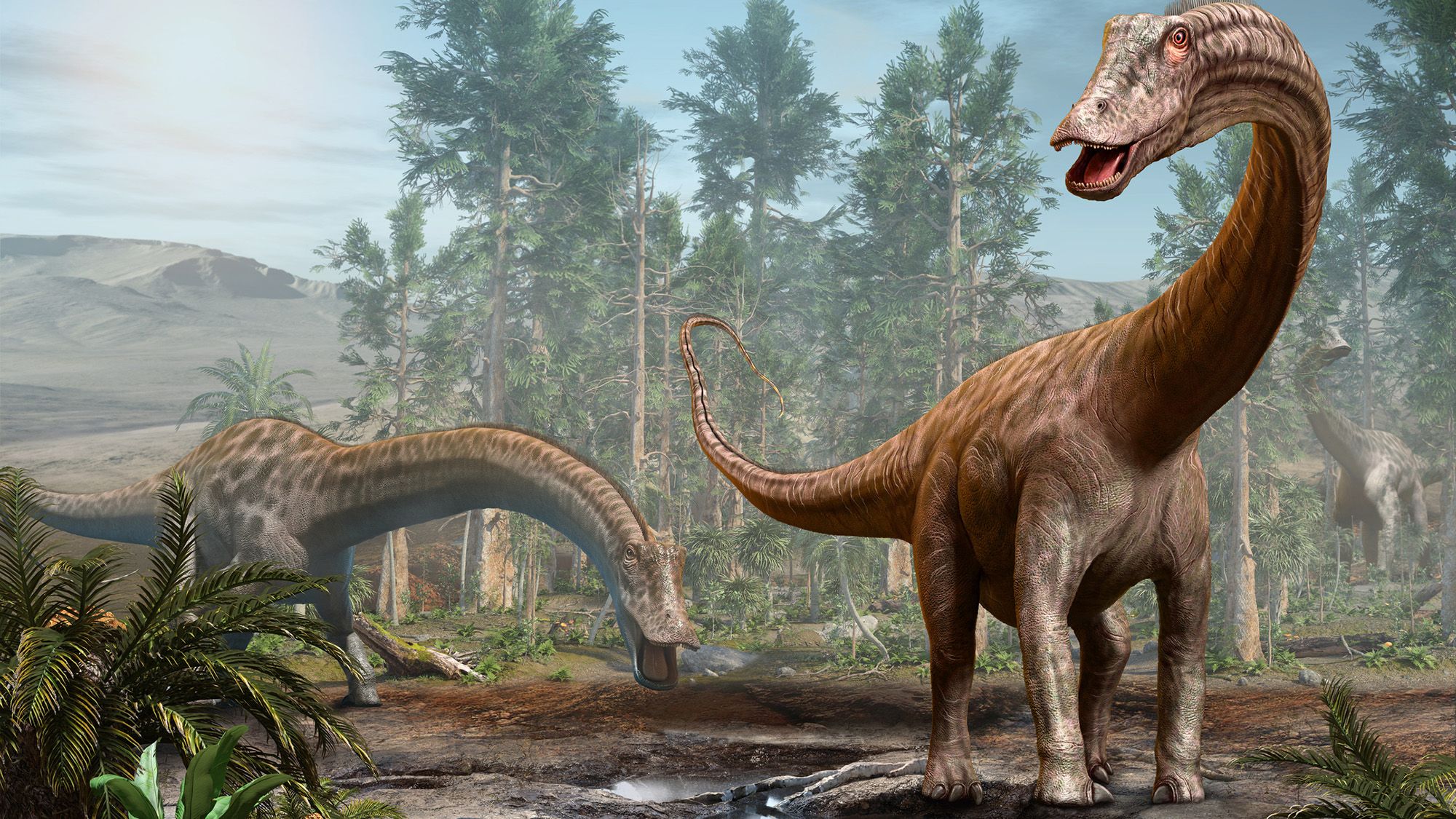
Paleontologists have identified the first fossilized Diplodocus discovered outside North America. The find shows that the iconic long-necked dinosaur reached what is now Spain about 150 million years ago.
The discovery suggests that giant sauropods did not live exclusively in North America, as previously thought. Instead, the dinosaurs may have crossed temporary land bridges between North America and Europe during the Late Jurassic Period.
Researchers made the discovery at the La Tejeria archaeological site near El Castellar, a small village in eastern Spain. Their findings provide some of the strongest fossil evidence yet that dinosaurs could migrate between the two regions while the Atlantic Ocean was still in the early stages of opening after the breakup of the supercontinent Pangea.
The study was published Tuesday, September 15, in the Journal of Vertebrate Paleontology.
A rare Diplodocus discovery in Spain
“Paleontological studies like this one help us better understand the history of life on Earth, reconstruct ancient ecosystems, and understand how they changed over time,” lead author Sergio Sánchez-Fenollosa, a doctoral student studying biodiversity and evolutionary biology at the Collaborative Paleontology Foundation Teruel Dinopolis, told Live Science by email.
Diplodocus is one of the most famous dinosaurs. After the fossil’s spectacular debut at Pittsburgh’s Carnegie Museum of Natural History in the early 1900s, a life-size replica of the towering herbivore was displayed around the world, including in the United Kingdom, France, Spain, Argentina and Russia.
Until now, fossils of Diplodocus were known from the Morrison Formation in North America. The new discovery suggests that the dinosaur was far more mobile than its fossil record had indicated.
The specimen consists of 14 well-preserved tail vertebrae and several chevrons. These small bones supported blood vessels and muscles in the dinosaur’s tail.
Image credit: Carmelo Lopez
Alberto Cobos, a co-author of the study and managing director of the Dinopolis Foundation, said a local resident initially thought he had found bones on a mountainside. When Cobos visited the site near El Castellar in Spain’s Teruel region, he identified several sauropod vertebrae.
Although only part of the skeleton has been recovered, the bones have several distinctive features. They include a large cavity corresponding to an air sac and a deep groove running along the underside of the tail.
“It was an exciting and ongoing process watching the pieces of the puzzle gradually fall into place,” Sánchez-Fenollosa said in a statement. “From the early stages of osteological studies, we noticed strong similarities with sauropods in some diplodocines. With each new result, the picture becomes clearer: what we are looking at is Diplodocus.”
A 25-meter-long Jurassic giant
The exact species of the Spanish Diplodocus specimen remains unknown. However, like other members of its genus, the animal had a very long neck and a whip-like tail.
“El Castellar’s Diplodocus was about 25 meters long” — roughly 82 feet, Cobos said in a statement. Its body length was comparable to that of its North American relatives, making it one of the giant sauropods known from Jurassic-period Spain.
How did Diplodocus reach Europe?
Between about 195 million and 170 million years ago, Pangea began to break apart as the Atlantic Ocean opened. The oceans were narrower than they are today, and the continents were not necessarily as isolated.
Researchers believe temporary land connections may have allowed some animals to move between North America and Europe. One well-known example of an ancient route is the Bering Land Bridge, which connected Asia and present-day Alaska and was used by humans. Previous research has also suggested that the land bridge existed about 68 million years ago and may have allowed Asian ancestors of Tyrannosaurus rex to reach North America.
One possible route for Diplodocus may have been a land bridge connecting Newfoundland with the island that would later become Iberia. Geological conditions could have made it possible for the dinosaurs to travel between the continents.
“This interpretation is supported not only by the fossil record, but also by geological evidence,” Sánchez-Fenollosa told Live Science.
More fossils could solve the mystery
The Spanish fossils suggest that the distribution of giant sauropods was more complex than the fossil record previously indicated. However, researchers say that more complete specimens are needed to determine exactly which species lived in Europe and how the animals dispersed.
“No species, either already known or previously unknown in North America, lived in Europe,” Sánchez-Fenollosa said. “This discovery is a reminder that even for such an iconic dinosaur, there are still many unanswered questions about its evolutionary history and biogeography.”
Study: Sánchez-Fenollosa, S., García-Coveña, J., and Cobos, A. (2026). “Intercontinental evidence for an iconic genus Diplodocus Marsh, 1878 (dinosaurs, sauropods).” Journal of Vertebrate Paleontology.
Source: www.livescience.com