


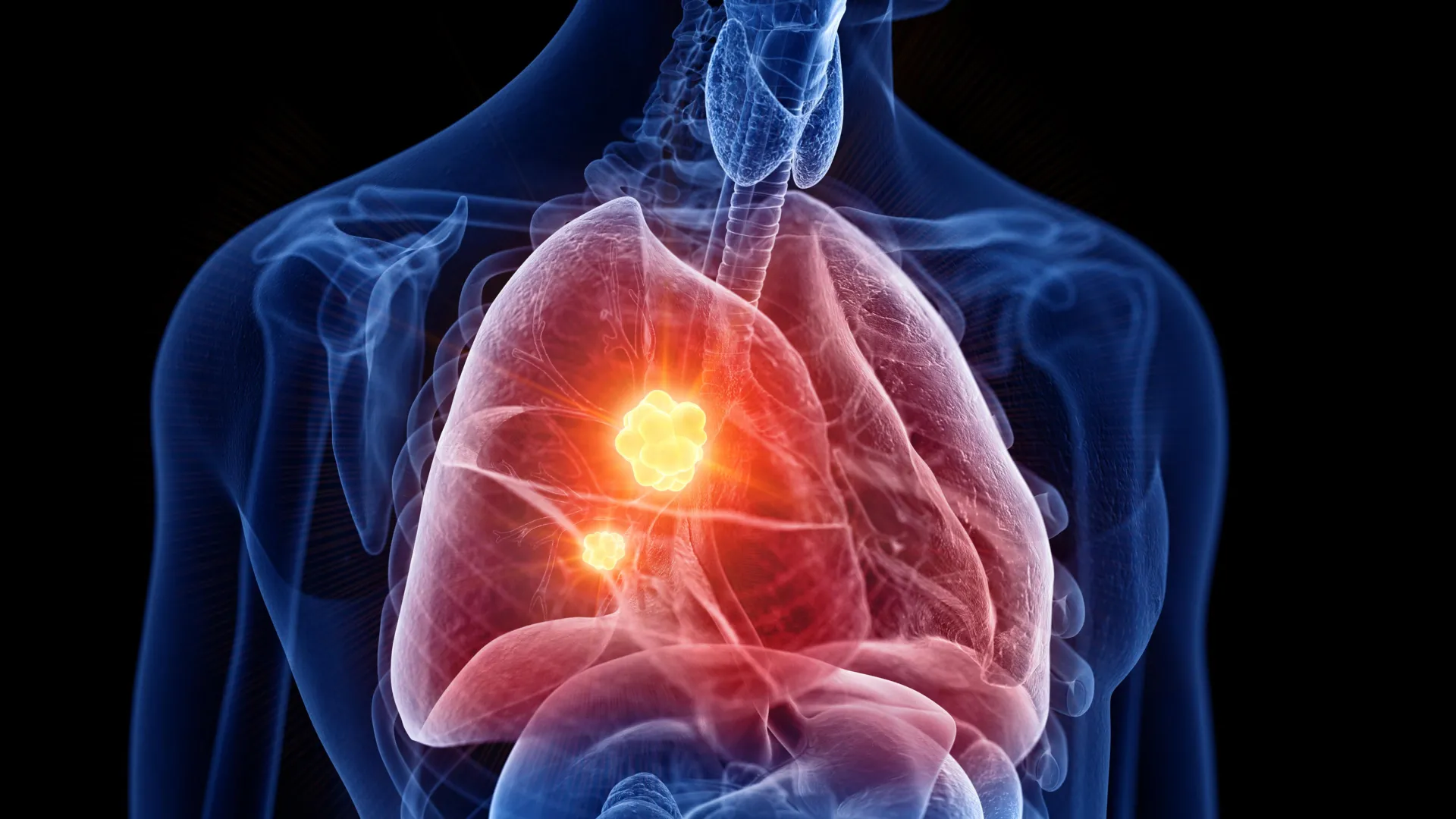
Experimental Mesothelioma Drug Targets Cancer’s Antioxidant Defense System
Mesothelioma is a rare, aggressive cancer most often associated with asbestos exposure. When inhaled, asbestos fibers can become trapped in the lungs, causing chronic inflammation that may eventually lead to cancer decades later.
Approximately 30,000 people are diagnosed with mesothelioma worldwide each year, and treatment options remain limited. Immunotherapy and chemotherapy can help some patients, but the disease is still difficult to control. Many patients previously worked in industries such as shipbuilding, oil refining, and asbestos manufacturing. Median survival is about 12 months, while the five-year survival rate is approximately 10%.
“This is a disease with a significant unmet medical need,” says Brian Cunniff, a professor at the University of Vermont.
Now, research published in Nature Communications describes an unusual strategy that could provide a new approach to treating mesothelioma and potentially other cancers. Cunniff, UVM research scientist Victoria Gibson, and an international team of collaborators investigated a treatment designed to disable one of cancer’s key antioxidant defenses.
In a Phase 1 clinical trial sponsored by RS Oncology, LLC, an experimental drug slowed disease progression in 67% of patients with relapsed mesothelioma. Some patients also experienced tumor shrinkage. The drug was generally well tolerated, and critically ill patients in the trial lived longer than those who received standard treatment.
How the treatment turns cancer’s defenses into a weakness
Mesothelioma cells, like many cancer cells, produce abnormally high levels of reactive oxygen species—unstable molecules that can damage cells. These molecules are produced partly because tumor cells have highly active metabolisms.
To survive this stressful environment, cancer cells increase production of antioxidant enzymes that neutralize harmful molecules. One of these enzymes is peroxiredoxin 3, or PRX3, which functions inside mitochondria, the structures that produce much of a cell’s energy.
UVM researchers decided to reverse the usual logic behind antioxidant-based cancer strategies. Scientists have spent years testing whether increasing antioxidants can reduce reactive oxygen species and fight cancer. Many of these clinical trials failed, while some studies suggested that boosting antioxidants may actually help tumors grow.
The UVM team instead asked what would happen if cancer cells were stripped of one of their most important antioxidant defenses.
Their approach focuses on blocking PRX3. Without this protective enzyme, oxidative stress builds up inside tumor cells until the damage becomes overwhelming.
How thiostrepton and RSO-021 attack tumor cells
The experimental treatments developed by RS Oncology are based on discoveries made at UVM. Thiostrepton, a naturally occurring antibiotic, is used to disable PRX3.
Blocking PRX3 causes hydrogen peroxide to accumulate inside the mitochondria of tumor cells, eventually leading to cell death.
Cancer cells may be especially vulnerable to this strategy because they already produce more reactive oxygen species than normal cells. PRX3 also turns over more quickly in tumor cells, potentially allowing the treatment to target cancer more selectively while having less impact on healthy tissue.
Laboratory experiments provided additional evidence that PRX3 is important for mesothelioma survival. When researchers completely deleted PRX3 from mesothelioma tumor cell lines, mitochondrial function was impaired, cell growth slowed dramatically, and the cancer cells were unable to form tumors in animal studies.
Other research groups have shown that removing PRX3 in healthy mice produces no adverse effects. This finding is important because mitochondria perform essential functions in nearly all cells, and some scientists question whether they can be safely targeted.
“Someone will come up to us at a conference and say mitochondria are too important to target,” Gibson says. “Evidence that knocking out PRX3 in mice does not result in deleterious phenotypes supports our approach.”
In other words, the researchers found that mice remained able to develop and function normally even after the gene responsible for producing PRX3 was removed.
From UVM laboratory research to human clinical trials
The scientific basis for the treatment began at UVM’s Cancer Center around 2015.
After early experiments with thiostrepton produced promising results, the researchers helped found RS Oncology, a private pharmaceutical company created to move UVM’s discoveries into clinical trials. Brian Cunniff, an associate professor in the University’s Lerner School of Medicine Department of Pathology and Laboratory Medicine, is the company’s chief scientific officer.
The research team eventually converted thiostrepton into a clinical formulation called RSO-021.
From 2022 to 2023, researchers tested RSO-021 in a Phase 1 clinical trial in the United Kingdom. The study was conducted under the supervision of the MHRA, the UK equivalent of the FDA.
The treatment is administered directly into the chest through a catheter. Many mesothelioma patients already have a catheter in place to treat pleural effusions, a buildup of fluid in the space between the lungs and chest wall.
Approximately 90% of mesothelioma patients develop pleural effusions.
Delivering the drug locally allows doctors to concentrate it near the tumor while reducing the amount that circulates throughout the rest of the body.
Early mesothelioma trial results show potential
The 90-milligram dose met safety and tolerability goals in the Phase 1 trial, and no patient deaths were attributed to the drug.
Researchers also found evidence in patient tissue samples that RSO-021 reached its intended biological target. The results confirmed that mechanisms previously observed in cells and mice also occur in human tumors.
Average progression-free survival was 4.2 months, similar to existing treatments.
Researchers were further encouraged by overall survival. Outcomes for the 15 patients included in the cohort were better than typically seen with currently available treatments. Cunniff described the discovery as a potential “game changer.”
“Our overall survival data are very encouraging and we expect them to hold up as the number of patients increases,” Cunniff said.
The findings also suggest that RSO-021 may do more than directly kill cancer cells. The treatment may change the immune environment around tumors in ways that help the immune system attack or suppress cancer.
“Our drug has both cytotoxic activity that can kill tumor cells, but it also has immunomodulatory abilities that can modulate the immune system to manage tumors,” Cunniff said.
Phase 2 of the clinical trial is now complete. The researchers plan to present their results at this year’s global oncology congress.
Could PRX3 inhibitors work against other cancers?
Research is currently moving in several directions.
Scientists at UVM and RS Oncology are collaborating with the University of Leicester and other institutions in the UK to develop a second-generation PRX3 inhibitor with improved solubility.
Future versions could be developed as oral tablets, potentially making the treatment easier to administer and expanding its use beyond mesothelioma.
At UVM, Gibson, the study’s lead author, continues her research as a postdoctoral researcher. She is helping launch a study investigating thiostrepton in peritoneal malignancies, including mesothelioma, gastric cancer, and other gastrointestinal cancers.
The study is being conducted in collaboration with Conor O’Neill, a surgical oncologist at UVM Cancer Center and UVM Health.
“We think this mechanism can be applied to other cancers,” Cunniff said.
For Gibson, seeing the research progress from laboratory experiments to human trials gave the project a deeply personal dimension.
“I’ve always had a desire to help people, because I think everyone experiences cancer at some point in their life, whether it’s themselves, a friend, or a family member,” she said.
Still, she was surprised when a family member contacted the lab to enroll his dying father in a clinical trial.
“We just work with cells in the lab all day long, and the fact that we were impacting people and that they wanted to participate in this clinical trial was amazing to me,” she recalled.
Source: www.sciencedaily.com