


NASA Scientist Discovers the Largest Newly Formed Crater in the Solar System
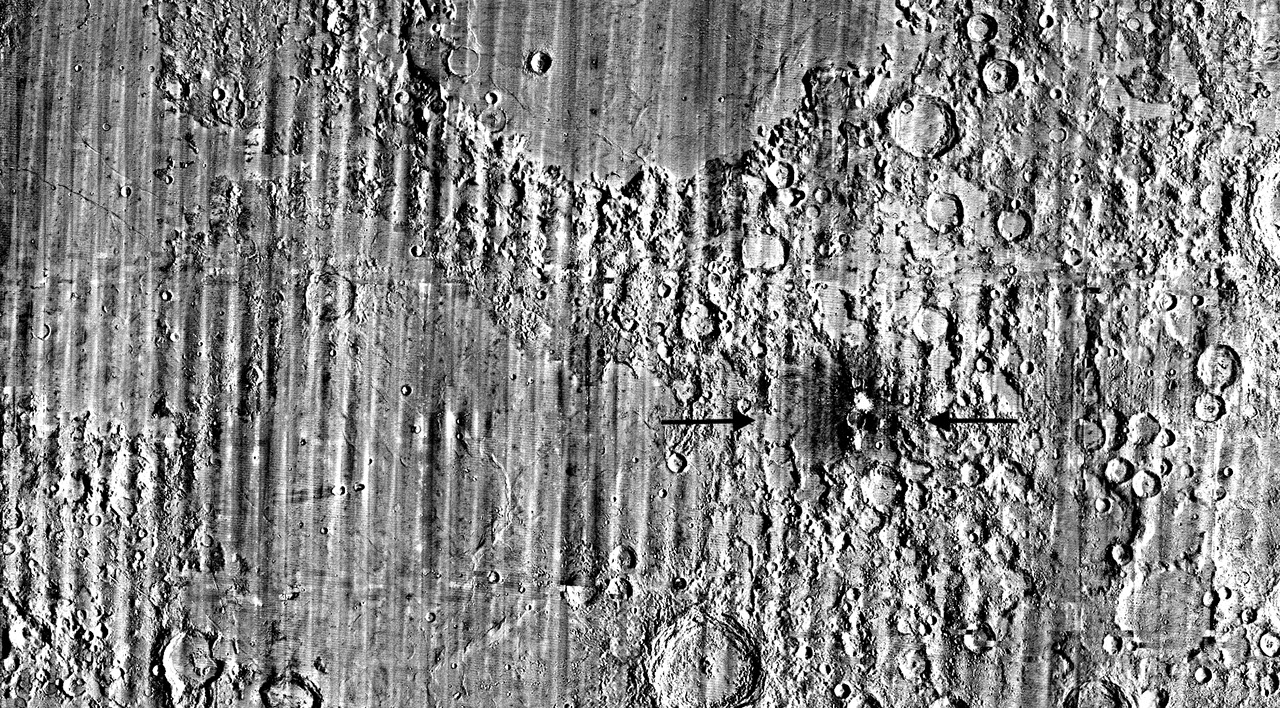
A routine lunar data-quality check led to the discovery of the largest newly formed crater ever identified in the solar system. NASA’s Lunar Reconnaissance Orbiter (LRO) detected the crater after scientist Robert Wagner noticed an unusually large bright spot surrounded by a dark halo on a map of the Moon.
The pattern suggested that the lunar surface had recently been disturbed.
“I just stopped, dropped everything, and started looking at what the place was,” said Wagner, an image-processing specialist at Intuitive Machines who works with data from the Lunar Reconnaissance Orbiter Camera (LROC) system.
A Newly Formed Lunar Crater Hundreds of Feet Wide
By comparing images of the Moon taken before and after the event, Wagner determined that the bright spot was a newly formed impact crater. The discovery, reported in Science Advances, highlights the value of lunar orbiter data for studying a changing lunar landscape as NASA works to support a sustained human presence and expand scientific and commercial activity on the Moon.
Officially named McGechin Crater, the feature formed near the Moon’s eastern edge when a comet or asteroid roughly the size of a three- to six-story building struck the lunar surface sometime between April 11, 2024, and May 22, 2024.
- Width: 728 feet, roughly the width of two football fields
- Depth: 141 feet, deep enough to fit three yellow school buses stacked vertically
- Estimated frequency: An impact of this magnitude occurs on the Moon about once every 100 years or longer
How NASA’s Lunar Reconnaissance Orbiter Found It
For more than 17 years, LRO has orbited the Moon with seven instruments that map its topography, surface composition, temperature, and radiation environment. During the mission, the spacecraft team has identified at least 1,000 new impact craters and reported an additional 100,000 surface changes caused by incoming objects and the debris they eject.
Space rocks can easily reach the lunar surface because the Moon has no atmosphere to slow them down or burn them up. Most impacts are far smaller than the event that created McGechin Crater.
The smallest crater scientists can distinguish in LRO images is about 30 feet wide—the length of a three-story building lying on its side. It can be created by a rock roughly the size of a monster-truck tire, about 43 inches wide. Scientists estimate that impacts of this size create approximately 140 new craters across the Moon each year, although most are made by microscopic projectiles that leave holes too small to detect from orbit.
The Impact Created a Six-Mile-Wide Lunar Cold Spot
LRO’s instruments can reveal changes on the lunar surface that are not immediately visible in LROC images. After the crater was discovered, scientists using the spacecraft’s Diviner thermal measurement instrument conducted follow-up observations.
They found that an area about six miles wide around the crater was approximately 16 degrees Fahrenheit cooler at night than the surrounding terrain.
In a second paper published in the same journal, researchers reported that the cooling occurs because the impact fluffs up the lunar regolith around the crater. The less-dense material is less able to retain heat.
The size of the “cold spot” surprised scientists because it shows that lunar impacts can alter the surface far beyond the crater itself. These physical changes could affect how rover wheels interact with the Moon’s soil—an important consideration for future robotic and human missions.
Source: science.nasa.gov