


Earth’s Center of Gravity Shifts With the Seasons, NASA Study Finds
Seasonal changes in water, ice, and air redistribute enough mass around Earth to shift the planet’s center of gravity by a fraction of an inch relative to its geometric center. NASA scientists are studying these movements because Earth’s center of mass is an important reference point for satellite navigation, mapping, and altitude measurements.
A team led by NASA’s Jet Propulsion Laboratory (JPL) in Southern California has proposed a highly accurate new method for calculating these seasonal variations. The research, published in Geophysical Journal International, examines how spring snowmelt, ocean movement, and dense seasonal air change Earth’s surface mass throughout the year.
Why Earth’s Center of Mass Moves
This study is not the first attempt to locate Earth’s center of gravity. For decades, scientists have used space-based techniques to define and measure it. However, the reference point is constantly moving.
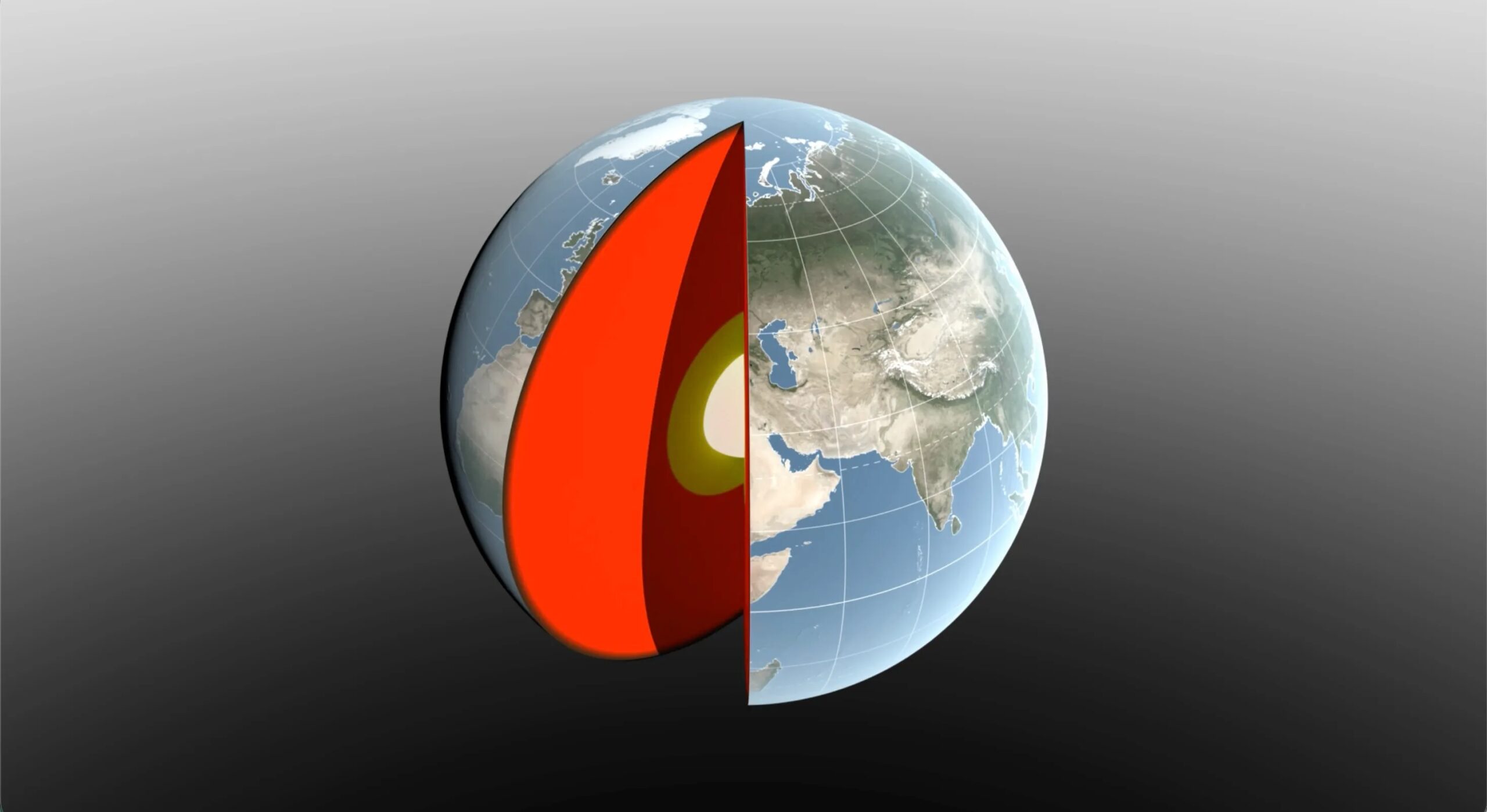
If Earth were a solid, perfectly uniform blue marble, its center of mass would overlap its geometric center. In reality, the planet shifts and sways under the changing weight of water, ice, and air. As a result, Earth’s center of mass moves around its geometric center by several millimeters each year.
The last two international estimates, for 2017 and 2023, differed by 0.27 inches (7 millimeters)—about the height of three stacked nickels. That difference is nearly as large as the movement scientists are trying to measure.
A More Accurate Way to Track Earth’s Center of Gravity
To reduce uncertainty, JPL geoscientist Donald Argus led the development of a new technique based on ultra-high-precision satellite tracking.
Satellites are governed by gravity and naturally orbit Earth’s center of mass. Small changes in the distance between satellites and ground stations can therefore reveal movements in the planet’s center of mass.
Using satellites to measure Earth’s center of gravity is not a new idea. Dense metal satellites launched in 1976 and 1992 were dedicated to this purpose. The two Laser Geodynamics Satellites, LAGEOS 1 and LAGEOS 2, each weigh about 900 pounds (408 kilograms). Covered with reflective prisms, they are tracked with lasers from ground stations distributed across more than 20 countries.
Satellite laser ranging has one major limitation: ground stations are unevenly distributed around the world. The new technique improves accuracy in two ways. It combines GPS tracking with orbital data from multiple satellites in low Earth orbit, creating a broader range of measurement targets. It also accounts for the way the weight of water and ice deforms Earth’s crust, causing ground stations to move as well.
The technique was developed by Argus in collaboration with researchers from JPL’s Satellite Orbit Determination Team, the University of Nevada, the University of Montana, and Germany’s Helmholtz Centre for Geosciences.
“We now estimate that the Earth’s center of mass moves back and forth each year by about half as much as was thought eight years ago,” Argus said. “Our findings suggest that the mass of Earth’s water and air moving between hemispheres is smaller than previously thought.”
“These movements may seem small, but our modern world relies on highly accurate positioning measurements,” said Felix Landerer, a JPL study co-author. “Unraveling and understanding the mechanisms that change frames of reference will help us build better frames of reference that will ultimately benefit mapping and navigation, from global transportation logistics to precision agriculture.”
How the Seasons Shift Earth’s Center of Mass
The researchers divided the seasonal influences on Earth’s center of mass into three categories: oceans, atmosphere, and continental water. Continental water includes land ice, snow, lake and river water, soil moisture, and groundwater.
Snow and Water in the Northern Hemisphere
Snow cover in North America and Eurasia reaches its maximum in March, shifting Earth’s center of mass about 3 millimeters toward the North Pole.
One month later, in April, the Amazon Basin receives 2,400 gigatonnes of rainwater, swinging Earth’s center of mass 2.2 millimeters toward South America.
Six months later, in November, monsoon waters in Southeast Asia reach up to 600 gigatonnes, contributing to a slight increase in annual variability.
Seasonal Ocean Changes
From August through October, the oceans swell with snowmelt and rain, shifting Earth’s center of mass toward the South Pacific Ocean. Because the Pacific is so large, changes in its mass can mask gains and losses in other oceans. Seasonal fluctuations in the Mediterranean, Red Sea, North Sea, Baltic Sea, and Barents Sea also contribute to smaller shifts.
Atmospheric Mass and Winter Air
The researchers used a model developed by the European Centre for Medium-Range Weather Forecasts to estimate how atmospheric changes affect Earth’s center of mass throughout the year.
Cold, dense winter air shifts mass over Arabia, Asia, and North Africa around December 21 each year. A similar atmospheric shift occurs over South America and South Africa around June 21.
How GRACE-FO Confirms the Findings
The study’s mass calculations are consistent with observations from the GRACE Follow-On (GRACE-FO) mission. Launched in 2018, GRACE-FO consists of twin satellites that map monthly changes in Earth’s gravitational pull, primarily caused by the movement of water above and below the ground.
The two satellites fly in precise formation. When the first satellite passes over a dense feature, such as a flooded river basin, the extra gravitational force changes the distance between the satellites by a small but measurable amount.
GRACE-FO is a partnership between NASA and the German Research Centre for Geosciences (GFZ). The next-generation GRACE-Continuity (GRACE-C) mission is targeted for launch in late 2028 to extend the nearly 25-year data record of the GRACE satellite series.
-end-
Written by Sally Younger
2026-061
Source: www.nasa.gov