


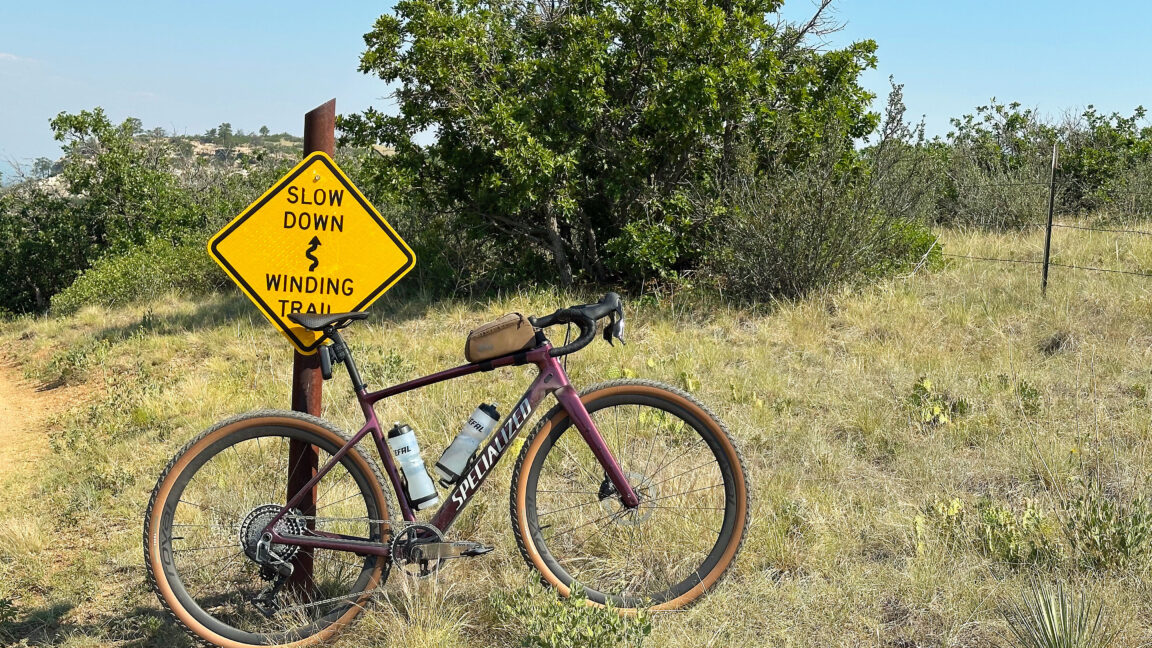
Specialized Diverge 4 Pro Review: A Gravel Bike Built for Rough Trails and Fast Roads
When I travel to Denver each year, I always bring my road bike. It is a rare chance to tackle the steep climbs and descents that are unavailable in the glacier-eroded landscape of northeastern Illinois. For this year’s trip, I brought Specialized’s new Diverge 4 Pro gravel bike to explore terrain far more demanding than the carefully maintained gravel roads of the Chicago suburbs.
Unlike the Specialized Turbo Creo 2 we reviewed a few years ago, the Diverge 4 Pro is completely human-powered. Specialized describes it as “the ultimate getaway vehicle,” developed with input from off-road adventure riders, scientists, and racers. The company markets it as the only gravel bike riders need for racing, adventure, and long-distance riding. While we cannot speak to its racing performance, our time with the bike showed that the Diverge 4 Pro is capable on every type of gravel and performs well on the road, too.
Priced at $8,249, the Specialized Diverge 4 Pro is designed for rough trails and technical descents. Both were waiting below me at the top of a climb in Douglas County, Colorado, where I rode the bike on gravel and singletrack. I took a deep breath and started down.
The descent included ruts and terrain that was slightly more technical than anything I have encountered around Chicago. But after spending enough time on the bike to understand its handling, I knew that if I had trouble on the way down, it probably would not be the bike’s fault.
Future Shock 3.3 is the Diverge 4 Pro’s standout feature
To understand what makes the Diverge 4 Pro so compelling, it helps to start with my favorite feature: Future Shock 3.3. Specialized’s suspension system is a significant upgrade over the versions used on the Turbo Creo 2 and Diverge Pro 3.
The mechanism sits between the head tube and stem. It adds relatively little weight while isolating the rider from high-frequency shocks without changing the bike’s steering geometry or introducing brake dive. That makes it a compromise between the behavior of a rigid gravel bike and the drawbacks that can come with a traditional suspension fork.
The fork, head tube, and front wheel remain tightly connected, while the stem and handlebars move perpendicular to the rest of the bike. The result is added comfort and control over rough surfaces without changing the bike’s basic steering characteristics.
Source: arstechnica.com