


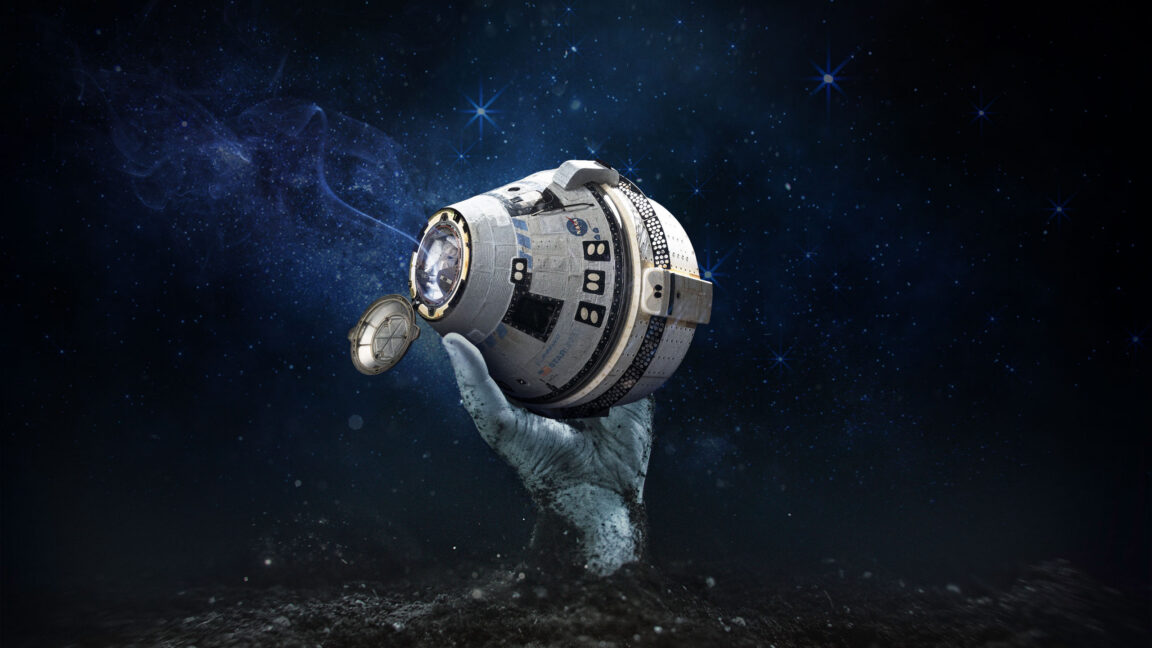
Could Boeing Starliner Launch on Blue Origin’s New Glenn?
A partnership between Boeing and Blue Origin could give NASA another option for crewed missions to private space stations. However, relying on a single provider could also raise pricing concerns. The key question is whether Boeing could operate as a prudent monopolist.
Blue Origin Could Benefit From a Starliner Partnership
NASA may have another option. Although Blue Origin has said little publicly, the company has reportedly maintained a team dedicated to developing a crewed spacecraft for launch on its New Glenn rocket.
Design work on the vehicle is well underway, according to people familiar with the program. Reported development efforts include cabin pressure-vessel construction, extensive parachute testing, in-house thermal-protection-system testing, and life-support-system work.
More Competition Could Arrive in the 2030s
NASA could eventually open the door to new competition for human spaceflight missions in the 2030s. Potential contenders include Boeing, Blue Origin, and perhaps the Exploration Company. In the immediate aftermath of the Commercial Crew Competition a decade ago, however, agencies appeared less interested in pursuing additional providers and the costs associated with them.
Even so, launching Boeing’s Starliner on Blue Origin’s New Glenn could be valuable to Blue Origin beyond the launch contract.
Starliner Could Help Certify New Glenn for Crewed Missions
If Boeing chooses to fly Starliner on New Glenn, Blue Origin could gain what amounts to “free” certification of the rocket for crewed missions. That certification process could otherwise be expensive and time-consuming.
Boeing and NASA would also need to build a crew-rated launch arm and other facilities for human spaceflight missions. Blue Origin could potentially use those facilities for future spacecraft as well.
New Glenn May Offer Cargo and Crew Launch Advantages
As commercial space station operators work to control costs, New Glenn’s greater lifting capability could provide additional advantages. The rocket might be able to launch both a crewed spacecraft and a cargo vehicle, such as Northrop’s Cygnus, into orbit on the same mission.
Combining crew and cargo payloads could potentially reduce launch costs. It is not clear whether Vulcan has the same dual-payload capability.
Source: arstechnica.com