


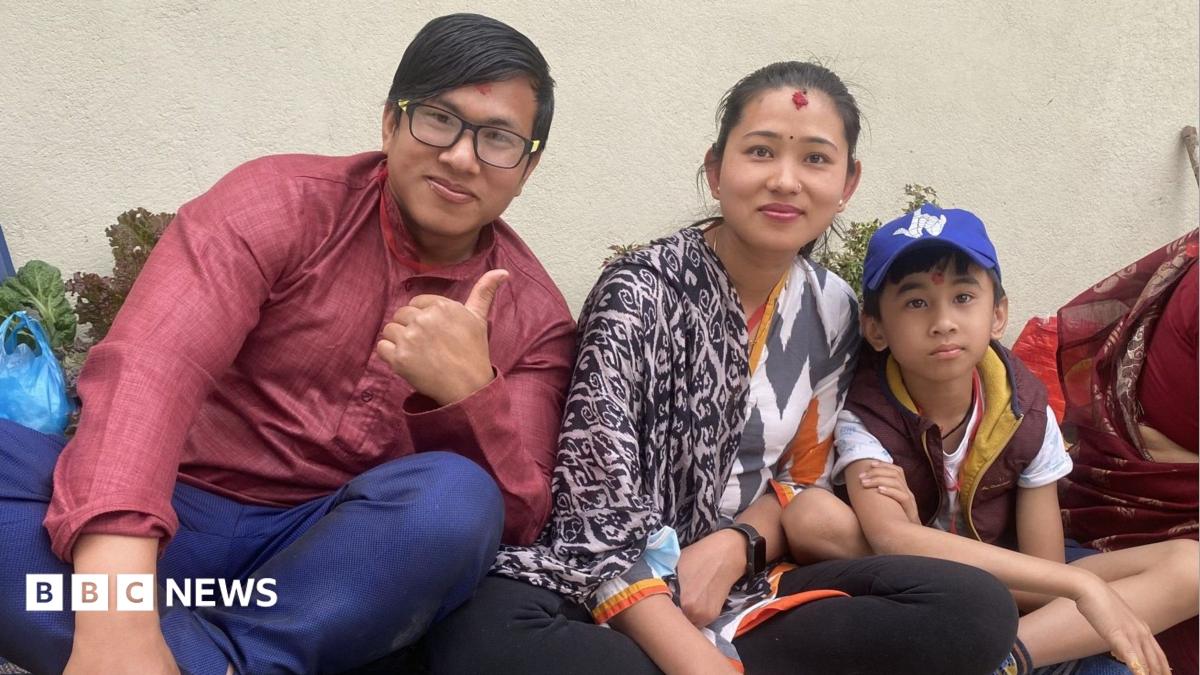
“Life has changed forever since Wednesday,” Mr Upadhyay told BBC Radio Wales Breakfast on Tuesday, as rescue teams continued searching for people missing after the devastating Trishuli landslide in Nepal.
“For the first few days, we waited hopefully for information. We also hoped he might somehow reach higher ground and begin the long journey home—possibly a 60-mile trip.”
“But as the days passed, that hope definitely began to fade.”
Officials said rescue efforts are focused mainly on the Trishuli 3A and Trishuli 3B sites, which include hydropower facilities and underground tunnel systems.
Nepali authorities have used controlled explosions and other measures to clear the hillsides and reach people believed to be trapped beneath the mud. A controlled blast was carried out near Trishuli early Monday to create access for rescuers.
Upadhyay told BBC Radio’s Shimul’s Bwrw Golwg programme on Sunday: “It was very difficult to reach the scene. From what we understand, all the buildings are buried beneath several metres of mud, making it impossible to search for anyone who may have been inside.”
“Within 20 minutes, all our communication links went down. We could not hear anything because the phone signal was not working.”
“It took around three days to receive any information. We checked the news, contacted people locally and tried to learn what the military and police were doing.”
She added: “We understand that the only way to reach the site is by helicopter. Operating a helicopter in that area requires specialist skills because the terrain is extremely difficult. We were also waiting for a machine capable of working in the mud.”
“We have received some positive news from other hydropower stations along the river, where people managed to shelter inside underground tunnels.”
“There is not much hope for that particular site, but we will not know for certain until rescuers can break through. At present, everything remains buried under the mud.”
Upadhyay said there are around 14 hydroelectric power plants along the river valley and that Chaudhary worked as a driver.
Upadhyay was at the scene when the disaster occurred but said Chaudhary was unlikely to have been deep inside the tunnel network.
“Our assumption is that he was swept away by the first wave,” she said.
Source: www.bbc.co.uk