


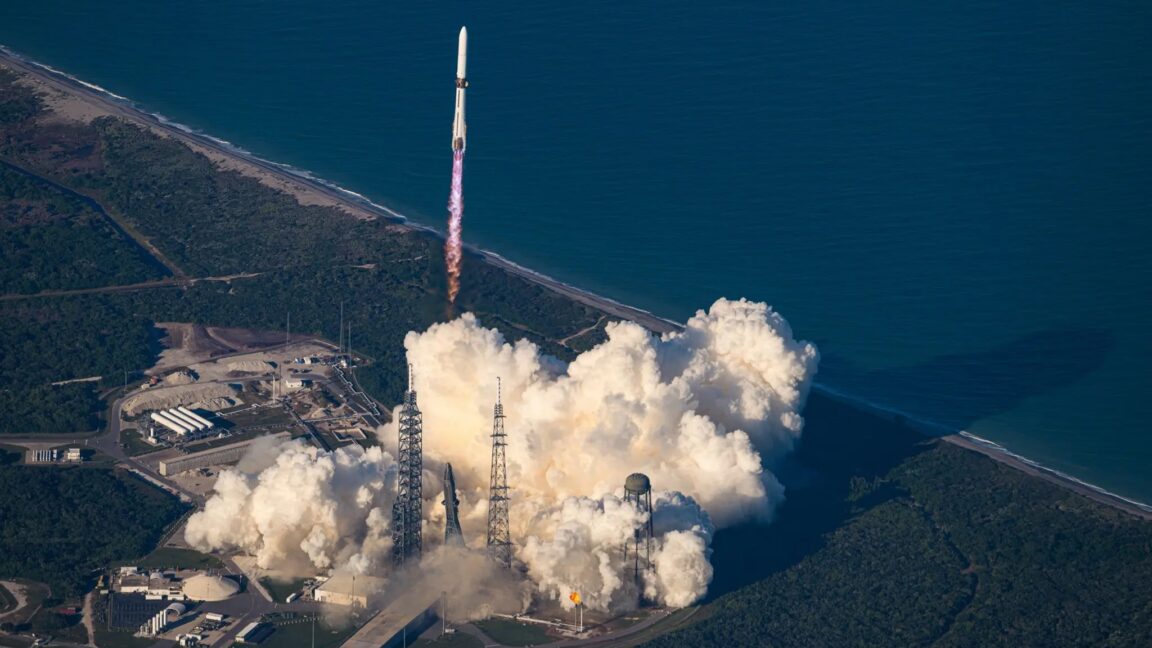
The US Space Force is considering a third military launch site to handle rising demand and provide geographic resiliency, but it has not set a timeline or decided whether the facility would be federally owned, state-owned, or developed through a public-private partnership.
Public, private, or both?
There is still no clear plan for when the military will begin establishing the new launch site. “That requires strong partnerships with local and state governments,” Gallant said. “Nothing has been decided yet regarding the timeline for a decision.”
Last year, there were 175 orbital launch attempts from Cape Canaveral Space Force Station and Kennedy Space Center in Florida, as well as Vandenberg Space Force Base in California. Space Force officials predict that the nation’s established spaceports will need to support 700 launches per year by 2036.
A third launch site would ease pressure on the limited real estate available at Cape Canaveral and Vandenberg. It would also provide what Space Force leaders call “geographic resiliency,” reducing the risk that a natural disaster or military attack could take either Cape Canaveral or Vandenberg offline.
The federal government already operates a third spaceport at NASA’s Wallops Flight Facility in Virginia. Wallops is used for suborbital rocket testing and for launching small and medium-sized satellites. Small rockets can also launch from the Pacific Spaceport Complex, which is owned by the state of Alaska.
Commercial facilities could provide another option for a new military spaceport. Ars asked Gallant whether the Space Force might consider leasing privately owned launch-site assets, such as the large spaceport SpaceX plans to build in southern Louisiana.
“We’ve talked about the need to consider all opportunities, including public-private partnerships, new federal facilities, the use of state-owned land and commercial land. Those are all possibilities. They all have pros and cons. We haven’t made that decision yet, but we’re not going to ignore any of those options.”
Source: arstechnica.com