


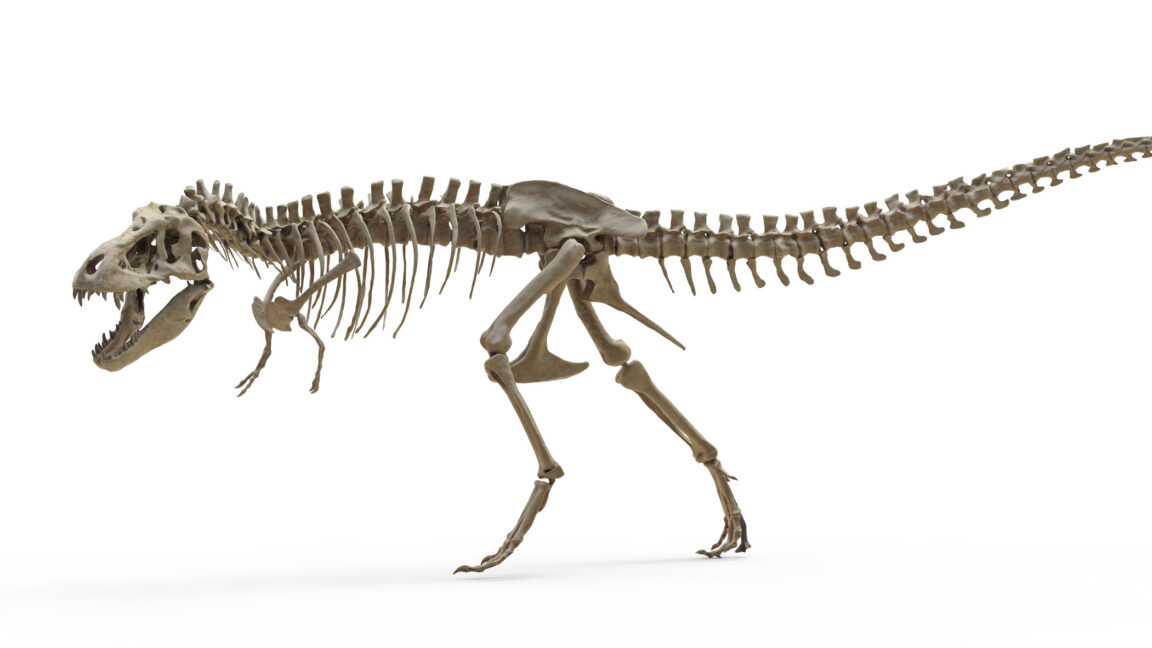
Tyrannosaurus Teeth Reveal Clues About Dinosaur Body Temperature
For much of the last century, Tyrannosaurus was portrayed as a lumbering reptile that needed to bask in the sun before becoming active. Later research transformed that image, suggesting that tyrannosaurs were active, bird-like animals more closely resembling the creatures depicted in Jurassic Park.
One major question remained: did Tyrannosaurus generate its own body heat? A new study may bring scientists closer to an answer. A research team led by UCLA geochemists Landon J. Flores and Robert A. Eagle analyzed dinosaur teeth to estimate body temperature. Their dental thermometer produced a reading of approximately 36 degrees Celsius, similar to the body temperature of a modern elephant.
Measuring dinosaur body temperature through tooth enamel
Paleontologists have long debated dinosaur physiology using indirect evidence, including bone microstructure, growth rates, and the geographic locations of fossils. Some research suggests that many dinosaurs were endotherms, generating their own body heat like birds and mammals. Other studies indicate that different dinosaur lineages may have evolved different thermal strategies.
Earlier attempts to measure Tyrannosaurus body temperature relied on oxygen isotopes in fossilized bones and teeth. However, those isotope ratios depend not only on temperature but also on the composition of the water in the animal’s body. Because scientists cannot directly identify that water in extinct animals, the results have been difficult to interpret.
Flores, Eagle, and their colleagues addressed this problem with a technique called aggregated isotope thermometry. Eagle introduced the method to dinosaur research more than a decade ago in a study of Jurassic sauropods.
Carbonate minerals in tooth enamel contain rare heavy isotopes of carbon and oxygen, including carbon-13 and oxygen-18. The frequency with which these heavy atoms bond, or “clump,” depends on the temperature at which the mineral forms. Since tooth enamel develops inside a living animal, these bonds can preserve a record of body temperature without requiring scientists to know the composition of the animal’s body water.
Source: arstechnica.com