


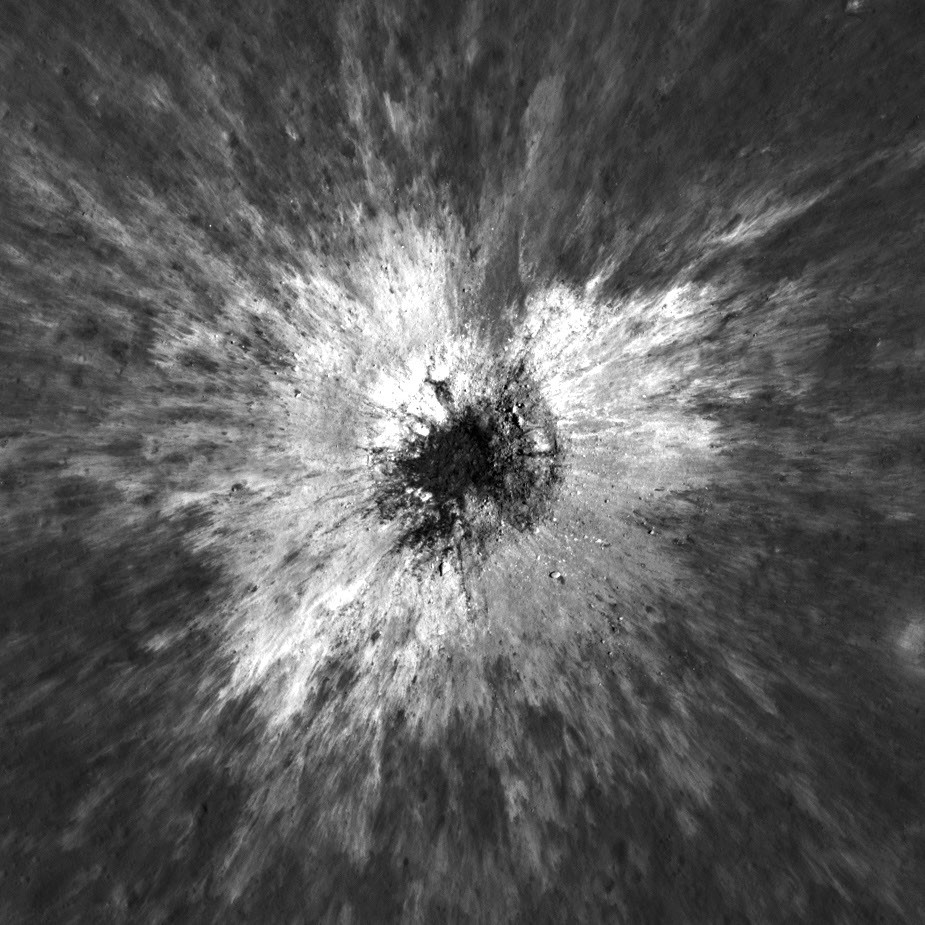
A New Crater Appeared on the Moon After a 2024 Asteroid or Comet Impact
A once-in-a-lifetime crater has appeared on the Moon. Sometime between April and May 2024, a comet or asteroid approximately the size of a human
humpback whale
— roughly 10–20 meters (30–60 feet) across — collided with the lunar surface.
NASA’s Lunar Reconnaissance Orbiter Captured the Change
The Lunar Reconnaissance Orbiter (LRO), which monitors the Moon every month, captured images showing the lunar surface before and after the impact.
View today’s image to compare the Moon before and after the event.
The McGethin Crater Is About the Size of Two Soccer Fields
The resulting crater was named after Apollo-era lunar scientist
McGethin.
A crater of this size is expected to occur only once
every 132 years.
A Thermal Image Revealed a Large Cold Spot
Tracking thermal imaging
revealed a large cold spot surrounding a warm crater. The impact disturbed the loose lunar sediment, or regolith, causing it to swell.
This made the material less dense and less able to retain heat.
The event affected an area
much larger than the visible crater.
Studying this impact will help inform humanity’s understanding of surface impacts and the evolution of the lunar surface. It also reminds us to appreciate Earth’s atmosphere.
APOD’s posting email address has changed. Check out APOD’s submissions.
NASA’s main site for APOD is on the move:
Visit the APOD update.
APOD has moved from apod.nasa.gov to
science.nasa.gov/apod.
Tomorrow’s photos: Great Unknown
Source: science.nasa.gov