


The Simple Emails That Help Researchers Feel Seen
Academic recognition does not always require collaboration or a meeting. Sometimes, telling a researcher how their work has influenced you can make a lasting difference.
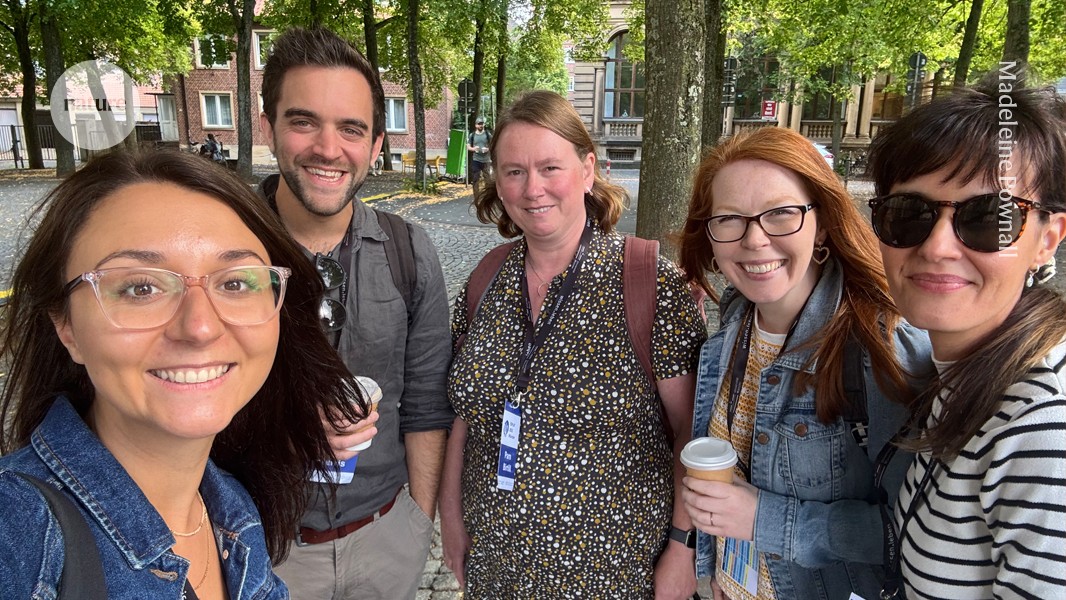
Madeline Pownall and four academic friends, Richard Harris, Pam Bertil, Tessa Flack and Christina Sotiropoulou Drosopoulou.
Credit: Madeline Pownall
About a year ago, I was in a room of undergraduate students talking passionately about a fellow researcher I admire. I spoke about her writing, her advocacy and the way she uses her research to inspire change in our shared field of feminist psychology.
Then a student raised a hand and asked: “Does she know?”
Of course, she did not. I had watched her work from afar. I told a room of students how important her writing was, added her research to my reading list and cited it in my paper. But the person whose work I was celebrating had no idea that it had made an impact on me.
Why researchers should hear when their work matters
So I returned to my office at the Department of Psychology at the University of Leeds in England and sent a series of emails to researchers whose work I admired. I told them what I valued about their research and tried to be specific about why.
I did not ask for their cooperation or request a meeting. I simply wanted them to know that their work had made a difference.
The replies surprised me. Some researchers sent a brief thank-you. Others explained what the research meant to them. For several, it was the first time someone had explicitly told them that their work had been recognized.
I had assumed that these messages were something I would be happy to receive. I had not realized how rarely we send them.
A small way to strengthen research culture
Recognizing a researcher’s contribution can be as simple as writing a thoughtful message. By explaining which ideas, papers or forms of advocacy have influenced you, you can help researchers understand the reach and impact of their work.
Source: www.nature.com