


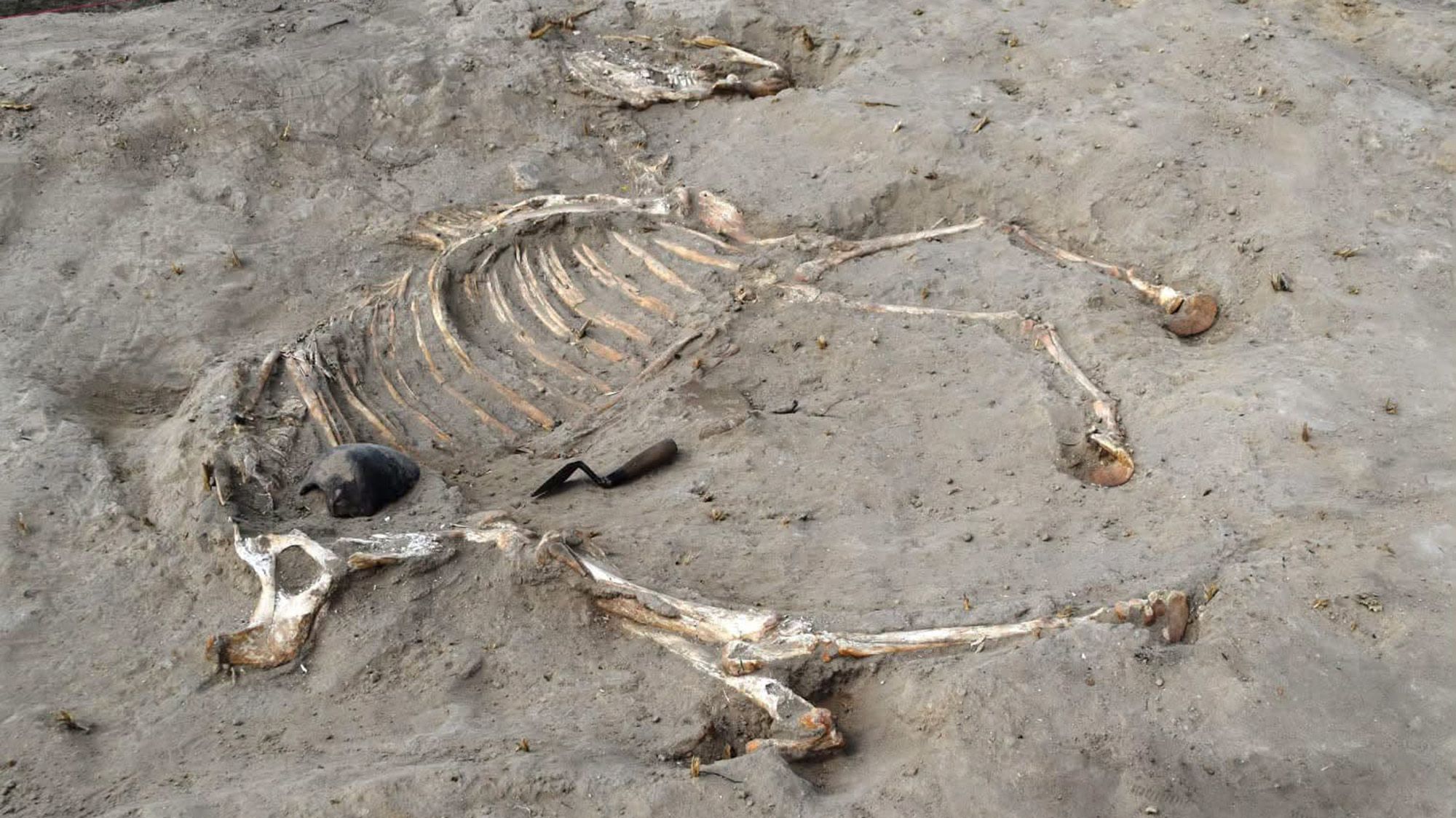
3,000-Year-Old Horse Burial Found Inside Ancient Egyptian Fortress
Archaeologists have unearthed the remains of a 3,000-year-old horse inside an ancient fortress in Egypt’s western Nile Delta. The young, medium-sized male horse was likely used to pull a chariot or for another form of military activity.
Nearby, archaeologists found hardware from a charioteer’s harness. Together with translated texts, the discovery suggests the horse may have received a deliberate, possibly ritual burial, according to a statement from Egypt’s Ministry of Tourism and Antiquities.
An ancient fortress in the Nile Delta
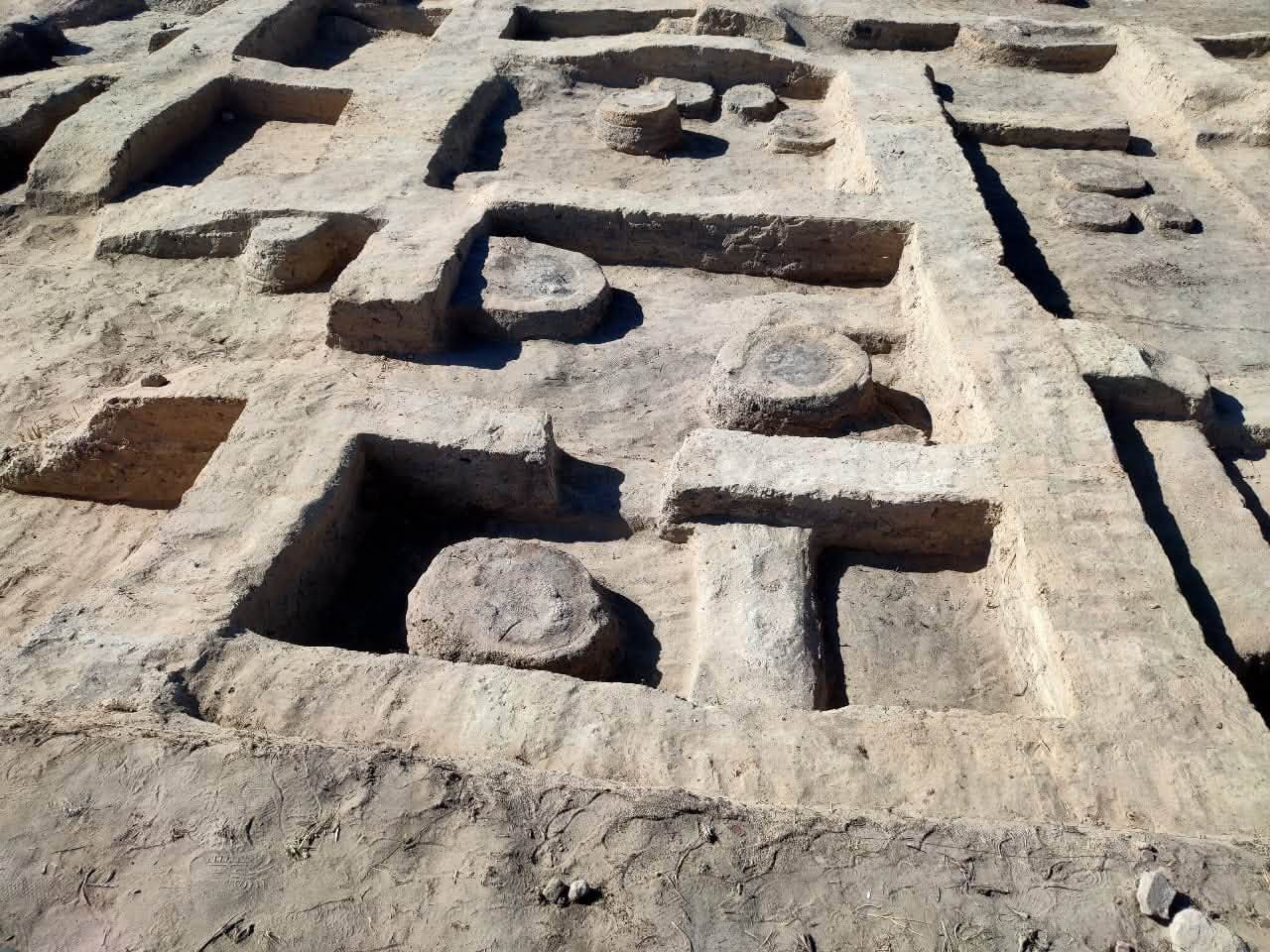
The horse was discovered at the ruins of Abu Ka’a in Egypt’s Lake District. The fortress dates to the New Kingdom period, which lasted from about 1550 B.C. to 1070 B.C., and was built to defend against hostile Libyan tribes to the west.
Other finds from the excavation include tablets depicting Libyan prisoners. Their clothing suggests that they belonged to the Meshwesh tribe, with whom Egypt frequently came into conflict.
According to the ministry’s statement, the prisoners are shown with their hands tied behind their bent bodies, a position that signified submission.
One hieroglyphic tablet bears the name of Pharaoh Ramses II, who ruled from about 1279 B.C. to 1213 B.C. A second tablet names Pharaoh Merneptah, who ruled from about 1213 B.C. to 1203 B.C. The tablets also reference Seth, an ancient Egyptian god associated with the desert and storms.
Why the horse burial is unusual
Horse remains from pharaonic Egypt are rare, particularly complete skeletons, making the discovery significant, researchers not involved in the excavation told Live Science.
“This is an amazing find, as horse remains from pharaonic Egypt are very rare, especially complete skeletons,” Lonneke Delpeut, a researcher at the University of Vienna who has studied ancient Egyptian horses, told Live Science by email.
Archaeologists have found the remains of horse stables at sites including Pi-Ramesses, the ancient Egyptian capital. However, horse remains are scarce. This newly discovered skeleton could provide additional information about how horses were used at military fortifications in the region, Delpeut said.
Was it a warhorse?
Researchers caution against definitively describing the animal as a warhorse. In ancient Egypt, there was no fixed definition of the term, Delpeut explained.
“It was definitely a chariot horse,” she said. “Horses revolutionized locomotion and warfare in ancient Egypt. So this horse was definitely a valuable animal, which is reflected in its careful burial.”
The discovery also offers clues about the relationship between horses and humans in ancient Egypt. Carolyn Willekes, an ancient horse expert at Mount Royal University in Calgary, Canada, said well-preserved remains can reveal important details about a horse’s life.
“The fact that this appears to be a deliberate horse burial also gives interesting hints about the relationship between horses and humans in ancient Egypt and the cultural importance of horses,” Willekes told Live Science by email.
The excavation was carried out by an archaeological team from Egypt’s Ministry of Tourism and Antiquities. Live Science contacted the team for comment but had not received a response at the time of publication.
Are you a fan of mummies and hieroglyphics? Test your knowledge with our Ancient Egypt quiz!
Source: www.livescience.com